If you usually make one pot of soup, a portable single hob is an obvious place to start. However, induction only works with compatible cookware, whereas a conventional hotplate has no such requirement. A second cooking zone is most useful if you want to heat the soup and a side dish at the same time. If there’s a longer gap between meals, a keep-warm setting is no substitute for checking the food’s temperature; cooling it and reheating it later may be an alternative.
Who these hobs are suitable for
Households with staggered mealtimes
If you don’t all eat at the same time, you’ll need to decide whether to keep the soup hot under controlled conditions or cool it and reheat it later. The German Federal Institute for Risk Assessment (BfR) offers guidance on keeping food hot and kitchen hygiene.
People who cook several things at once
A second independently operated cooking zone can be useful if you regularly prepare a side dish or another meal alongside the soup.
Kitchens with a specific pot or limited space
The key questions are whether your soup pot is suitable for induction and whether a portable hob will fit on your available worktop. For a built-in hob, you’ll also need to consider the cut-out and connection.
What to look for when choosing
First, decide how you want to handle the soup between mealtimes. Then choose the number of cooking zones, check that your pot is compatible and make sure the hob will fit in the space available.
For keeping food hot, the BfR recommends at least 60 °C throughout. A setting on the appliance or a selected temperature does not, on its own, prove that thick soup will reach this temperature everywhere.
| What you need |
What to check before buying |
Who it matters most to |
| Handling soup between meals |
Adjustable low settings and the option to measure the temperature; assess the food itself, not just the appliance setting. |
If there’s a gap between mealtimes, I want to keep the soup hot under controlled conditions or cool it in good time and reheat it later. Around 33% of consumers put managing waiting times first. |
| Preparing several dishes at once |
The number and layout of independently operated zones, and whether they’re suitable for your pot sizes. |
If I regularly want to have a second pot on the hob alongside the soup, another cooking zone is important to me. Around 27% of consumers prioritise cooking several things at once. |
| Continuing to use your existing soup pot |
The base and diameter of the pot, and the heating technology required by the appliance. |
If I want to keep using my existing pot, I’ll first check whether it’s suitable for the hob I’m considering. Around 20% of consumers prioritise pot compatibility. |
| Planning for space and connection |
The dimensions of the portable hob or cut-out, and the connection requirements for the specific model. |
If the available space or planned connection limits my choice, the hob has to fit exactly where it’s going. Around 20% of consumers put space and connection requirements first. |
Common buying mistakes
-
Assuming a keep-warm setting guarantees a safe food temperature
The appliance setting doesn’t show whether thick soup has reached at least 60 °C throughout. The BfR recommends this temperature for keeping food hot.
Decide whether you want to keep the food hot or cool it and reheat it for a later meal. If you’re keeping it hot, check the temperature of the soup itself.
-
Assuming ceramic glass means induction
A ceramic glass surface may cover either an induction system or a conventional heating element. Induction requires compatible cookware, while a conventionally heated hob can also be used with pots that aren’t suitable for induction.
Check the stated heating technology against the base of your existing pot. If it isn’t suitable for induction, you may need different cookware.
-
Comparing only the number of cooking zones
A portable double hob needs more worktop space than a single hob. A built-in hob has different cut-out and connection requirements; Bosch specifies these requirements for the PVS63KBB5E model.
Measure the space or cut-out and check the connection requirements for the specific appliance. According to the manufacturer, the Bosch PVS63KBB5E must be connected by a qualified electrician.
Connection and installation work may be required for a built-in appliance.
Relevant brands at a glance
CASO Design
Its range of portable single induction hobs also includes models with a temperature probe.
- CASO states that the TC 2400 has an adjustable range of 40–160 °C with the probe and 60–240 °C without it.
- The TC 2400 has one cooking zone; its settings don’t prove that thick soup will reach the desired temperature throughout.
ROMMELSBACHER
The range includes portable induction and conventionally heated hobs.
- The CT 3430/IN has two induction zones for cooking several things at once with compatible pots. The CT 2200/E is a single HiLight ceramic glass hob with a dual-circuit heating element.
- Heating technology and features vary by model; the characteristics of these appliances don’t apply to the entire brand.
SEVERIN
The models considered include a portable single induction hob and a conventionally heated double hob.
- The KP 1071 is a single induction hob. The DK 1014 has two independently adjustable cast-iron rings and does not use induction.
- The models differ in size and heating technology; no information on a repair service for the DK 1014 is available here.
Bosch
Bosch offers built-in induction hobs, including the PVS63KBB5E model with several cooking zones.
- The manufacturer specifies four cooking zones and precise cut-out dimensions for the PVS63KBB5E.
- This model is supplied without a plug and, according to Bosch, must be connected by a qualified electrician. No keep-warm setting is specified for this model.
AEG
For some built-in induction hobs, AEG describes sensor or flexible-zone features.
- Features vary by range and model.
- A feature of this kind doesn’t prove that every AEG hob will keep soup safely hot. AEG also points out that the pot can heat the ceramic glass on an induction hob.
Joybuy products for cooking
The products below include portable single and double hobs, as well as a built-in induction hob. Before choosing, check that the heating technology, number of cooking zones and installation requirements suit your pot and kitchen.
 No image available
Induction hob with 2 cooking zones and 5 temperature settings
The two cooking zones are useful if you want to prepare soup and a side dish at the same time.
The product title lists five temperature settings and says the hob is suitable for keeping food warm. This doesn’t prove that the soup will reach at least 60 °C throughout.
Joybuy
 No image available
DTL06 infrared hotplate, 3500 W
This portable infrared hotplate may suit you if you need a hob that doesn’t require induction-compatible cookware and have a suitable heat-resistant pot.
The product description lists a timer, touch controls and a rotary control, and states that the appliance can be used with heat-resistant cookware.
Joybuy
 No image available
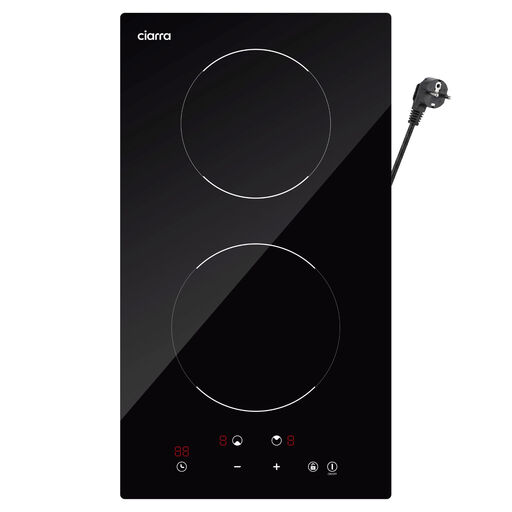
CIARRA CRGDBIH2 built-in induction hob, 3000 W
With two induction zones, this built-in model is designed for a suitably planned kitchen and for cooking several things at once.
The description lists nine power levels and a timer of up to 99 minutes. It requires a 270 × 490 mm cut-out; a 16-A fuse is also specified.
Joybuy
 No image available
Ochama Induction Hub, 2000 W
This portable single induction hob is an option if you’re preparing one portion and have a suitable pot.
The description lists ten power levels and a soup function. It specifies that magnetic cookware is required.
Joybuy
 No image available
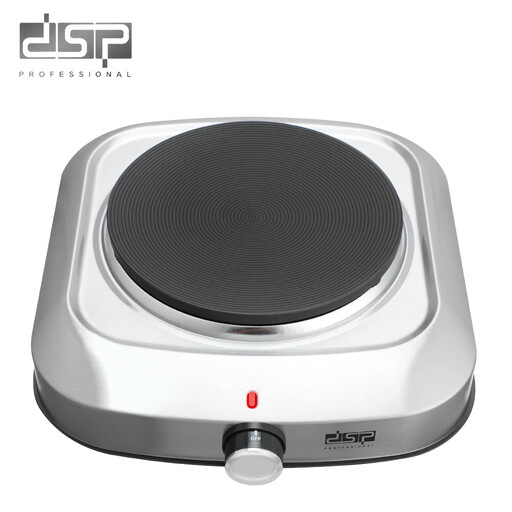
DSP Professional single hotplate, model KD4056
This electric single hotplate may suit you if you’re looking for a portable hob with adjustable heat.
The product description lists 1500 W, a 185 mm-diameter hotplate and an adjustable temperature control.
Joybuy
Frequently asked questions
Is the displayed keep-warm setting enough to keep soup safe?
No. The appliance setting alone doesn’t tell you the temperature of the soup. The BfR recommends at least 60 °C throughout when keeping food hot, so check the food itself.
Can I use any soup pot with a portable induction hob?
No, the base of the pot must be suitable for induction. Also check the maximum pot diameter for your chosen appliance; CASO, for example, specifies 12 to 26 cm for the TC 2400.
Can I simply plug any built-in hob into a socket?
No, it depends on the specific model. Bosch lists the PVS63KBB5E as an appliance supplied without a plug that should be connected by a qualified electrician. For other appliances, check their connection and installation requirements.
How should I clean the hob after lentil soup has boiled over?
Wait for the appliance to cool in accordance with its instructions, and check for a residual heat indicator. Even with induction, a hot pot can transfer heat to the ceramic glass; follow the cleaning instructions for your appliance.
Who should I contact if my hob is faulty?
The retailer is generally responsible for your statutory rights, which are separate from any voluntary manufacturer’s guarantee. Also check the guarantee terms and repair options for the specific model.


