
Lieferung heute & morgen

Qualitätsgarantie

Willkommens-Angebote freischalten: KOSTENLOSE Lieferung | Bis zu 80 % RABATT | Kostenlose 30-Tage-JoyPlus-Testphase
App herunterladen
A red moka pot is more than just a kitchen appliance; it's a design statement. However, choosing the perfect red Italian coffee pot comes with a few pitfalls that often only become apparent after the purchase. From incompatibility with your stovetop to misleading size specifications, many details determine whether your new moka pot will bring you joy or simply gather dust in a cupboard.
This guide will help you identify the crucial features and make an informed choice that suits your coffee preferences and your kitchen setup.
Before you decide on a model, you should be aware of the three most common problems that can arise during the selection process:
To avoid a bad purchase, you should check three technical aspects before making a decision. These determine the functionality and longevity of your red coffee maker.
The most important factor is compatibility with your type of stovetop. Check the product description carefully to ensure it is suitable for your cooktop.
The material affects not only stovetop compatibility but also handling and care.
The capacity of a red moka pot is specified in espresso cups. Use the following guidelines to find the right size for your needs:
For preparing larger quantities of coffee for guests, a red French press can also be a sensible alternative, as it often has a capacity of up to one litre.
Here are some recommendations tailored to different user profiles and requirements.
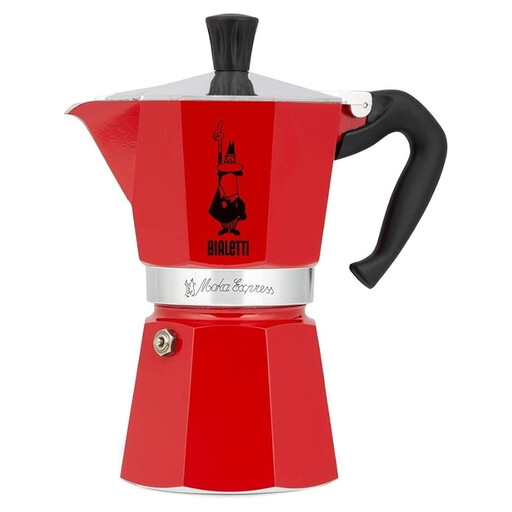
Why it's a great fit: Ideal for lovers of the authentic Italian coffee ritual who cook on a gas or electric stove. The 3-cup size is perfect for daily enjoyment, whether alone or with a partner.
This model is clearly declared for traditional stovetops, thus avoiding the induction trap. The 3-cup size (approx. 130 ml) is an established standard.
Made from durable aluminium with the patented Bialetti safety valve. The iconic octagonal design ensures optimal heat distribution.
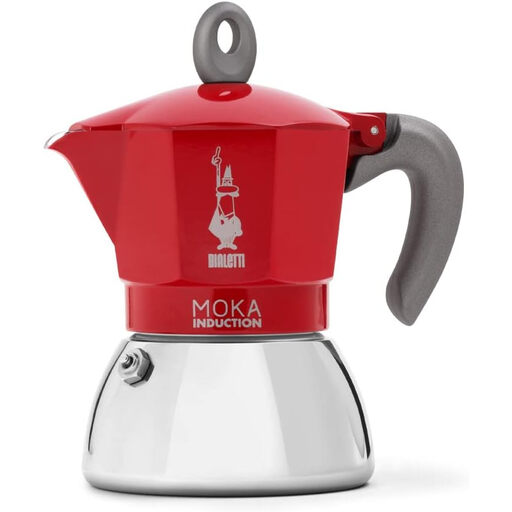
Why it's a great fit: The solution for anyone who loves the classic moka design but owns an induction stovetop. The 4-cup size offers slightly more volume than the 3-cup classic.
Solves the core problem of incompatibility with a bi-layer boiler made of stainless steel and aluminium. It is explicitly designed for all stovetops, including induction.
Combines the heat conductivity of aluminium in the upper chamber with the induction-suitability and durability of stainless steel in the boiler.
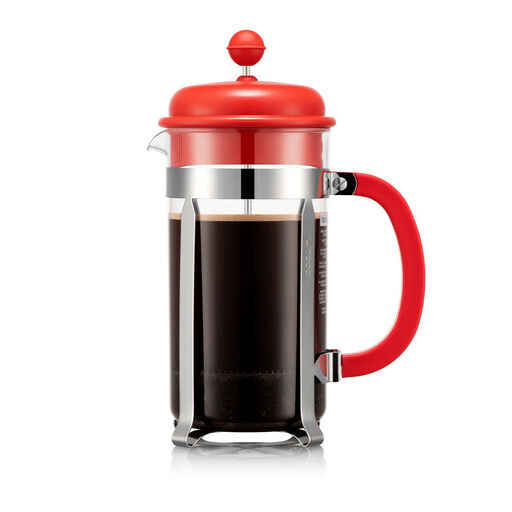
Why it's a great fit: An excellent alternative to the moka pot for those who want to brew larger quantities of coffee. Perfect for breakfast with the family or for serving coffee to guests.
It sidesteps the cup size pitfall with a clear 1-litre capacity specification. As a manual coffee maker, it is also completely independent of stovetop type.
Allows you to brew up to 8 cups of coffee at once. The carafe, made of heat-resistant borosilicate glass, is taste-neutral and durable.
To complete your coffee experience, we have curated a selection of products that meet the same criteria for quality and design mentioned here.
1. How do I clean my red moka pot correctly without damaging the colour? Most manufacturers, especially for aluminium pots, recommend cleaning with only clear, warm water. Use no dish soap and do not put the pot in the dishwasher. Harsh detergents and high temperatures can destroy the protective patina inside and damage the exterior paint. After rinsing, allow all parts to air-dry completely before reassembling.
2. Is an aluminium or stainless steel moka pot the better choice? That depends on your stovetop and personal preferences. Aluminium is the traditional material, very lightweight, and an excellent heat conductor. However, it is not suitable for induction stovetops. Stainless steel is more durable, easier to care for, and essential for use on induction cooktops. Some coffee lovers perceive a difference in taste, with aluminium often being credited with a smoother flavour.
3. My moka pot doesn't work on my induction cooktop, what can I do? If you own a traditional aluminium moka pot, it is not magnetic and therefore cannot be heated by an induction cooktop. You have two options: purchase an induction adapter plate. This plate is placed on the cooktop, heats up, and transfers the heat to the pot placed on it. However, the more direct and often more efficient solution is to buy a model that is explicitly labelled as induction-compatible.