
Lieferung heute & morgen

Qualitätsgarantie

Willkommens-Angebote freischalten: KOSTENLOSE Lieferung | Bis zu 80 % RABATT | Kostenlose 30-Tage-JoyPlus-Testphase
App herunterladen
The search for the right red pen seems simple at first glance. But reality often looks different: the ink bleeds through the paper, the tip dries out after just a few days, or a mark can no longer be removed, even though it was only meant to be temporary. These problems not only lead to messy results but also to unnecessary expense.
As your Joybuy Product Recommendation Officer, I'll help you navigate the common pitfalls. Instead of relying on marketing promises, we'll focus on the objective features that make a red pen truly suitable for your specific use case.
To avoid a bad purchase, you should check three technical parameters before making a decision. These determine whether a pen meets your requirements.
The ink is the heart of any pen. Its composition determines adhesion, durability, and removability.
The tip, also known as the nib, determines the line width and the script's appearance.
Check which materials the manufacturer recommends for the pen. While a red gel pen works excellently on paper, it fails on smooth films. Speciality pens like the STAEDTLER Lumocolor Omnigraph, on the other hand, are designed for demanding surfaces such as damp wood, metal, or stone, where conventional markers cannot adhere.
Based on these objective criteria, we have compiled a selection of red pens that are suitable for specific user profiles and their requirements.
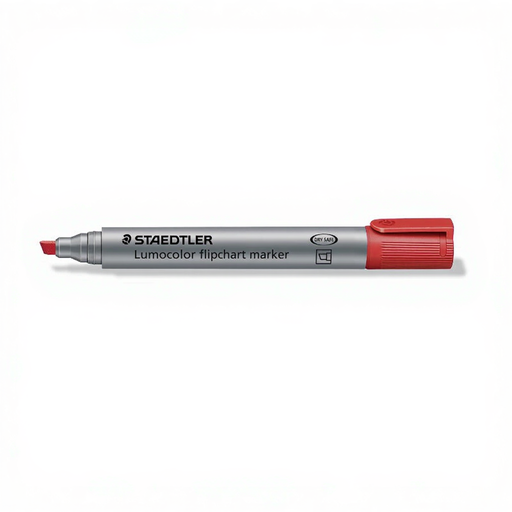
Why This Fits Their Persona: Ideal for workshops, meetings, and educational settings. The chisel tip allows for variable line widths for headlines and notes, while the ink is optimised for paper.
The special ink is formulated so it won't bleed through flip chart paper. The DRY SAFE technology, according to manufacturer specifications (ISO 554), prevents it from drying out even when the cap is left off.
Variable line width (2-5 mm) from the chisel tip. Low-odour, water-based ink and refillable for greater sustainability.
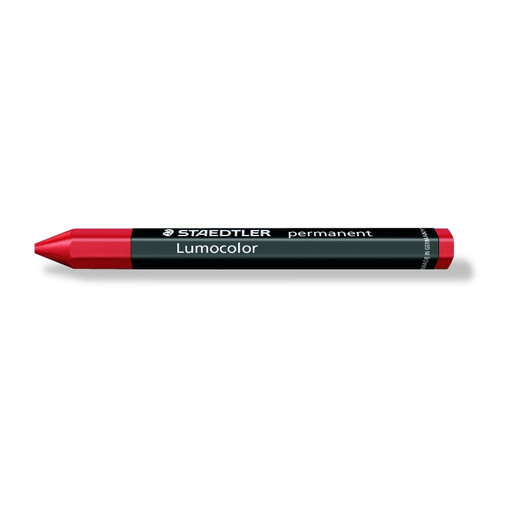
Why This Fits Their Persona: Designed for trade professionals and logisticians who need to make permanent marks on a wide variety of surfaces, including rough or damp ones.
This waterproof, wax-based marking crayon adheres to almost any surface (wood, metal, glass, plastic) where conventional markers fail. It does not bleed through paper.
Universal application, even on damp materials. High lightfastness and colour intensity for highly visible markings.
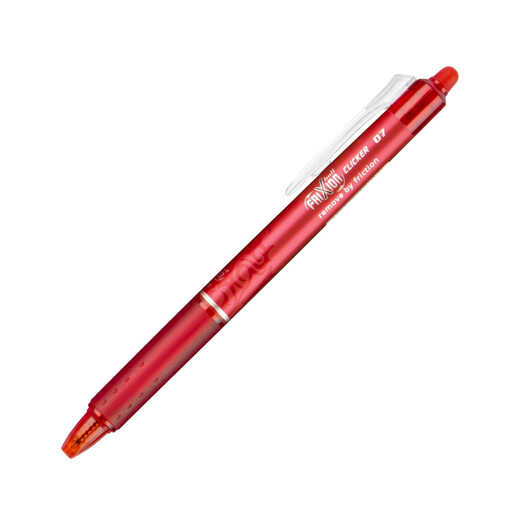
Why This Fits Their Persona: Perfect for students, teachers, and anyone who wants to keep their notes flexible. Ideal for correcting, annotating, and planning, as mistakes can be eliminated without a trace.
The thermo-sensitive ink solves the problem of permanent errors. Instead of messily crossing things out, the writing becomes invisible with friction, without damaging the paper.
Write, erase, and rewrite as many times as needed. The clicker mechanism makes a separate cap unnecessary.
We have compiled a complete, real-time list of products that fully satisfy these strict selection criteria and UK safety regulations.
A red wet-erase pen (non-permanent) contains water-soluble ink that can be wiped from smooth surfaces like transparencies or glass with a damp cloth. A red permanent marker, on the other hand, uses waterproof ink designed for permanent labelling on almost all materials and can typically only be removed with special solvents like alcohol.
Most pens, especially fibre-tips, flip chart markers, and highlighters, should be stored horizontally. This ensures that the ink evenly supplies the tip and doesn't collect at one end of the ink reservoir due to gravity. Also, make sure the cap is always on tight to minimise ink evaporation.
For corrections, pens for correcting with a fine tip (approx. 0.5 mm to 0.7 mm) and ink that doesn't bleed through the paper are ideal. A red fineliner or a red gel pen with quick-drying ink are good choices here. They allow for precise annotations without obscuring or smudging the original text. Erasable pens are generally not permitted for official documents or exams.