
Lieferung heute & morgen

Qualitätsgarantie

Willkommens-Angebote freischalten: KOSTENLOSE Lieferung | Bis zu 80 % RABATT | Kostenlose 30-Tage-JoyPlus-Testphase
App herunterladen
A red permanent marker may seem like a simple tool, but choosing the wrong one can quickly lead to frustration: the ink dries out unexpectedly, the writing smudges on smooth surfaces, or the tip gives way under pressure. To avoid these issues, it's crucial to understand the key product features that often get lost in marketing jargon. This guide will help you separate the good from the bad and find a marker that reliably meets your needs.
The most common problems when selecting a marker include:
To avoid a bad purchase, you should carefully examine three technical aspects. These determine whether a red permanent marker is suitable for your specific application.
The term "permanent" is not standardised. The crucial factors are the ink's composition and its suitability for the material you intend to write on.
The shape and size of the tip define the marker's range of applications.
Some features offer significant added value in daily use.
Instead of making a one-size-fits-all recommendation, we have identified products tailored to clearly defined user profiles and their specific requirements.
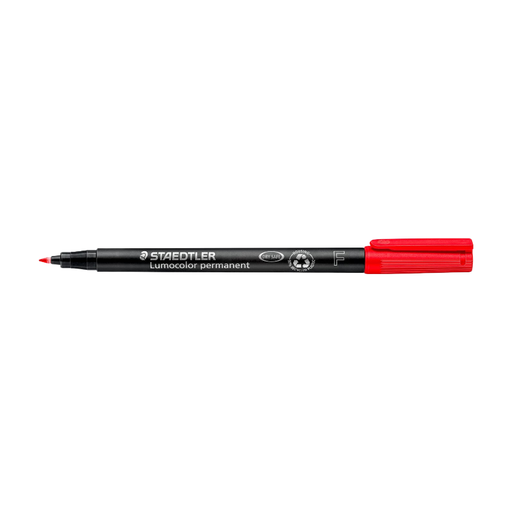
Why This Fits Their Persona: Ideal for technicians, lab workers, or organisers who need fine, permanent labelling on various materials like plastic labels, glass slides, or CDs. The fine tip allows for legible writing in the smallest of spaces.
According to the manufacturer, STAEDTLER, the ink is smudge-proof and waterproof on almost all surfaces and dries in seconds. The "DRY SAFE" technology prevents it from drying out, and the robust polypropylene barrel ensures durability.
A 0.6 mm line width for precise markings. Suitable for overhead projection and is refillable.
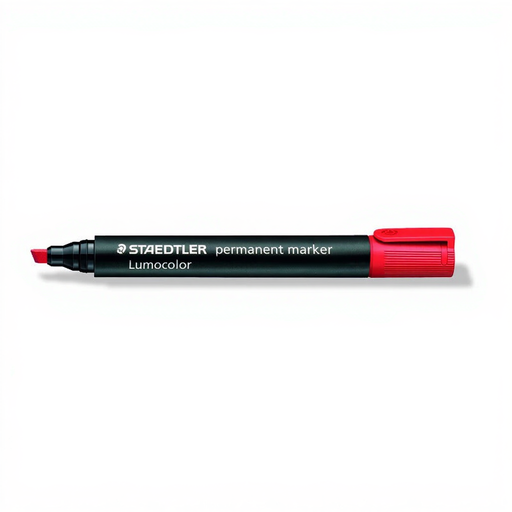
Why This Fits Their Persona: Perfect for employees in logistics, trades, or office settings who need a robust pen for variable labelling—from marking boxes to organising warehouse locations.
The locked tip prevents it from being pushed into the barrel under heavy pressure. The "DRY SAFE" feature and the quick-drying, smudge-proof ink make it a reliable tool for daily work.
The chisel tip with a 2–5 mm line width offers maximum flexibility. The pen is also refillable, which reduces operating costs.
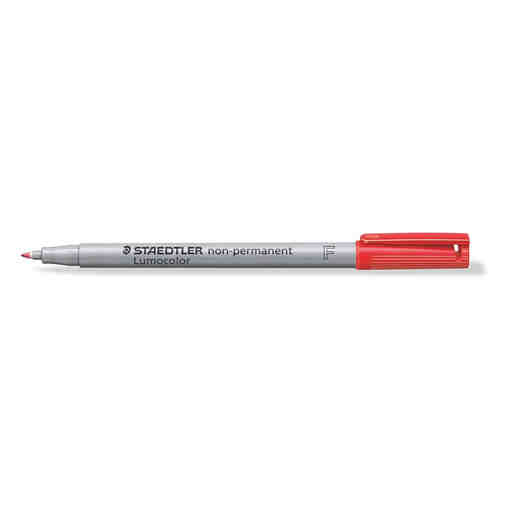
Why This Fits Their Persona: Suitable for teachers, lecturers, and anyone working with transparencies, laminated cards, or whiteboards for presentations or planning. It allows for clear yet temporary markings that can be easily corrected.
This pen solves the problem of permanent markers being unsuitable for flexible applications. The water-soluble ink is specifically designed to be wiped off smooth surfaces with a damp cloth without leaving ghosting or residue.
Wipes off smooth surfaces with a damp cloth. The ink still dries quickly to prevent smudging while writing.
We have compiled a complete, up-to-date list of products that fully meet these strict selection criteria and German safety regulations.
1. What exactly does "DRY SAFE" mean for STAEDTLER markers? "DRY SAFE" is a technology developed by STAEDTLER. According to the manufacturer (based on the ISO 554 test), pens with this feature can be left uncapped for days without the ink drying out. This is achieved through a special polypropylene barrel and a unique ink formula that minimises the evaporation of solvents.
2. How can I remove permanent marker from plastic? Although the ink is considered permanent, it can often be removed from smooth, non-porous plastic surfaces. A common method is to use a high-percentage alcohol (e.g., isopropanol) on a cloth. Another option is to write over the marking with a whiteboard marker, let it sit for a moment, and then wipe both away together. Always test the method on an inconspicuous area first to avoid damaging the surface.
3. Are refillable markers an economical choice? Yes, in the long run, refillable markers are generally more cost-effective. While the initial cost of the pen is a one-time expense, the refill ink is significantly cheaper than buying a new marker. It also reduces plastic waste, which is beneficial from an environmental perspective. However, the cost-effectiveness depends on the frequency of use—for occasional users, the difference is smaller than for heavy users in an office or industrial setting.