
Lieferung heute & morgen

Qualitätsgarantie

Willkommens-Angebote freischalten: KOSTENLOSE Lieferung | Bis zu 80 % RABATT | Kostenlose 30-Tage-JoyPlus-Testphase
App herunterladen
Finding the right red Staedtler pen can be more specific than it first appears. Whether for professional labelling in industry, presentations in the office, or creative projects, the requirements vary. A poor purchase often leads to frustration: a mark that wipes off when it should be permanent, or ink that bleeds through valuable paper. This guide will help you understand the technical differences and find the right product for your use case.
A common problem is the misleading term "permanent". A red Staedtler permanent marker that works perfectly on paper might be easily wiped off smooth surfaces like plastic or glass. Another annoyance is ink bleed-through, especially on flip charts. An unsuitable red flip chart marker can render subsequent pages unusable. Finally, longevity is a factor; many pens dry out quickly or their tips get damaged under firm pressure, making them useless.
To avoid these issues, you should consider three core technical parameters before making a decision. These determine the pen's functionality and reliability for your specific task.
The ink's composition is the deciding factor for adhesion and removability.
The tip determines how the pen writes and the applications for which it is suited.
The surface you are writing on dictates the choice of pen. A standard marker can fail on smooth materials. For labelling lab equipment, CDs, or plastic containers, a special marker for glass and plastic is required, with ink that has high adhesion on non-porous substrates. For industrial applications on metal or wood, robust wax crayons are often the more reliable choice.
Here are some recommendations tailored to different user profiles and their specific requirements.
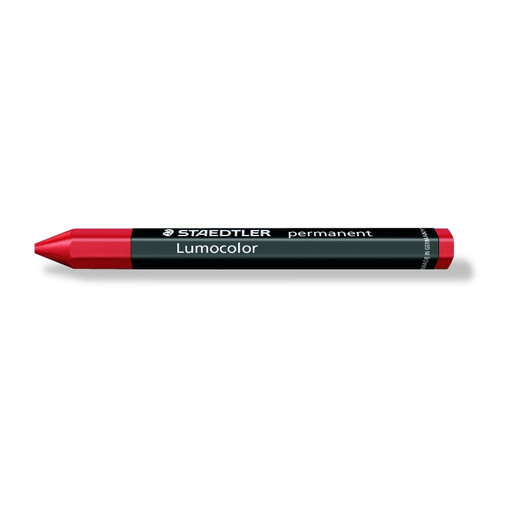
Why it's a match: Ideal for users in trades, logistics, or on construction sites who need a robust and universal marking solution for rough, smooth, and even damp surfaces.
This wax-based marking crayon is explicitly designed for almost any surface, including wood, metal, and plastic. Its waterproof formula adheres even to damp wood, solving the problem of inadequate "permanent" adhesion.
The crayon does not bleed through paper and is odourless. Its hexagonal shape prevents it from rolling off work surfaces.
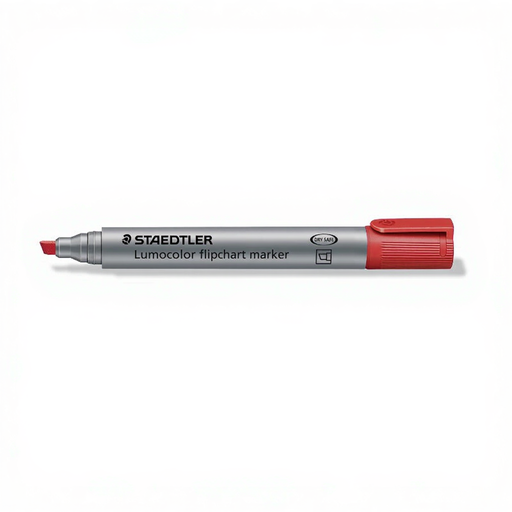
Why it's a match: Designed for teachers, lecturers, and office professionals who need a reliable marker for paper presentations that is highly visible and won't bleed through.
The special water-based ink is formulated so it won't bleed through flip chart paper. This protects the sheets underneath and prevents material waste. The DRY SAFE technology also prevents it from drying out.
The chisel tip (2-5 mm) allows for variable line widths for headings and notes. The marker is also a refillable marker, which reduces operating costs.
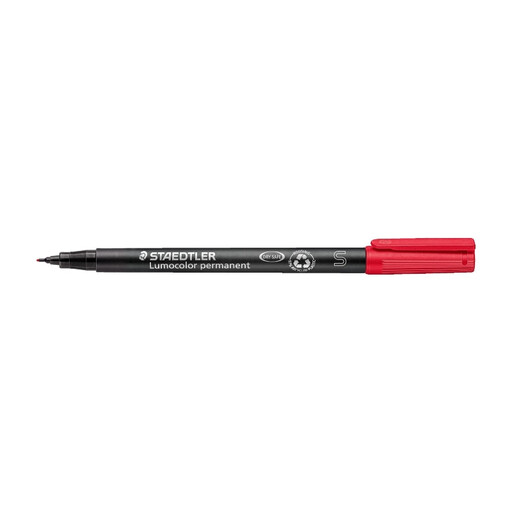
Why it's a match: Perfect for left-handers, lab technicians, or anyone who needs fine, smudge-proof, and permanent markings on smooth surfaces like transparencies, glass, or plastic.
The fast-drying ink is a crucial advantage for a pen for left-handers, as it is instantly smudge-proof. The DRY SAFE technology prevents it from drying out, even if the cap is left off for days.
The superfine tip (0.4 mm) allows for high-precision markings. The pen is airplane-safe due to automatic pressure equalisation and can be refilled with station 487 17.
We have compiled a complete, up-to-date list of products that fully meet these strict selection criteria.
Although the ink is labelled "permanent," it can be removed from many smooth, non-porous surfaces like glass, porcelain, or whiteboards. This typically requires a solvent such as isopropyl alcohol or ethanol. Apply the liquid to a cloth and gently rub the mark. It is advisable to test this on an inconspicuous area first.
The "DRY SAFE" technology is a feature developed by Staedtler that prevents the pen from drying out, even if left uncapped for several days. According to the manufacturer (based on ISO 554), the pen remains ready to write. This increases the marker's longevity and reliability, especially in hectic work environments.
Yes, a refillable marker can be an economical and environmentally friendly choice. Instead of disposing of the entire pen when the ink runs out, only the ink is replaced using a refill station. This not only reduces ongoing costs but also decreases plastic waste, as the high-quality pen barrel is reused.