Snack lovers focused on fat
You fancy something savoury and crunchy mid-morning, and are specifically looking for crisps with a stated fat reduction compared with similar products. How much you plan to eat is also part of the decision.


If your main priority for a mid-morning break is less fat, check exactly what the crisps are being compared with, then look at the fat, salt and energy per 100 g and per portion you plan to eat. A classic snack mix offers a variety of components, but that does not automatically make it reduced-fat: for example, EDEKA’s GUT&GÜNSTIG Snack-Mix contains 16,2 g of fat and 2,9 g of salt per 100 g. Even with crisps labelled as reduced-fat, the ingredients and allergens still matter.
You fancy something savoury and crunchy mid-morning, and are specifically looking for crisps with a stated fat reduction compared with similar products. How much you plan to eat is also part of the decision.
You’re also considering lentil crisps or protein snacks for your break. As well as the nutritional information, you want to check the ingredients and any allergen labelling.
You prefer a pack with several types of snack, so you pay particular attention to the ingredients list. EDEKA’s description of the GUT&GÜNSTIG mix lists wheat, sesame, barley and milk among its ingredients.
For a mid-morning break, it helps to start by deciding on the format: would you prefer a mix of different components, or crisps with a clearly stated fat reduction? Then check the nutritional information and ingredients for the specific pack.
A good choice if: You value having several components in one pack more than a stated fat reduction.
The trade-off: A mix format alone says nothing about fat content; ingredients and allergens can vary from one mix to another.
A good choice if: You want potato crisps with a clearly stated reduction compared with similar crisps.
The trade-off: Less fat than the comparison product does not automatically mean a low overall fat content.
A good choice if: You’d like a different kind of crunchy snack, made with lentils or with a stated protein content, instead of a classic mix.
The trade-off: The recipe, taste and allergens differ from those of potato crisps and snack mixes.
| Criteria | What to check | Who it matters to |
|---|---|---|
| Fat reduction | Check the product used for the comparison, as well as fat and energy per 100 g. | I want to choose crisps with a clear reduction in fat for my break, without mistaking the word ‘light’ for a low overall fat content. Around 42 % of consumers would consider fat reduction a top priority when buying. |
| Ingredients and salt | Check the salt per 100 g and the ingredients and allergen list for the specific pack. | If I’m choosing between spicy crisps and a mix, the ingredients need to suit my requirements; the salt content also influences my choice. For around 33 % of consumers, this information is a key consideration when buying. |
| Format and portion | Compare the snack format, pack size and nutritional information with the portion you plan to eat. | I’m looking for a suitable crunchy snack for a short break; I may also be interested in the stated protein content. This would be the deciding factor for around 25 % of consumers. |
A fat-reduction claim compares one product with another. Lorenz markets Naturals Leicht fein gesalzen as containing 30 % less fat than conventional potato crisps; the variety still contains 23 g of fat per 100 g.
Read the comparison claim alongside the fat, energy and salt figures in the pack’s nutritional information.
Having different components does not automatically make a mix lower in fat. EDEKA lists 16,2 g of fat and 2,9 g of salt per 100 g for GUT&GÜNSTIG Snack-Mix.
If reducing fat is your priority, compare the information for your preferred mix with the specific alternative you’re considering.
The snack mix described by EDEKA contains wheat, sesame, barley and milk, among other ingredients. Lorenz and EDEKA also point out that recipes or online information may differ from what’s on the current pack.
If you have allergies or specific requirements about ingredients, check the labelling on the exact pack you plan to buy.
According to the Verbraucherzentrale, the Nutri-Score is primarily intended for comparing products within the same category or with the same intended use.
Use it as an extra guide; if you’re choosing based on fat content, the nutritional information and the portion you plan to eat still matter.
These brands and supermarket ranges offer a variety of snack formats. Information about individual varieties should not be applied to the whole range.
Lorenz’s Naturals Leicht fein gesalzen range includes potato crisps marketed with a clearly stated fat reduction.
funny-frisch offers Ofen Chips, as well as lentil and protein crisps in different snack formats.
SUNSNACKS Light Chips Classic are a crisp option for comparing stated fat content.
GUT&GÜNSTIG Snack-Mix is a mix of different crunchy snack components.
REWE stocks nut mixes and snack mixes with a variety of ingredient profiles.
Lidl describes Alesto as a range of nuts, nut mixes and dried fruit.
This selection from Joybuy features savoury flips and crisps as alternatives to a classic snack mix. If your aim is ‘less fat’, compare the nutritional information for each variety and the portion you plan to eat.
 No image available
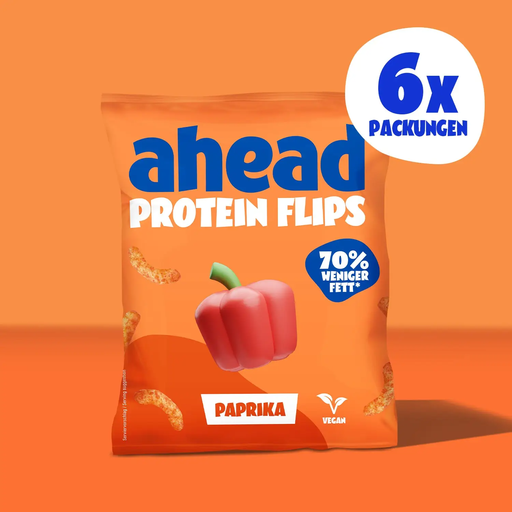
An option if you’d prefer flips rather than a snack mix for your mid-morning break.
The product description states that the tray contains six 50 g packs. Check the fat, salt and ingredients for this specific variety on the pack.
 No image available
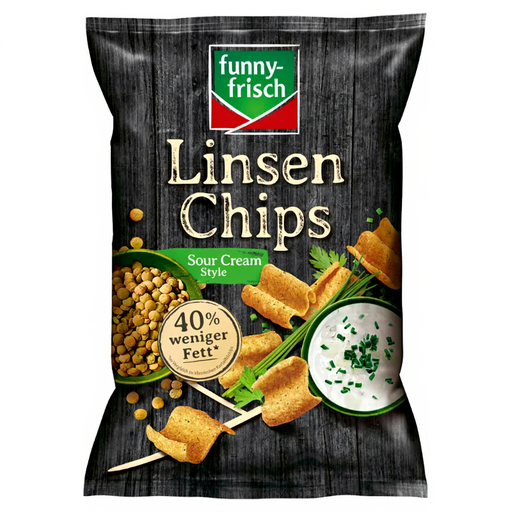
A lentil crisp option if you’re not looking for a mix with several components for your break.
The product description lists a 90 g pack. Compare the fat and salt per 100 g using the current pack, and check the allergen information.
 No image available
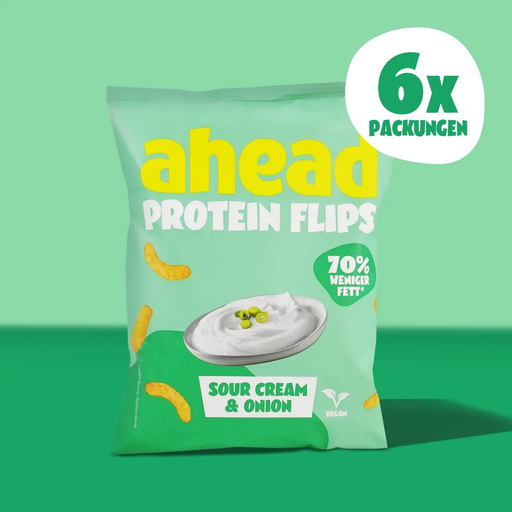
Another savoury crisp option for your break if you’d prefer one variety rather than a classic snack mix.
Before comparing this variety with other snacks, check the protein content and overall fat content in the nutritional information on the current pack.
No. ‘Reduced-fat’ means that a product contains less fat than a comparable food; on its own, the claim does not mean the overall fat content is low. Lorenz states that Naturals Leicht fein gesalzen contains 23 g of fat per 100 g, despite being marketed as reduced-fat. So always check the nutritional information as well.
Read the ingredients and allergen information on the specific pack, especially if there are ingredients you need to avoid. EDEKA’s GUT&GÜNSTIG mix contains wheat, sesame, barley and milk, among other ingredients; other mixes may have a different recipe.
No. According to the Verbraucherzentrale, the Nutri-Score is mainly intended for comparing products within the same category or with the same intended use. If you’re specifically looking for less fat, also check the fat, salt and energy per 100 g, and consider the portion you plan to eat.