What should you look for when buying?
Start by comparing similar nut products using the nutritional information per 100 g. Then decide which ingredients, portion size and pack best suit your afternoon.
| What to consider |
What to check |
Who it matters to |
| Fat and energy |
Compare fat and energy per 100 g with a similar standard product, and take your own portion into account. |
If I’m considering a variety advertised as reduced-fat, I want to know what the comparison means for my snack portion. Around 36% of consumers focus on fat and energy first. |
| Salt and ingredients |
Check the salt content per 100 g and the ingredients list, especially for roasted or seasoned nuts. |
For a snack I have often, I mainly want to keep an eye on salt without assuming that unsalted roasted nuts are unprocessed. This is the main priority for around 29% of consumers. |
| Flavour and mix |
Check the types of nuts, how they’re roasted and any added ingredients. |
I want a variety of nuts and a roast I enjoy, so I take a closer look at the other information too. Taste and variety come first for around 21% of consumers. |
| Pack size |
Check the pack weight and how it’s divided up. If you buy a larger pack, plan how you’ll store it after opening. |
I want a pack for my cupboard that’s easy to portion and store. Pack size is the priority for around 14% of consumers. |
Nuts for an afternoon snack on Joybuy
This selection includes roasted, unsalted cashews and walnuts in their shells. You can choose by nut type and pack, but these features alone don’t tell you whether a variety is reduced-fat compared with a similar standard product.
 No image available
Seeberger roasted, unsalted cashew kernels, 150 g
A good choice if you’re looking for roasted cashews without salted seasoning for the afternoon.
The pack contains 150 g. To compare it with a variety advertised as reduced-fat, you’ll need the nutritional information for a similar standard product. Be sure to decide on your own portion size too.
View on Joybuy
 No image available
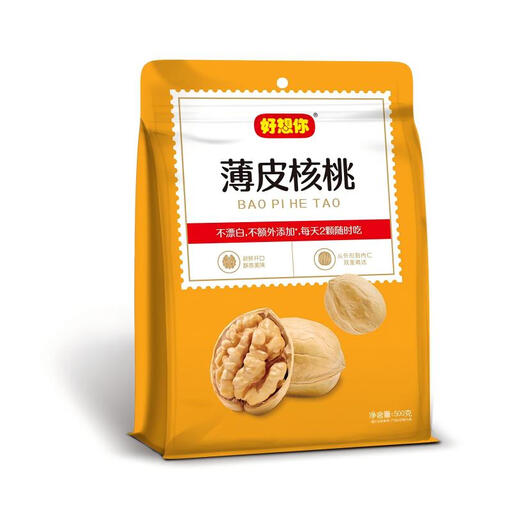
Haoxiangni thin-shell walnuts, 500 g in eight packs
A good choice if you prefer walnuts for an afternoon snack and would like to split the contents across several packs.
The title states that the total weight is 500 g across eight packs. The walnuts are in their shells and need to be cracked before eating; the way they’re divided into packs doesn’t tell you whether they’re lower in fat than a similar standard product.
View on Joybuy
Frequently asked questions
Are reduced-fat nuts automatically a better choice for the afternoon?
No, the label alone doesn’t tell you that. Compare fat and energy per 100 g with a similar standard product, and take into account how much you actually plan to eat.
Are unsalted nuts also low in fat?
No, ‘unsalted’ doesn’t describe the fat content. EDEKA states that its roasted, unsalted peanut kernels contain 51 g of fat and 0.01 g of salt per 100 g. Check both figures separately when making your choice.
How do I check the salt content of a nut mix?
Compare the salt information per 100 g and read the ingredients list. EDEKA states that its roasted, salted nut mix contains 0.7 g of salt per 100 g; the word ‘roasted’ alone tells you nothing about the salt content.
What should I check before buying if I have a nut allergy?
Check the ingredients and allergen information on each individual pack. Mixes may contain several types of nuts, and you can’t reliably tell the full list of ingredients from the name or front of the pack alone.
How should I store opened nuts?
Follow the product’s storage instructions and check the condition of the nuts after opening. For opened, chopped nuts, the Verbraucherzentrale recommends storing them in the fridge and gives a storage period of around four weeks; throw away any mouldy nuts.


