If you’re choosing nuts for a late-night snack specifically because you want a lower fat content, check the nutritional information and compare them with a similar product. ‘Roasted without oil’ describes the roasting method, not the overall fat content. Unsalted varieties and setting aside a portion in advance may suit other snacking preferences, but neither means the nuts are lower in fat.
Who is this distinction important for?
People keeping an eye on fat content
If you’re specifically looking to reduce your fat intake, read roasting descriptions and nutritional information separately. REWE lists 51 g of fat per 100 g for pistachios roasted without added oil, and 77 g of fat per 100 g for macadamias roasted in the same way.
People who prefer unsalted snacks
If you’re looking for a less salty nut snack, try unsalted varieties. The ingredients list and information on the specific pack will show whether, for example, oil has been added and which allergen warnings apply.
People who want to portion out their snack
If you’d rather not eat straight from the pack, you can put the amount you want into a bowl beforehand. Serving information can help you relate the nutritional values to the amount you actually eat.
What should you look for when buying?
First decide what matters most to you: a demonstrably lower fat content, unsalted ingredients or the size of your snack portion. The same information on a pack won’t answer all three questions.
| What matters to you |
What to check when buying |
Who it matters most to |
| Fat content |
Check the fat per 100 g and per planned portion. If a product claims to have reduced fat, look for a clear comparison with a similar product. |
I want to choose a different snack because of its fat content, so I need more than a note about how it was roasted. Around 42% of consumers would make a clearly evidenced fat reduction their main purchase consideration. |
| Salt and ingredients |
Read the salt information and ingredients list for the specific variety, especially for roasted or flavoured products. |
I’m looking for unsalted nuts for a late-night snack and want to know which ingredients have been added. For around 33% of consumers, this would be the main consideration. |
| Portion size |
Relate the nutritional information to the amount you plan to eat and check whether the pack is easy to portion out. |
I want to set aside an amount before eating, rather than picking at the pack as I go. Around 25% of consumers would put portion control first. |
Common misconceptions
-
Assuming ‘roasted without oil’ means low in fat
This description may refer only to the roasting process. REWE lists 51 g of fat per 100 g for pistachios roasted this way and 77 g per 100 g for macadamias.
Check the fat information in the nutrition table. If the product claims to have reduced fat, also check what it’s being compared with.
-
Equating ‘unsalted’ with ‘reduced-fat’
According to REWE’s product information, its unsalted ja! nut kernel mix contains 58 g of fat per 100 g. The salt information answers a different question from the fat information.
Use ‘unsalted’ to guide your choice of salt level, and check the nutrition table for fat content.
-
Overlooking portion size when snacking
REWE lists 17.4 g of fat in a 30 g serving of its unsalted ja! nut kernel mix.
Set aside the portion you want before eating and use that amount when checking the nutritional information.
-
Reading only the online description
The ingredients and allergen warnings for the specific variety matter. EDEKA also points out that online product information may differ from the packaging.
Before eating, check the ingredients list and allergen warnings on the pack, especially if you need to avoid particular ingredients.
Brands to help you choose
REWE / ja!
REWE lists, among other products, roasted unsalted nut mixes from the ja! brand.
- For its ja! nut kernel mix, REWE gives fat values per 100 g and per 30 g serving.
- According to REWE, the mix contains 58 g of fat per 100 g; ‘unsalted’ does not mean reduced-fat.
EDEKA Herzstücke / EDEKA Bio
EDEKA sells roasted peanuts in both unsalted and salted varieties.
- The ingredients list for each variety shows whether oil or salt has been added.
- According to EDEKA, its EDEKA Herzstücke unsalted peanuts contain sunflower oil. Always check the labelling on the specific pack when choosing.
Alesto / Lidl
Lidl’s Alesto range includes both plain nuts and seasoned party snacks.
- If you want a simple snack, you can look specifically for plain varieties.
- ‘Plain’ on its own says nothing about whether the fat content has been reduced.
ALDI SÜD
ALDI SÜD sells, among other products, roasted unsalted peanuts.
- For the Ültje product listed, ALDI SÜD states that it contains 0.05 g of salt per 100 g.
- The same product is listed as containing 52 g of fat per 100 g, so the unsalted variety is not evidence of reduced fat.
Seeberger
Seeberger offers nuts without salt, as well as salted and seasoned varieties.
- The range lets you choose according to salt content and preparation.
- You can only tell whether a particular pack suits your fat goals by checking its nutritional information.
Chestnut kernels at Joybuy
The Joybuy selection below features chestnut kernels as a different kind of snack. If you’re specifically looking to buy reduced-fat nuts, check separately for a relevant claim and a comparison with a similar product.
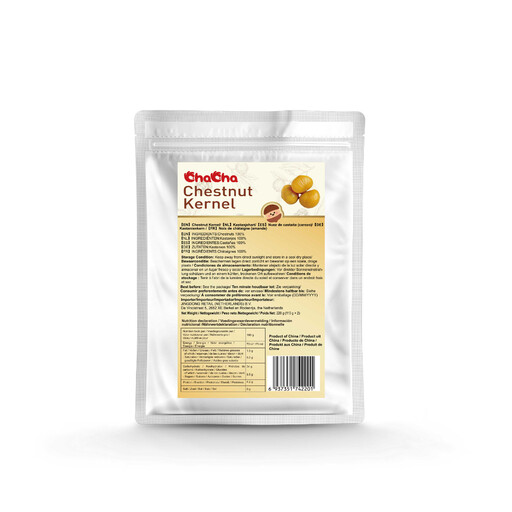 Image unavailable
ChaCha Chestnut Kernels 220 g
If chestnut kernels appeal as a late-night snack, compare the nutritional information on the pack with that of similar products. The pack contains 220 g; for a smaller snack, you can set aside a portion before eating.
View at Joybuy
Frequently asked questions
Does ‘roasted without fat or oil’ also mean ‘reduced-fat’?
No. The roasting description doesn’t tell you the overall fat content of the nuts. REWE lists 51 g of fat per 100 g for pistachios roasted without added oil and 77 g per 100 g for macadamias roasted in the same way. To check a reduced-fat claim, look at the nutritional information and compare the product with something similar.
How can I judge a portion of nuts for a late-night snack?
First set aside the amount you want to eat, then use that amount when checking the nutritional information. REWE lists 17.4 g of fat per 30 g serving of its unsalted ja! nut kernel mix; the per-100 g figure alone doesn’t describe your portion.
What should I look out for if I have allergies?
Before eating a nut product, check the ingredients list and allergen warnings on the specific pack. Don’t rely solely on a range description or an online product page.
What if the online information differs from the packaging?
When you buy the product, check the ingredients and nutritional information on the actual pack. EDEKA notes that the information on its product pages may differ from the packaging.


