If you’re specifically looking to buy reduced-fat nuts, compare the fat and energy per 100 g with a clearly identified alternative; the product name alone isn’t enough to make that decision. If your main concern is how much you eat when snacking, you could also portion out a small amount of regular nuts in advance. Unsalted nuts aren’t automatically lower in fat.
Who is this comparison relevant to?
People who want to portion out their snacks
You don’t want to cut nuts out, but you do want to keep track of how much you actually eat. The German Nutrition Society recommends a small handful of nuts a day as a guide. When shopping, what matters is whether you can easily take out a suitable portion.
People looking to compare fat content
You’re looking for an option with demonstrably less fat and energy than a specific alternative. To check this, look at the nutritional information for each product, not descriptions such as ‘roasted’ or ‘unsalted’.
People who check salt and ingredients
You want to avoid added salt or choose a particular recipe. The salt and ingredients information can help you decide, but on its own it tells you nothing about whether the fat content is lower.
What should you look for when buying?
First decide whether you’re looking for a smaller portion of nuts, a verifiable comparison of fat content or, above all, a different recipe. Then compare the relevant information on the packs.
| Criteria |
What to check |
Who it matters to |
| Portion and energy |
Check the energy per 100 g and for the amount you actually plan to eat. See whether you can portion it out in advance. |
When I snack on nuts, I don’t want to take more than I planned. Around 45% of consumers prioritise keeping their snack portions in check. |
| Fat and energy comparison |
Compare fat in g and energy in kcal per 100 g with a clearly identified alternative. |
I only want to choose a different type of nut if there’s a measurable difference. For around 36% of consumers, reducing fat and energy is the top priority. |
| Salt and recipe |
Check the salt per 100 g and the ingredients list for the specific variety. |
If I want to avoid added salt, the ingredients matter more to me than a lower fat content. Around 19% of consumers prioritise this. |
Common pitfalls when buying nuts
-
Assuming ‘unsalted’ means ‘reduced-fat’
The salt content doesn’t tell you about fat or energy. Ültje says its roasted, unsalted peanuts contain 52 g of fat and 626 kcal per 100 g.
If you’re aiming to reduce fat, compare the nutritional information per 100 g with a suitable alternative, and check your planned portion too.
-
Eating straight from the pack
Without deciding on a portion beforehand, it’s harder to factor the energy in your snack into your overall plan. The consumer advice centre recommends small portions of nuts as a possible snack between meals.
Measure out the amount you want before eating and include it in your total energy intake.
-
Taking ‘lighter’ wording at face value
On its own, this kind of description doesn’t show how the fat and energy compare with a specific product.
Check the ingredients list and both nutrition tables before choosing another variety on the assumption that it contains less fat or energy.
Useful brands to consider
Seeberger
Seeberger offers nuts, kernels and mixes with different recipes, making it a useful brand to consider when comparing specific nut products.
- According to Seeberger, its nut kernel mix contains hazelnuts, almonds, cashews and walnuts.
- The recipe alone doesn’t prove that it contains less fat or energy than another nut mix.
REWE
REWE is a retailer with an online range of nuts. Its selection can be a starting point for comparing different types of nuts and recipes.
- You can compare different nut products in its range.
- To see whether a specific variety meets your fat-reduction goal, compare its nutritional information with that of a suitable alternative.
Ültje
Ültje offers roasted, unsalted peanuts, among other products. They’re a good example of why salt and fat content need to be considered separately.
- Ültje provides nutritional information per 100 g for its roasted, unsalted peanuts.
- According to Ültje, this variety contains 52 g of fat and 626 kcal per 100 g; ‘unsalted’ doesn’t mean ‘reduced-fat’.
Joybuy products: chestnuts as a snack alternative
This selection features chestnut kernels for anyone considering an alternative to a classic nut kernel snack. To compare fat and energy, check the latest nutritional information and the portion you actually plan to eat.
 No image available
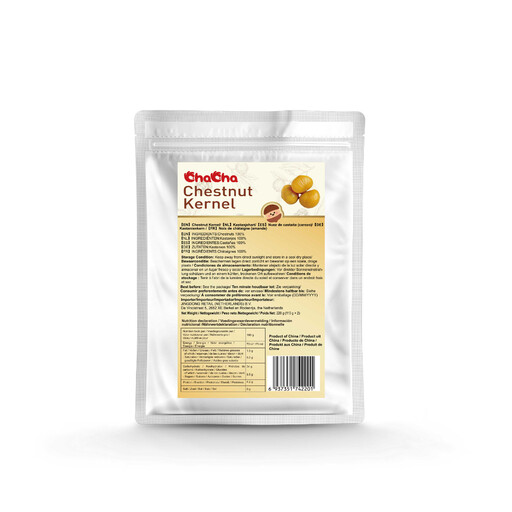
ChaCha chestnut kernels, 220 g
A chestnut alternative if you’re looking to try something other than classic nut kernels. The pack contains 220 g; for a portion comparison, decide how much you actually plan to eat.
View at Joybuy
Frequently asked questions
Are reduced-fat nuts automatically a better choice for weight management?
No, the product description alone doesn’t determine that. The consumer advice centre explains that, to lose weight, your energy intake needs to remain below your energy expenditure over time. So compare energy as well as fat per 100 g and for the portion you actually plan to eat.
How many nuts can I use as a guide?
The German Nutrition Society recommends a small handful of nuts a day as a general guide. It’s easier to keep track of how much you actually snack on if you portion it out beforehand.
Are unsalted or roasted nuts automatically reduced-fat?
No, these descriptions don’t indicate reduced fat or energy. Check the nutritional information per 100 g for the specific variety and compare it with a suitable alternative.
What should I check before buying if I have a nut allergy?
Check the allergen labelling and any warnings about possible traces on the current pack of the product you’re considering. Don’t rely on information from another variety or pack size.


