People buying snacks for the team
You want to choose savoury snacks with a specific fat-reduction claim, without limiting the tin to just one flavour.


For a shared office snack tin, you can combine separately served potato crisps, chickpea crisps or peanut flips labelled as reduced-fat. The fat claims may be based on different comparison products, depending on the variety. So, before putting snacks out for the team, also check energy and salt per 100 g, as well as the ingredients and allergen information.
You want to choose savoury snacks with a specific fat-reduction claim, without limiting the tin to just one flavour.
You don’t want to treat “less fat” as an overall judgement of a snack, so you also compare energy and salt per 100 g.
You’re putting out snacks for several colleagues and want to be able to match ingredients, allergens and “may contain” information to each variety.
Start by choosing varieties with a fat comparison that works for you. For a shared snack tin, the nutritional information for each variety and clear allergen details are also important.
| Criterion | What to check | Who it matters to |
|---|---|---|
| Fat comparison | Check which snack the fat content is compared with, and under what conditions. Claims based on different comparisons don’t provide a direct ranking of the products. | If I specifically want less fat than in a conventional comparison snack, I need a clear claim rather than just the word “light”. Around 33% of consumers would put this fat comparison first. |
| Energy and salt | Compare the energy, fat and salt information per 100 g on the current packs. | When the tin contains several varieties, I don’t want to reach for one based solely on a fat claim and overlook its energy or salt content. For around 27% of consumers, comparing nutritional values would be the main concern. |
| Allergens | Read the ingredients lists and “may contain” information for each variety, and keep the details accessible when serving them separately. | With an open-access snack tin, I need to be able to tell which ingredients each snack contains. Around 20% of consumers would want to clarify the ingredients and allergens first. |
| Variety and pack size | Choose different types of snacks and check the pack size and storage instructions if you plan to refill the tin in portions. | I want to be able to switch between crunchy and lighter-textured snacks without losing track of what’s in the shared tin. Variety would be the most important criterion for around 20% of consumers. |
The Verbraucherzentrale NRW points out that a lower fat content doesn’t automatically mean a correspondingly lower energy content.
Compare fat, energy and salt per 100 g, rather than looking only at the fat claim on the front of the pack.
Peanut flips and multi-component mixes may contain ingredients or traces that matter to colleagues. Once snacks are mixed together, it can be harder to match individual items to their packaging.
Serve the varieties separately and keep the relevant ingredients information accessible.
The Verbraucherzentrale NRW also draws attention to the salt content of pulses-based crisps. REWE lists 1.8 g of salt per 100 g for funny-frisch Linsen Chips Oriental.
Compare the salt content of the specific variety with that of the other snacks you’re considering for the tin.
The term “snack mix” says nothing about fat reduction. EDEKA lists 16.2 g of fat and 2.9 g of salt per 100 g for its GUT&GÜNSTIG Snack-Mix.
Check the claims on the specific mix, or put together a selection of different varieties with clear labels.
The product lines considered include Ofen Chips, popchips and Linsen Chips.
The varieties considered offer potato crisps and chickpea crisps as different options for the tin.
Flips softig+leicht are a peanut flip option if you’re looking for a different texture alongside crisps.
Chips aus dem Ofen Gesalzen is another potato crisp variety considered.
The Snack-Mix is an example of a classic multi-component mix, not a reduced-fat variety.
These savoury snack options can add different flavours and textures to your office snack tin. Check the current labelling for each variety before serving it alongside other snacks.
 No image available
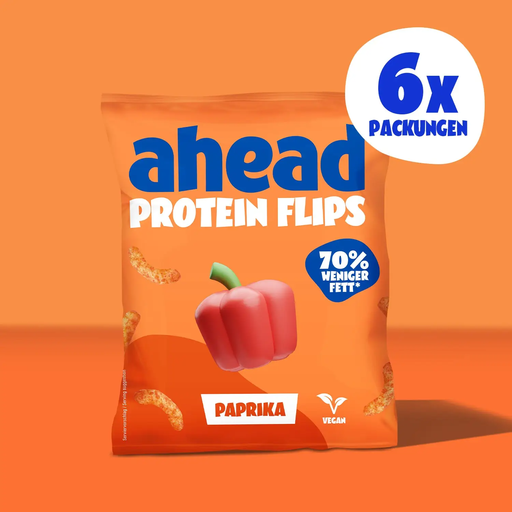
A paprika-flavoured flip option if you want to serve snacks separately at the office. The tray contains six 50 g bags. Check the pack’s nutritional information and ingredients when comparing it with other varieties.
 No image available
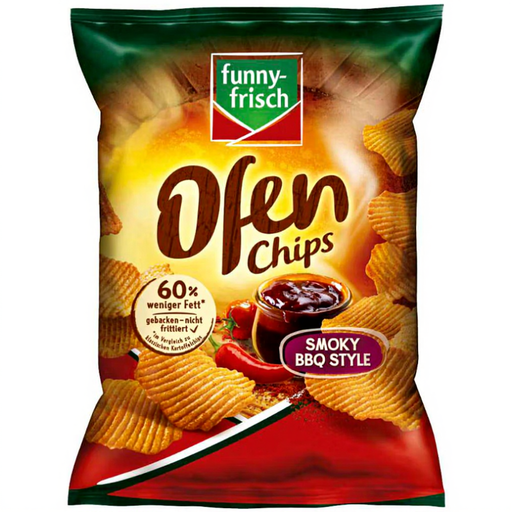
An oven-baked crisp option for a tin that includes potato crisps. The pack contains 115 g. Check the current packaging to see whether a fat-reduction claim applies to this specific variety, rather than assuming a claim for the product line covers it.
 No image available
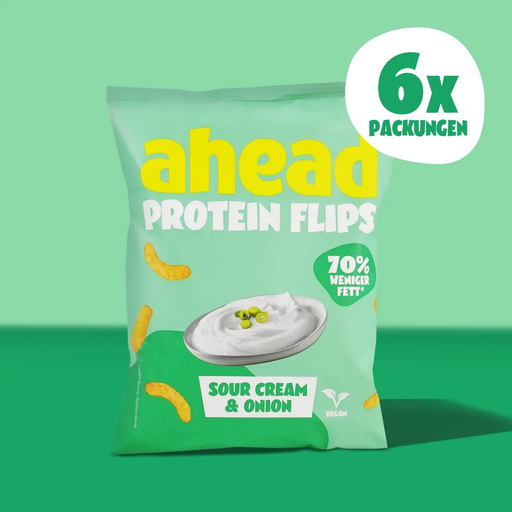
Another savoury option if you want to add something beyond potato crisps to the office snack tin. Compare fat, energy and salt using the current nutritional information. If a fat-reduction claim is made, also check what it’s compared with and whether the claim applies to this variety.
No. A lower fat content doesn’t automatically mean a correspondingly lower energy content. The Verbraucherzentrale NRW points this out, so compare energy, fat and salt per 100 g on the packs of the varieties you’re choosing between.
Not just because they’re made from pulses. The Verbraucherzentrale NRW highlights the salt content of these snacks in particular. Choose based on the nutritional information, ingredients and flavour you want from the specific variety.
Serve different varieties separately and keep their original packaging or clearly labelled ingredients information accessible. Before putting snacks out, check both the listed allergenic ingredients and any “may contain” warnings.
Follow the storage instructions on each pack and reseal any opened bags. For Wurzener Flips softig+leicht, the product information recommends storing them in a cool, dry place and using a bag clip after opening.
No. The term “snack mix” doesn’t prove that the product has reduced fat. EDEKA lists 16.2 g of fat and 2.9 g of salt per 100 g for its GUT&GÜNSTIG Snack-Mix. Check the specific product labelling and the basis for any comparison claim on every mix.