A dry, packaged wafer could be a good choice for your journey, as long as you check the sugar information and serving size before you buy. “Reduced sugar” means less sugar than a comparison product; it doesn’t automatically mean low in sugar or calories. If you choose wafers with sweeteners, check the ingredients and consumption advice too. The rules for creamy accompaniments in hand luggage differ from those for dry wafers.
Who should take care when choosing?
If you want a clear reduction in sugar
If you’re looking to cut down on sugar, compare the specific claim with the nutritional information per 100 g and for your portion. The consumer advice centre points out that phrases such as “less sweet” tell you nothing about the actual sugar content.
If you need a snack for your hand luggage
For the wait at the airport and your flight, you’ll want a dry wafer you can eat without cutlery. If you’re bringing syrup or a creamy spread, you’ll also need to follow the rules on liquids and similar consistencies explained by the German Federal Police.
If you need to check ingredients and consumption advice carefully
If you have allergies or want to avoid certain sweeteners, the sugar claim on the front of the pack isn’t enough. Check the current ingredients and allergen information, as well as any consumption advice on the specific pack.
What should you look for when buying?
First, decide whether you’re looking for a stated reduction in sugar or a product with no added sugar. Then compare the nutritional values for your portion and check that the packaging and ingredients are suitable for your journey.
| Criteria |
What to check before buying |
Who it matters most to |
| Sugar information |
The comparison claim for “reduced sugar”, plus “of which sugars” per 100 g and per portion eaten. |
If I’m specifically looking to eat less sugar, I need a clear figure rather than simply a less sweet taste. Sugar reduction is likely to be the main reason for buying for around 45% of consumers. |
| Taking it with you |
Pack and portion format; if taking a dip or spread separately, check the hand luggage rules. |
I want a snack I can eat at the gate without cutlery and stow in my hand luggage. For around 28% of consumers, being able to take it along easily is likely to come first. |
| Ingredients and suitability |
Ingredients and allergen information, plus details of sweeteners and recommended amounts to eat. |
If I react to certain ingredients or want to avoid sweeteners, the specific recipe needs to suit me. Checking the ingredients is likely to be the most important criterion for around 27% of consumers. |
Common misconceptions
-
Assuming “reduced sugar” means “sugar-free”
A sugar reduction is a comparison with another product. A wafer labelled “30% less sugar” can still contain sugar, as the consumer advice centre explains.
Compare “of which sugars” and the energy content per 100 g, as well as for the portion you plan to take with you.
-
Overlooking sweeteners before you travel
Damhert lists polyols in its coffee wafers and warns that excessive consumption may have a laxative effect. A significant reduction in sugar doesn’t mean you can ignore consumption advice.
If you’re trying an unfamiliar wafer, read the ingredients and advice on the pack before adding it to your travel-day plans.
-
Treating dry wafers and creamy accompaniments the same way
At security, the German Federal Police treats items including pastes and spreads as liquids or similar consistencies. A spread you bring with you is therefore subject to different requirements from a dry wafer.
Before you leave, check the hand luggage rules for any dip, syrup or spread you want to take separately.
-
Ignoring allergen information because of a sugar claim
Depending on the product, the Manner and Damhert wafers described contain ingredients such as wheat, milk, egg, soya or hazelnuts. A claim about sugar is no substitute for checking the recipe.
Check the current ingredients and allergen information on every pack you buy, even if you already know the brand.
Brands to help you choose
Manner
Neapolitan wholegrain wafers are a crunchy wafer option with a sugar reduction quantified by the manufacturer compared with its classic version.
- Manner describes its wholegrain wafers as “100% wholegrain” and containing “30% less sugar” than classic Manner wafers.
- The recipe still contains sugar and glucose syrup. Also check the labelling for cereals containing gluten, hazelnuts and soya, and choose a pack size that’s suitable for your journey.
Damhert
These coffee wafers are for shoppers who want to check a clearly stated sugar reduction and take a recipe with sweeteners into account.
- Damhert says its coffee wafers have 92% less sugar than a conventionally sweetened comparison product and contain 3.0 g of sugar per 100 g.
- The manufacturer says they contain polyols, which may have a laxative effect if consumed in excess. Check for wheat, milk and egg when reviewing the allergen information.
NEOH
NEOH offers wafers labelled “no added sugar”. This answers a different question from a comparison claim such as “less sugar”.
- NEOH explains that its wafers may still contain naturally occurring sugars from the ingredients, despite being labelled “no added sugar”.
- Check the “of which sugars” value, ingredients and portion size for the wafer you choose; “no added sugar” does not mean “sugar-free”.
REWE
REWE is one place to look for packaged wafers; whether a product suits your approach to sugar depends on the individual item.
- The REWE range includes various wafers and wafer-based bakes, including soft wafers from the REWE frei von range.
- A range overview is no substitute for checking the sugar information, ingredients and portion size on the pack you choose.
Wafers at Joybuy
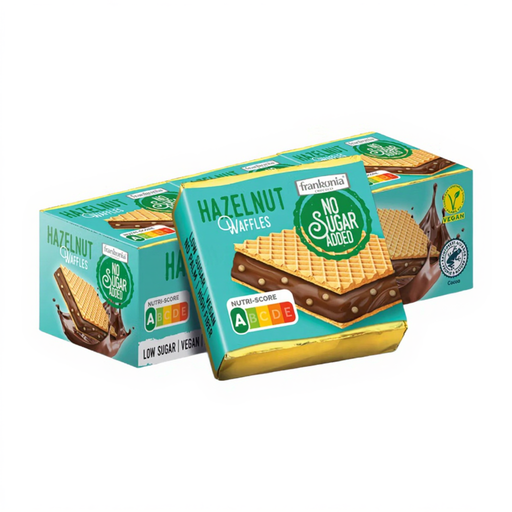
This wafer is an option if you’re looking for a product labelled “no added sugar” to take with you. Check the specific pack to make sure its sugar content, ingredients and packaging suit your travel day.
 No image available
Frankonia No Sugar Added Hazelnut Wafers 9x19.4g
A handy option if you’re looking for a hazelnut wafer labelled “no added sugar”. According to the product name, the pack contains nine wafers weighing 19.4 g each. Before you buy, check “of which sugars” per 100 g and per wafer, along with the ingredients, allergens and consumption advice. The product description warns of a possible laxative effect if consumed in excess.
View at Joybuy
Frequently asked questions
What does “reduced sugar” mean on wafers?
In Germany, “reduced sugar” means at least 30% less sugar than a comparable food; the energy content must also be the same or lower. The consumer advice centre explains this with reference to EU rules. When choosing, it’s also important to check how much sugar the wafer contains per 100 g and per portion eaten.
Does “no added sugar” mean the same as sugar-free?
No. A wafer with no added sugar may still contain naturally occurring sugars from its ingredients, as NEOH explains for its wafers. So check the ingredients list and the “of which sugars” nutritional value on the specific pack.
Can I take a dry wafer in my hand luggage?
By its nature, a dry wafer isn’t a liquid or similar product covered by the special hand luggage rules explained by the German Federal Police. Separate syrup, dip or creamy spread may be covered by these rules; if in doubt, security staff will make the final decision at the checkpoint.
How should I store wafers until my travel day?
Follow the storage instructions on the pack you’ve bought. For its Neapolitan wholegrain wafers, Manner recommends storing them in a dry place at room temperature; other wafers should be stored according to their own packaging instructions.


