Consumers with a specific sugar target
You compare the stated sugar content per 100 g and check the ingredients to decide whether sweeteners or sugar alcohols are suitable for you.


If you’re looking for sweet wafer snacks with less sugar for your weekly shop, start by comparing the sugar content per 100 g and checking the ingredients. ‘No added sugar’ on its own doesn’t tell you the total sugar content. Then check the sweeteners, portion size and where you can buy the product. Plain cereal wafers can also be low in sugar, but they’re not a taste-for-taste replacement for filled sweet wafers.
You compare the stated sugar content per 100 g and check the ingredients to decide whether sweeteners or sugar alcohols are suitable for you.
You want to know what a wafer is sweetened with, and take portion size and any warnings into account when a product contains sugar alcohols.
You’re planning to stock up on wafers and check not only the nutritional information, but also allergens, any gluten-free labelling and where the specific product is available.
First, distinguish sweet, often filled wafer snacks from plain cereal wafers. Then compare like with like using the nutritional information per 100 g, and check that the products suit your shopping plans.
| Criterion | What to check | Who is it important for? |
|---|---|---|
| Sugar content | Compare sugar per 100 g in similar types of wafer. For ‘reduced sugar’ products, also check what the comparison is based on. | If a low, easy-to-verify sugar content is my main priority, the information on the front of the pack isn’t enough. Around 42% of consumers put sugar content first. |
| Sweeteners and portion size | Check the ingredients list for sugar alcohols such as maltitol or isomalt, as well as the portion size and any warnings. | I want to know what my wafers are sweetened with before planning to have them regularly as a snack. This is a priority for around 33% of consumers. |
| Stocking up and ingredient requirements | Check where the specific product is available and, if needed, look for allergen information or explicit gluten-free labelling. | For my weekly shop, the wafers I choose need to meet my household’s requirements and be available to buy. This is the most important criterion for around 25% of consumers. |
Wafers with no added sugar can still contain naturally occurring sugars. According to Lebensmittelklarheit, products making this claim may also contain sweeteners or sugar substitutes.
Also check the sugar content per 100 g and the ingredients list on the pack you’re buying.
Zuckerfrei Store lists the Gullón wafers at 434 kcal and 22 g of fat per 100 g, and the Diablo chocolate wafers at 483 kcal and 27 g of fat per 100 g. A lower sugar content doesn’t tell you about these other nutritional values.
If you also want to compare energy and fat, use the same reference amount for every product and bear your usual portion in mind.
According to the Verbraucherzentrale, sugar substitutes can have a laxative effect when consumed in large quantities. The Gullón wafers contain maltitol and isomalt, while the Diablo wafers contain maltitol.
Check the ingredients and warnings before planning to stock up on a large quantity.
Zuckerfrei Store’s retailer pages listed the Gullón and Diablo wafers reviewed as out of stock. For your weekly shop, what matters is whether the specific product is available through your chosen way of shopping.
Check your local store or online shop’s range in advance. If you choose an alternative, check its sugar content and ingredients again.
Buying separately online also means placing an additional order.
The chocolate cream wafers reviewed are worth considering if you’re comparing products with very low stated sugar contents.
The chocolate-filled wafers reviewed can be assessed using their stated sugar and polyol content.
NEOH describes its wafers as having no added sugar and a recipe based on plant-based fibre.
BERTHA’S describes its butter and vanilla wafers as gluten-free and reduced-sugar.
This Joybuy selection includes plain spelt wafers and individually portioned hazelnut wafers with no added sugar. If you’re specifically looking for a sweet, filled wafer with a low sugar content, bear this difference in mind and compare the nutritional information on the specific packs.
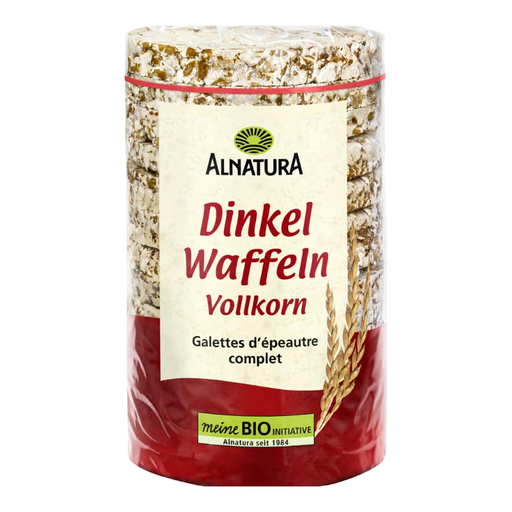 No image available
A store-cupboard option if you’re looking for plain cereal wafers rather than sweet, filled wafer snacks. The pack contains 100 g; spelt contains gluten.
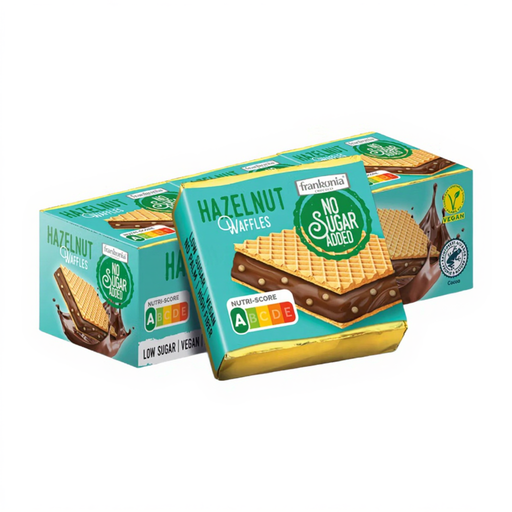 No image available
A portioned hazelnut wafer option if the ‘no added sugar’ claim matters to you. The pack contains nine wafers at 19.4 g each. To check whether they fit your sugar target, also compare the sugar content per 100 g and the ingredients list. The product description lists wheat, soya and hazelnuts, and warns of a possible laxative effect if consumed in excess.
No. The claim describes a reduction compared with a similar food, not the sugar content of the pack. Lebensmittelklarheit recommends checking the specific sugar content per 100 g.
No. ‘No added sugar’ doesn’t rule out naturally occurring sugars. According to Lebensmittelklarheit, sweeteners or sugar substitutes may also be present. The nutritional information per 100 g will show whether the wafers fit your sugar target.
Check the ingredients list, how much you eat and any warnings. The Verbraucherzentrale notes that sugar substitutes can have a laxative effect when consumed in large quantities.
Compare the nutritional information per 100 g and the ingredients lists of similar types of wafer. Sugar, energy and fat each tell you something different; no single figure replaces checking the ingredients and considering your portion size.