Shoppers keeping an eye on sugar
You’d like a sweet waffle before your workout and want to know how much sugar is in your portion. The nutritional information is a more reliable guide than a single claim on the front of the pack.


When choosing a waffle before a workout, don’t rely solely on claims such as ‘no refined sugar’ or ‘low carb’. Compare the sugar, carbohydrate and fat content for the amount you actually plan to eat, and check the ingredients. Before longer sessions, a very low-carb waffle may not fit as well with a planned carbohydrate intake.
You’d like a sweet waffle before your workout and want to know how much sugar is in your portion. The nutritional information is a more reliable guide than a single claim on the front of the pack.
For longer or more intense sessions, you’ll want to factor in the amount of carbohydrate in your snack. A low-carb waffle won’t necessarily do the job just because it contains less sugar.
If allergens, a particular diet or sweeteners matter to you, check the label on the specific product. Recipe examples and other varieties from the same brand are no substitute for checking the pack.
First, decide what portion size and type of snack will suit you before your session. Then compare the nutritional values for that exact portion and read the ingredients list.
| What matters to you | What to check | Who should pay particular attention |
|---|---|---|
| Sugar content | Compare ‘of which sugars’ per 100 g and for your portion; read the ingredients list too. | I’d like a sweet waffle, but don’t want to judge it solely by a ‘no refined sugar’ claim. For around 31% of shoppers, checking the sugar content comes first. |
| Carbohydrates | Check the carbohydrate content of the amount you’ll eat, taking into account the length of your session and how soon it starts. | Before a longer session, I want to know how much my snack contributes towards my planned carbohydrate intake. Around 25% of shoppers put this question first. |
| Ingredients and allergens | Check the specific pack for allergens, ‘may contain’ warnings and sweeteners. | If I need or want to avoid certain ingredients, the label on the individual waffle determines my choice. This is a priority for around 25% of shoppers. |
| Portion and type of snack | Compare the weight of each waffle and the nutritional values per portion; distinguish baked waffles from crunchy waffle alternatives. | When I’m on the go, I want to portion my snack easily and know whether to expect a sweet or savoury waffle. Around 19% of shoppers check this first. |
REWE’s banana waffle recipe uses ripe bananas for sweetness. So the wording alone doesn’t tell you the total sugar content of the finished portion.
Check ‘of which sugars’ and the ingredients, rather than just reading how the waffle is sweetened.
EDEKA’s low-carb recipe lists 14 g of carbohydrate and 75 g of fat per portion. A portion like this needs to fit your planned carbohydrate intake and the time until your workout.
First decide what you want the snack to do for you before that session, then compare the nutritional values.
Nutritional information per 100 g doesn’t automatically describe one waffle. The amount you eat may differ considerably, depending on the weight of each waffle.
Work out the sugar, carbohydrate and fat content for the number of waffles or the weight you plan to eat.
Ingredients vary between waffle types and recipes. The German Federal Institute for Risk Assessment points out that sweeteners must generally be listed in the ingredients.
Check the ingredients list, allergen information and ‘may contain’ warnings on the specific pack.
REWE offers a banana waffle recipe for shoppers who would like to bake their own before a workout.
EDEKA’s information lets you compare a classic sugar waffle with a low-carb recipe.
Lidl provides a low-fat waffle recipe, with portion values you can use to compare recipes.
Lotus Bakeries distinguishes Biscoff biscuits from the brand’s waffle specialities.
Here you’ll find two crunchy waffle alternatives and a sweet hazelnut waffle. The product names alone won’t tell you how much sugar and carbohydrate are in the portion you eat.
 Image unavailable
For shoppers looking for a savoury, crunchy alternative to a sweet baked waffle.
The pack contains 100 g. Check the nutritional information against the amount you plan to eat.
If you have a soya allergy, take particular care to check the current pack’s labelling.
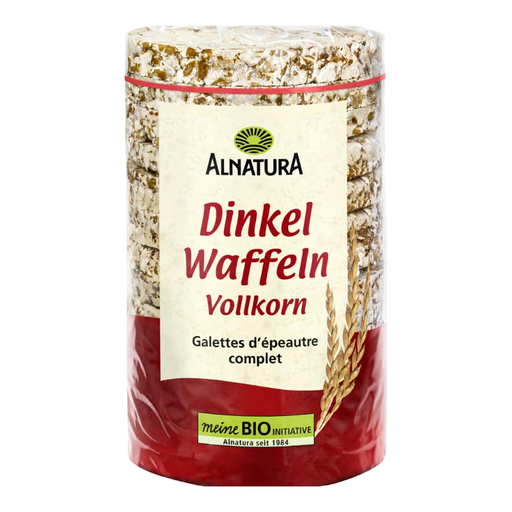 Image unavailable
For shoppers who’d like to enjoy a simple, crunchy waffle on its own or with a topping.
The pack contains 100 g; when checking your carbohydrate intake before a workout, what matters is the portion you actually eat.
Spelt is a type of wheat. Check the allergen information if wheat or gluten is relevant to you.
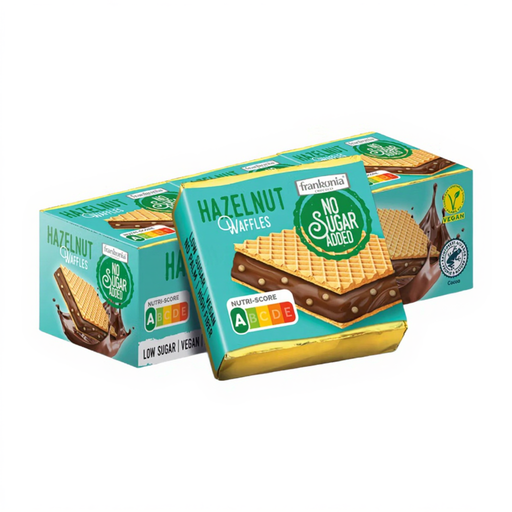 Image unavailable
For shoppers considering a sweet hazelnut wafer in individually portioned pieces.
The product name states that the pack contains nine wafers, each weighing 19.4 g. ‘No Sugar Added’ doesn’t tell you how much sugar or carbohydrate is in each one; check the nutritional information on the pack.
Check the allergen information and serving advice on the packaging.
No. ‘Reduced sugar’ describes a comparison, not the absence of sugar. The Federation of German Consumer Organisations explains that the claim means a sugar content at least 30% lower than that of a comparable food; the energy content must be the same or lower. For your portion, the ‘of which sugars’ figure still matters.
Not necessarily, if you’re planning to eat a specific amount of carbohydrate before your session. The Gatorade Sports Science Institute identifies carbohydrate intake in the hours beforehand as a relevant planning factor for endurance exercise lasting more than 60 minutes. So compare the carbohydrate content of the portion you’ll actually eat with your plan, rather than assuming it’s suitable because it’s labelled ‘low carb’.
Read the ingredients list on the specific pack. The German Federal Institute for Risk Assessment says sweeteners must generally be listed there. A claim on the front of the pack is no substitute for the full ingredients list.
Check the allergen information and ‘may contain’ warnings on each pack, as ingredients vary from one waffle to another. EDEKA’s description of the Liège sugar waffle lists wheat, egg and soya, among other ingredients, and notes that it may contain traces of milk; this information doesn’t apply to all waffles.