Conference organisers
For breaks and self-service, they need a serving format with portions and ingredient information that can be planned in advance.


For a self-service conference, individually portioned waffle snacks can be a good option, provided guests can easily access the sugar content, ingredients and any information on the packaging. Freshly made waffles are better suited to a staffed serving station with clear ingredient information. Neither “reduced sugar” nor “no added sugar” means you can skip checking the sugar per serving, allergens and any warnings about sweeteners.
For breaks and self-service, they need a serving format with portions and ingredient information that can be planned in advance.
They compare the stated sugar per portion and distinguish between claims such as “reduced sugar” and “no added sugar”.
They check the specific variety for allergens, ingredients and sweetener warnings, and arrange a separate alternative where needed.
First decide whether the waffles will be served packaged or freshly made. Then compare the nutritional information and ingredients of the specific varieties, based on the planned serving size.
| Criterion | What to check | Who it matters to |
|---|---|---|
| Sugar information | Compare sugar per 100 g and per serving; for “reduced sugar” claims, also check what the product is being compared with. | I want to know how much sugar is served with each waffle, rather than relying solely on the front of the pack. For around 36% of consumers, this transparency is the main priority. |
| Ingredients and suitability | Check the specific variety for allergens, sweeteners and warnings about excessive consumption. | If guests need to avoid certain ingredients, I want to offer them a clearly labelled selection they can trust. Around 29% of consumers put this first. |
| Portioning and serving | For ready-made products, check the pack and portion format; for fresh waffles, plan for equipment, preparation time and staffed service. | During a short conference break, waffles should be easy to serve without lengthy portioning. For about 21% of consumers, this takes priority. |
| Special dietary requirements | Confirm any required feature, such as “gluten-free”, separately, and check the sugar content and other ingredients independently. | If a guest specifically needs a gluten-free option, I want to provide it separately without calling it reduced sugar. About 14% of consumers prioritise this kind of alternative. |
A comparative claim does not tell you how much sugar is in the waffle being served. The German consumer advice centre also recommends considering such claims alongside the nutritional information.
Compare sugar per 100 g and per portion; don’t treat a comparative claim as a general statement about the buffet.
A variety with a low stated sugar content may still contain ingredients that are unsuitable for some guests. The Federal Office of Consumer Protection and Food Safety says that important allergens must be highlighted in the ingredients list on packaged foods.
Have the ingredient and allergen information for every variety you buy available where it is served.
The German consumer advice centre points out that sugar substitutes can have a laxative effect in large quantities. Some waffle manufacturers also include relevant warnings on their products.
Check the packaging and don’t serve waffles containing polyols without making the ingredient information easy to see.
“Gluten-free” describes a different product characteristic from its sugar content. BERTHA’S states that its gluten-free butter and vanilla waffle contains 22.0 g of sugar per 100 g.
Assess special dietary requirements and nutritional information separately, and check the ingredients and any may-contain warnings on the current packaging.
The examples below relate to specific waffles or a recipe, not to the providers’ full ranges.
Individually portioned waffle snacks may work well for a self-service break.
The vanilla waffles are an example of a product specifically labelled as reduced sugar.
The butter and vanilla waffle may be suitable as a separate option when a specifically gluten-free product is needed.
The quark waffle recipe is an option for a staffed preparation area instead of a ready-packaged snack.
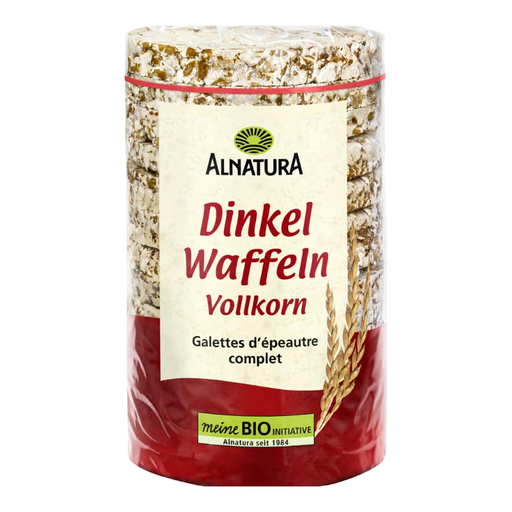
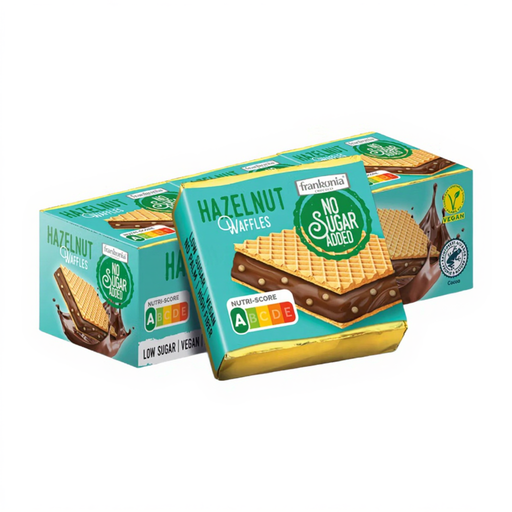
These two products offer different starting points for conference planning: a pack of spelt waffles and hazelnut waffles labelled “no added sugar”. For both, check the current nutritional table and serving format before deciding on portions.
 No image available
The 100 g pack may suit a conference break if you want to decide on the serving size yourself.
Check the sugar per 100 g and per serving, the gluten information and the pack format.
 No image available
Frankonia waffles may suit your conference if you’re specifically looking for a no-added-sugar option; this does not mean they are “sugar-free”.
The pack contains nine waffles, each weighing 19.4 g. Check the sugar per waffle, the information about wheat, soya and hazelnuts, the warning about excessive consumption, and whether the waffles are individually wrapped.
“Reduced sugar” is a comparative claim and does not mean “sugar-free”. When choosing catering options, the German consumer advice centre recommends checking the stated sugar per portion and what the claim is based on.
No. Ingredients may contain naturally occurring sugars. For example, NEOH states that its Hazelnut Crunch waffle, labelled “no added sugar”, contains 1.1 g of sugar per 21 g portion.
Check the ingredient information for each specific variety before serving it to guests. The Federal Office of Consumer Protection and Food Safety explains that packaged foods must list the 14 main substances or products that can cause allergies or intolerances in the ingredients list. For freshly made waffles, check the ingredients with the caterer before serving.
According to the German consumer advice centre, sugar substitutes can have a laxative effect in large quantities. For waffles containing them, check the ingredients and packaging warnings; Damhert specifically warns against excessive consumption of its vanilla waffles.