Organisers with a clear sugar-reduction goal
If you’re looking for sweet waffles for a meeting, compare the exact wording on the pack and the ‘of which sugars’ figure per 100 g, rather than relying on a product name that simply sounds appealing.


Reduced-sugar waffles can work well for a meeting if the actual sugar content, ingredients and serving style suit your group. Compare the ‘of which sugars’ figure per 100 g: ‘no added sugar’ does not mean sugar-free, and a percentage reduction alone tells you little about how much sugar remains. If you’re sharing snacks, it’s also important to check allergens and sweetener warnings.
If you’re looking for sweet waffles for a meeting, compare the exact wording on the pack and the ‘of which sugars’ figure per 100 g, rather than relying on a product name that simply sounds appealing.
If anyone attending needs to avoid certain ingredients, the allergen information on the pack you buy is essential. For the waffles considered here, wheat, nuts, milk, egg and soya may be particularly relevant.
If you’re arranging refreshments at short notice, check not only the product details but also whether the flavour you want is available where you shop. For example, REWE stocks Manner Wholegrain Neapolitan wafers; availability at your local store should be checked separately.
Start by checking the sugar content and type of product, then look at the ingredients and allergens. Only then can you decide which flavour and pack size will work for your planned serving.
| Criteria | What to check | Who it matters to |
|---|---|---|
| Sugar content | Compare the ‘of which sugars’ figure per 100 g and check what a claim such as ‘less sugar’ refers to. Manner says its Wholegrain Wafers contain 30% less sugar than the classic Manner wafer; REWE lists 26 g of sugar per 100 g for its Wholegrain Neapolitan wafers. | If I want to offer less sugar specifically, I need a clear comparison rather than just a headline claim. Around 36% of consumers would make sugar content a priority when buying. |
| Ingredients and suitability | Check the ingredients, highlighted allergens, may-contain warnings and sweetener information on the specific pack. | If the group has different dietary requirements, I want to avoid choosing a waffle that some attendees can’t eat. That’s why around 29% of consumers would prioritise checking the ingredients. |
| Serving and flavour | Choose a flavour and pack size to suit the group; check in advance whether the waffles can be served as they are. | If snacks are available during the meeting, they should taste good and be easy to serve. Around 21% of consumers would consider this first when choosing. |
| Availability | Check whether the flavour you want is available where you’re shopping, and plan how many packs you’ll need. | When there’s little time to prepare, I need a flavour I can actually get for the meeting. Availability would be the main criterion for around 14% of consumers. |
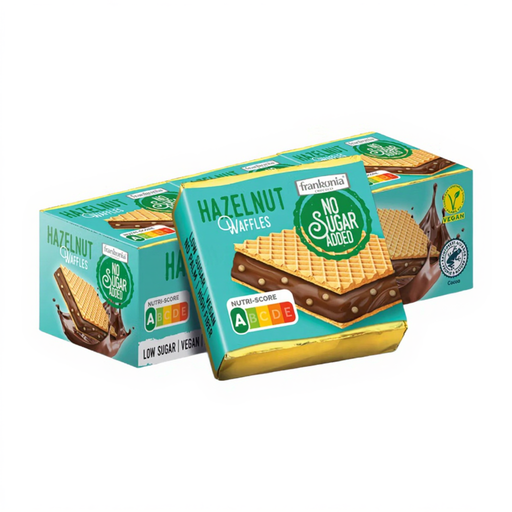
Frankonia labels its Hazelnut Crisp Waffles as a product with no added sugar, yet they contain 3.0 g of sugar per 100 g. So the wording is no substitute for checking the nutritional information.
Read the exact information on the pack and compare the ‘of which sugars’ figure per 100 g when making your choice.
For the varieties considered here, Frankonia and Damhert both warn that excessive consumption may have a laxative effect. People in a larger group may have different levels of tolerance.
Make the product information easy to access and consider providing another snack with a different recipe.
A lower sugar content doesn’t automatically make a waffle suitable for people with allergies. The recipes considered here contain or may contain traces of allergens such as wheat, nuts, milk, egg and soya.
Before serving, check the ingredients, highlighted allergens and may-contain warnings on the pack you’ve actually bought.
Manner’s 30% reduction is compared with its classic Manner wafer. REWE also lists 26 g of sugar per 100 g for its Wholegrain Neapolitan wafers.
Use the percentage as a comparison with the specific product named, and check the actual sugar content too.
The Wholegrain Wafers may be worth considering if you’re looking for a stated sugar reduction compared with the classic Manner wafer.
Hazelnut Crisp Waffles are a nutty option with no added sugar; this label does not mean they are ‘sugar-free’.
The coffee-flavoured wafers are a distinctive option if coffee is a good fit for your meeting.
This selection includes a hazelnut waffle with no added sugar and plain spelt waffles. If you’re specifically looking for a waffle with a stated percentage reduction in sugar, check the details on the pack for both products; a low sugar content alone doesn’t prove a reduction compared with another product.
 No image available
A good choice for a meeting where you’re looking for a nutty waffle with no added sugar. Frankonia lists 3.0 g of sugar per 100 g for the corresponding hazelnut variety; ‘no added sugar’ does not mean sugar-free.
The pack contains nine waffles, each weighing 19,4 g. Before serving, check the allergen and sweetener information and, if it matters to you, whether the waffles are individually wrapped.
 No image available
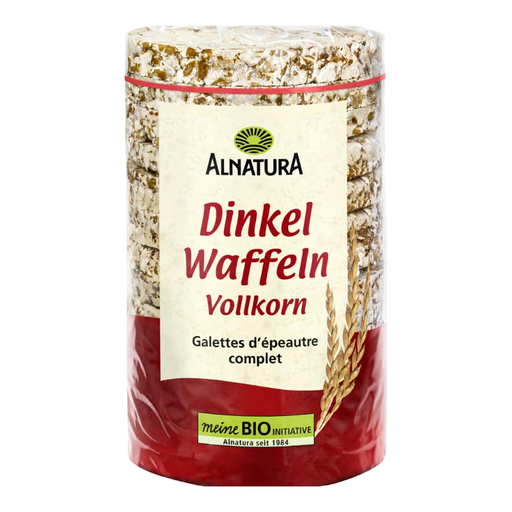
A good choice for a meeting where you’d prefer plain spelt wafers to a sweet, filled wafer. The pack contains 100 g.
If reducing sugar is the priority, check the nutritional information and any comparison stated on the pack. Remember to check the ingredients and allergen information too.
It describes a reduction compared with another product, not the sugar content of the waffle itself. Manner compares its figure with the classic Manner wafer; REWE lists 26 g of sugar per 100 g for its Wholegrain Neapolitan wafers. So always check the nutritional information too.
No. Frankonia Hazelnut Crisp Waffles are labelled ‘no added sugar’, but the manufacturer says they contain naturally occurring sugars; the stated amount is 3.0 g per 100 g. If sweeteners are relevant to your choice, check the ingredients as well.
The ingredients and warnings on the pack you’re actually serving are what matter. For the waffles considered here, wheat, nuts, milk, egg and soya may be relevant, among other allergens. Check for possible traces too, and make the packaging information available to attendees.
Not necessarily. For the varieties considered here, Frankonia and Damhert warn of a possible laxative effect if consumed in excess. If you don’t know how well attendees tolerate sweeteners, it may be worth providing another snack option.