Guests with leftovers for one
If you want to reheat an already-cooked potato without any fuss, you don’t necessarily need a second oven. Safe storage and even heating matter more than choosing the highest possible wattage.


For already-baked potatoes and single portions, a suitable freestanding solo microwave is a good place to start. A grill is worth considering if you also want to brown the skin; convection is only useful if you plan to use the appliance for baking too. Before you buy, compare the space available and the ventilation clearances required for the specific model, along with the size of your dishes. When reheating, make sure food has been stored safely and is heated evenly.
If you want to reheat an already-cooked potato without any fuss, you don’t necessarily need a second oven. Safe storage and even heating matter more than choosing the highest possible wattage.
Check that the freestanding appliance will fit in the space available, including the required ventilation clearances, and that your usual dishes will fit inside the cooking cavity.
If you want to brown the potato as well as heat it through, compare models with a grill. Convection is an extra option if you also plan to use the appliance for baking.
A good fit if: You mainly reheat individual baked potatoes or other leftovers in your holiday cottage, and don’t need a browning function.
Things to consider: A solo microwave doesn’t offer a separate grill or convection stage for browning the skin.
A good fit if: You want to brown the surface after heating the potato through, and will actually use the grill function.
Things to consider: The grill doesn’t replace checking that the potato has heated through to the centre.
A good fit if: You also plan to use the appliance regularly for baking or as an extra mini oven in your holiday cottage, and have enough room for it.
Things to consider: You don’t need the extra functions just to reheat one potato; the Samsung combination model tested was described as heavy and bulky.
For this kind of holiday-cottage use, the main things to consider are heating the potato through thoroughly, finding a suitable spot for the appliance and deciding whether you want a browned surface.
| Priority | What to check when buying | Who is this particularly important to? |
|---|---|---|
| Heat through evenly | Chill leftovers appropriately; turn the potato while reheating and check its internal temperature. The German Federal Institute for Risk Assessment recommends at least 70 °C for two minutes throughout the food. | When I reheat a single potato, I want the centre to be hot enough too, not just the surface. Around 36% of consumers prioritise thorough heating. |
| Space and dishes | Compare the external and internal dimensions, or turntable size, with the space available and the dishes you usually use; check the ventilation clearances in the specific model’s instructions. | In a small holiday-cottage kitchen, the appliance needs to fit on the worktop with enough space around it and accommodate a suitable plate. Around 29% of consumers prioritise a compact footprint. |
| Browning as well as heating | Check whether the specific model has a grill or also offers convection, what accessories are designed for these functions, and whether you’ll use them. | If I want a crispier skin, I look specifically for a grill function rather than just a microwave for heating food through. Around 21% of consumers prioritise a browned surface. |
| Easy to use | Compare the controls and labelling on the specific model; check whether the cooking cavity is easy to clean. | When different guests use the appliance, I want to understand the settings quickly and be able to pause it to check the food. Around 14% of consumers prioritise ease of use. |
The temperature inside a whole potato can differ from the temperature at the surface. Safety also depends on how the leftovers were stored beforehand.
Pay attention to storage, turn the potato while reheating and check that it’s hot enough inside, rather than choosing based on wattage alone.
Depending on the model, freestanding microwaves need clear space around them for ventilation. The casing dimensions alone won’t tell you whether the appliance can be installed in the spot you have in mind.
Carefully compare the external dimensions and the clearances specified in the instructions for the exact model you’ve chosen with the space available.
An unsuitable spot may mean you need to find somewhere else to put the appliance or choose a different one.
Browning and heating food through are two different jobs. You don’t need an extra grill function just to reheat food.
Choose a grill if you’ll actually use the browning function; only consider convection if you also need to bake.
The M20 Ecostyle is a freestanding solo model worth comparing if you prefer manual controls with rotary dials. CASO Design lists a 20 l capacity, 700 W and two rotary dials.
The freestanding solo model FFL020MW0 is a useful comparison if you want to check the power settings and the external and cooking-cavity dimensions. Bosch lists a 20 l capacity and a maximum output of 800 W.
The MG23T5018CW is a model with a grill; the MC32DB7746KDE1 is a separate combination model with a grill and convection. These details apply to these specific models.
The NN-SD36QSEPG is a solo model worth comparing if a larger cooking cavity and several power settings matter more to you than a grill function. For the NN-SD36, Panasonic lists a 29 l capacity, a 288 mm turntable and seven power settings.
The MW 7886 is an example of a freestanding solo appliance with rotary dials. The manufacturer’s instructions give specific installation requirements for the MW 7885/7886/7887 range.
The freestanding microwaves below include solo and combination models with a grill and/or convection, for use in a holiday-cottage kitchen.
 No image available
A solo appliance worth considering if you mainly reheat individual portions in your holiday cottage.
20 l, 700 W, six power settings, 30-minute timer, defrost function and 360° turntable.
The product listing gives compact external dimensions of 44,6 × 36,3 × 24,3 cm; also check the required ventilation clearance.
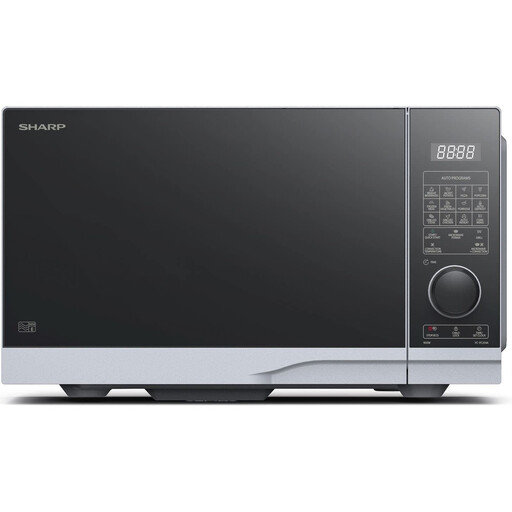 No image available
A combination option if you want to use the grill and convection as well as reheat food.
25 l, 900 W microwave output and ten power settings. The description lists a 288 mm turntable.
Check in advance that the appliance, turntable and required ventilation clearances will fit in the space available.
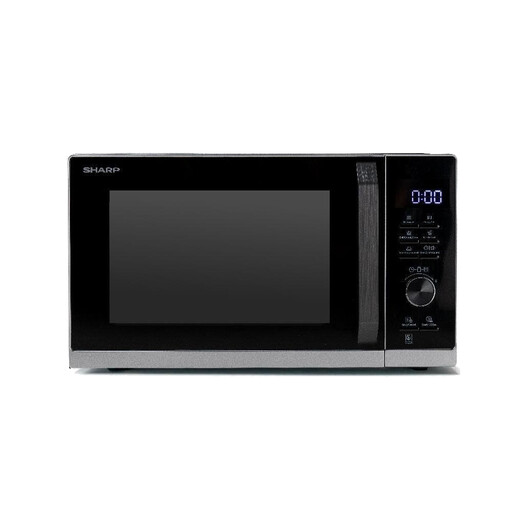 No image available
Worth comparing if you want to use the grill and convection heating as well as the microwave function.
27 l, 900 W microwave output, 1000 W grill and 2100 W convection heating. The description lists six microwave power settings.
With its extra functions, this model offers more than a solo microwave; check whether you need them and have enough space.
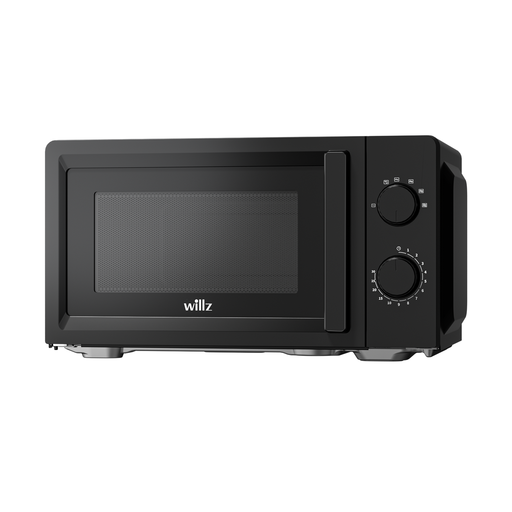 No image available
A solo microwave worth comparing if a compact design is important in a small kitchen.
The product is listed with a 20 l capacity.
Check the actual internal and external dimensions and ventilation clearances against the space available and your dishes.
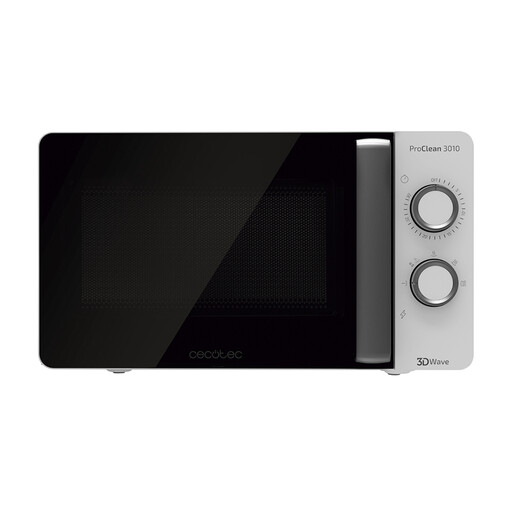 No image available
A solo microwave worth comparing if you want to adjust the power setting and turn the potato while reheating.
20 l, 700 W and six power settings.
For installation, the product description specifies at least 10 cm of clearance at the back, 5 cm at the sides and 20 cm above. Check that the space available meets these model-specific requirements.
Yes, provided it was stored hygienically and is heated sufficiently and evenly when reheated. The German Federal Institute for Risk Assessment recommends at least 70 °C for two minutes throughout the food. If necessary, turn a thick potato and check its internal temperature; reheating won’t make unsafe storage safe after the event.
Place the appliance on a suitable, stable surface and follow the instructions for your chosen model on ventilation clearances and the electrical connection. For example, the instructions for the Severin MW 7886 specify clearances of 7.5 cm at the sides, 10 cm at the back and 30 cm above. These measurements don’t automatically apply to other models.
Use a container marked as microwave-safe and follow its temperature limits and, where applicable, wattage limits. For plastic containers without a stated wattage limit, the consumer advice centre recommends not using the microwave at its highest power setting. Don’t continue using damaged dishes.
Mains-powered appliances covered by the EU Low Voltage Directive must meet the relevant requirements. As part of its market surveillance, the German Federal Network Agency lists CE marking and product and manufacturer identification among the points it checks. Check the specific listing and the accompanying instructions; a CE mark alone isn’t an independent test of the individual product.