Reheating individual portions
You reheat cooked chapatis one at a time and want a smooth, adjustable contact surface. Tristar, CASO Design and Severin list different surface sizes and controls in their product specifications.


For reheating cooked chapatis at a single cooking station, a smooth, adjustable surface that fits your largest flatbread is a sensible starting point. Compact griddles and round crêpe makers mainly differ in shape and footprint; if you’re preparing several portions, the usable surface matters more than the wattage alone. Manufacturer specifications describe a product’s design and features, but don’t confirm how well it reheats chapatis in practice. Check the instructions and cleaning guidance for the specific model too.
You reheat cooked chapatis one at a time and want a smooth, adjustable contact surface. Tristar, CASO Design and Severin list different surface sizes and controls in their product specifications.
You have just one cooking station and limited room to set up or store an appliance. Compare the size of your flatbreads with the cooking surface and the appliance’s overall dimensions, including models from Tristar and WMF.
You’d like to use the same electric surface to cook other suitable foods too. The smooth and ridged areas on the Steba VG 101 differ from an entirely smooth griddle such as the Tristar BP-2666.
First, check whether your largest chapati will fit entirely on a smooth surface. Then compare the shape and footprint with your cooking station, and consider whether you’d like to use the appliance for other foods too.
| What you need | What to look for | Who is this important to? |
|---|---|---|
| Room for a whole flatbread | Measure your largest chapati and compare it with the usable surface: Tristar lists 28 × 28 cm for the BP-2666, CASO Design gives a diameter of 33 cm for the CM 1300, and Tristar lists 100 × 22 cm for the BP-2670. | If I want my largest chapati to lie flat, I look for a fully smooth surface rather than just the overall size. Around 29% of consumers say surface fit is their main concern. |
| Adjustable heat | Compare the controls: Tristar says the BP-2666 has an adjustable thermostat, while the CASO CM 1300 has eight heat settings. | If I’m reheating cooked chapatis in batches, I want to be able to adjust the heat setting. Temperature control is a priority for around 22% of consumers. |
| Cooking other foods | Check which surfaces the appliance offers: Tristar describes the BP-2666 as a flat griddle, while the Steba VG 101 has smooth and ridged areas, according to the manufacturer. | If I only have one cooking station, I want to use it for other suitable foods too. Around 21% of consumers prioritise this versatility. |
| Space and cleaning | Compare the appliance’s overall dimensions and care instructions. Tristar lists 43,2 × 28 × 8,8 cm for the BP-2666; WMF describes the plate on the Lono Crêperie as removable and dishwasher-safe. | In a small kitchen, I check whether the appliance will fit where I want to use and store it, and how to clean the plate. Space and care are the main concerns for around 14% of consumers. |
| Reheating several portions one after another | Compare the usable shape and depth: the smooth surface on the Tristar BP-2670 measures 100 × 22 cm, according to the manufacturer; Severin lists an approximately 30 cm diameter for the round CM 2198. | If I’m reheating several chapatis one after another, I want to know how many will fit on the usable surface, without assuming a particular cooking time. Around 14% of consumers prioritise batch capacity. |
The stated grill area of the Steba VG 101 includes both smooth and ridged sections. So the total surface area alone doesn’t tell you how much is suitable for a chapati to lie flat on.
Measure your flatbread and check the dimensions of the smooth section, not just the grill’s overall measurements.
The smooth surface on the Tristar BP-2670 is 100 cm long and 22 cm deep, according to the manufacturer. A round chapati wider than the depth won’t lie completely flat on it.
First compare the diameter of your chapatis with the shorter side of the griddle, and make sure you have room for the appliance as well.
An appliance’s suitability for crêpes and its power rating don’t show how well it reheats cooked chapatis or what temperature the food reaches.
Use the surface dimensions and controls to compare models, and check the instructions to see what the specific appliance is designed for.
Tristar says the BP-2666 is not dishwasher-safe. The German Consumer Advice Centre distinguishes statutory consumer rights from a manufacturer’s voluntary guarantee.
Check the care instructions and guarantee terms separately from your statutory rights as a customer buying from a retailer.
Regular use may mean extra upkeep if the appliance needs to be cleaned by hand.
The BP-2666 and BP-2670 are flat tabletop grills with different plate dimensions.
The CM 1300 is a round crêpe maker with a cooking surface for individual flatbreads that fit.
The CM 2198 is a round crêpe maker with a plate measuring approximately 30 cm in diameter.
The Lono Crêperie has a round plate that the manufacturer says is removable.
The VG 101 is a tabletop grill with smooth and ridged sections.
The following Joybuy listings include electric crêpe makers, griddles and a plancha. For cooked chapatis, what matters is whether the actual smooth surface fits your flatbread; the product name alone doesn’t confirm how well it will reheat.
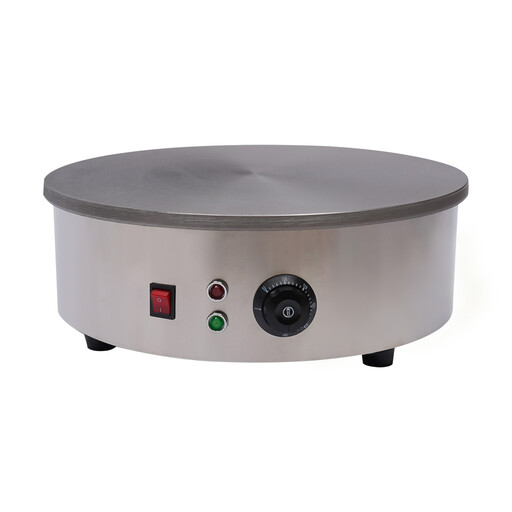 No image available
Check the actual smooth cooking area before relying on it to fit your largest chapati completely.
The product title lists 17.7 Inch, 3KW, an adjustable temperature, a batter spreader and a spatula.
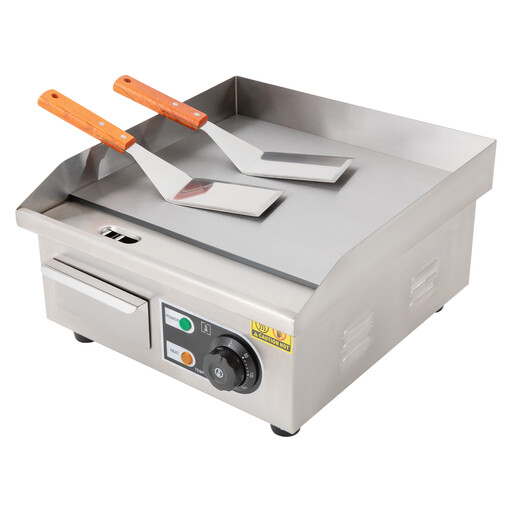 No image available
If a smooth surface is important to you, check the usable dimensions before buying to make sure it will fit your chapatis.
The product title lists a 14-Inch plate, 2000W, an 8mm-thick plate, a temperature range of 122–572°F, a non-stick surface, an oil drip tray and a splash guard.
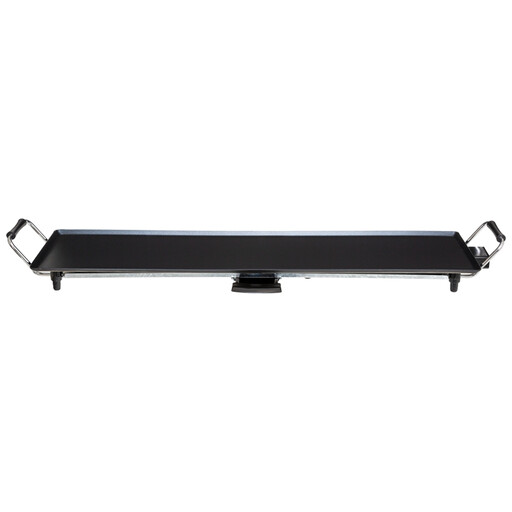 No image available
With a long plancha, check that the actual smooth cooking area suits your flatbreads and the space you have available.
The product title describes the appliance as a 90cm Electric Plancha.
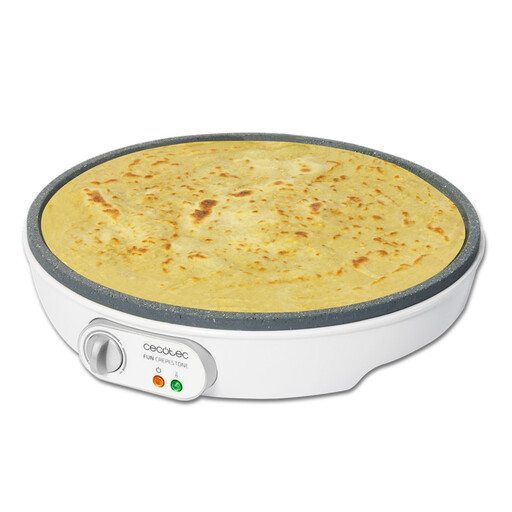 No image available
If you’re considering a round crêpe maker, measure your largest chapati and compare it with the usable plate area.
The product title lists a diameter of 30.5 cm, 1000 W, an adjustable temperature, a RockStone non-stick coating, a spatula and a batter spreader.
 No image available
With a round appliance, the key is whether your chapati fits within the actual usable surface.
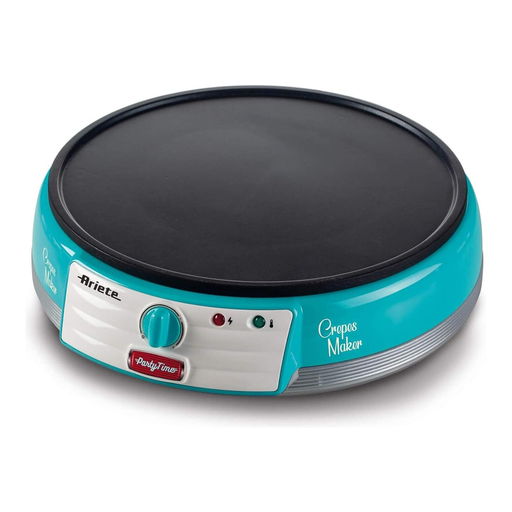
The product title lists dimensions of 33x33x9.5cm, 1000W, a non-stick surface and the colour Light Blue.
No. The control shows the appliance setting, not a temperature measurement inside the food. If heated food is to be kept hot until it is eaten, the Federal Institute for Risk Assessment (BfR) recommends keeping it at a minimum of 60 °C throughout. This is food hygiene advice, not a universal appliance setting.
Distinguish between reheating food to eat straight away and heating it safely before keeping it hot. The BfR recommends heating food to at least 70 °C throughout for two minutes, and keeping heated food at a minimum of 60 °C throughout when holding it hot. A wattage or temperature rating for the plate doesn’t confirm that these temperatures will be reached inside the chapati.
Follow the instructions for the specific model. Severin warns against using metal or sharp utensils on the CM 2198’s non-stick coating; Tristar says the BP-2666 is not dishwasher-safe. By contrast, WMF describes the removable plate on the Lono Crêperie as dishwasher-safe.
For mains-powered appliances covered by the relevant EU regulations, the manufacturer uses the CE marking to declare conformity; CE is not an independent quality mark. The German Consumer Advice Centre distinguishes statutory rights against the seller from a voluntary manufacturer’s guarantee. Check the marking and appliance details for the specific listing, and review the guarantee terms separately.