People who batch-cook dhal to take with them
If you prepare dhal for workdays, planning how to keep it chilled both on the way and at your destination is just as important as reheating it later.


For a single portion of dhal, a straightforward solo microwave is usually enough, as long as your lunchbox and lid fit inside and can rotate freely on the turntable. A flatbed may be more practical for wide or square containers; grill and combination functions are mainly worth considering if you also want to cook other dishes. No microwave design replaces keeping food chilled during transport, or stirring and heating the dhal thoroughly.
If you prepare dhal for workdays, planning how to keep it chilled both on the way and at your destination is just as important as reheating it later.
If you want to use your usual lunchbox, check its dimensions against the cooking cavity, door opening and, where applicable, turntable.
If you regularly reheat a single portion, easy-to-understand settings and an accessible interior may be useful things to consider.
When reheating dhal, the fit of your lunchbox and stirring during heating matter. The wattage alone does not tell you whether the whole portion will get hot enough.
| What matters | What to check before buying | Who it matters most to |
|---|---|---|
| Heating dhal thoroughly | Look for easy-to-access power and time settings, and enough room to stir. The German Federal Institute for Risk Assessment (BfR) recommends heating food to at least 70 °C for two minutes throughout; when heating food in a microwave, stir it part-way through. | When I take dhal with me, I want to keep it chilled on the way and heat it thoroughly before eating. Consumers who prioritise this safe lunch routine are likely to account for around 36%. |
| Finding the right fit for your lunchbox and microwave | Check the lunchbox and lid against the external dimensions, interior, door opening and usable turntable or flatbed area. Only use containers labelled as microwave-safe. | If I want to keep using my usual lunchbox, it needs to fit inside and, if there’s a turntable, rotate freely. Consumers concerned about fit are likely to account for around 29%. |
| Easy operation and cleaning | Check the controls, how easy the interior is to access, and the cleaning instructions for the turntable or cooking cavity floor. | For a regular weekday routine, I want to understand the settings quickly and wipe away splashes easily. Consumers who value straightforward operation and cleaning above all are likely to account for around 21%. |
| Features and running costs | Only factor in extra features if you’re actually going to use them. The German Environment Agency points out that microwave ovens do not have an energy consumption label; compare any available standby power figures separately. | If I want to prepare other dishes as well as dhal, I’ll weigh up the extra features against the space the microwave takes up. Consumers whose main concern is comparing features and costs are likely to account for around 14%. |
The stated output power does not prove that thick dhal will get hot enough all the way through. According to the manufacturer, the Bosch FFL023MW0’s maximum power is regulated to 600 W during extended operation.
Stir part-way through and check the result against the BfR’s heating recommendation, rather than working out a fixed time based on the wattage.
A turntable and a flat cooking cavity offer different amounts of usable space. A square lunchbox may not fit, even if the stated capacity in litres seems suitable.
Measure your lunchbox with its lid on and check the dimensions against the cooking cavity, door opening and turntable.
Heating your meal later does not replace keeping prepared food chilled while you’re on the way.
Before preparing your dhal, consider how you’ll keep it chilled at home, on the way and at work. The BfR recommends using a cool bag for transport.
Model numbers and product details can vary. The German Environment Agency points out that microwaves do not have an energy consumption label.
Check the model number, dimensions and features against the manufacturer’s information, and don’t take any stated energy efficiency classes at face value.
The MW 7790 and MW 7761 models illustrate the difference between a turntable and a flat cooking cavity.
The freestanding FFL023MW0 solo microwave is an example of a model with programmes and cleaning support.
The NN-S29 is a solo model with buttons, a rotary control and a quick-start function.
The MS23K3515AK/EG solo microwave is an example of a model with a 23 l cooking cavity and electronic controls.
The MW 49 SL is a combination option if you want to do more than just reheat food.
This selection includes microwaves for reheating individual lunch portions. Before buying, compare the appliance details with your lunchbox dimensions and the features you plan to use.
 No image available
A solo microwave for individual lunch portions, with power levels and a defrost function.
19 l, 700 W, six power levels, defrost function and turntable.
 No image available
An option for individual lunch portions if you prefer a solo microwave with rotary controls.
20 l, 700 W, six power levels, 30-minute timer, defrost function, interior light and 360° turntable.
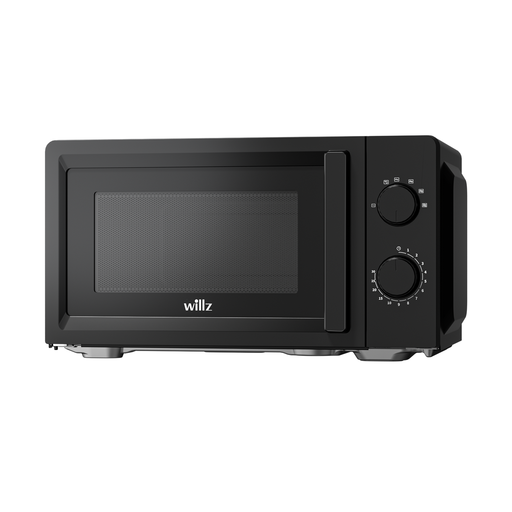 No image available
For a lunch portion, check that your lunchbox fits in the cooking cavity and, if there’s a turntable, can rotate freely.
20 l according to the product name.
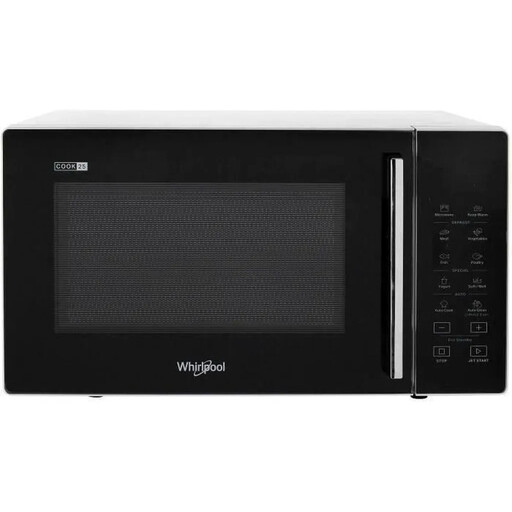 No image available
A solo microwave for lunch portions if you also want to use the extra programmes.
25 l, 900 W, Jet Start, keep-warm and Auto-Clean functions, plus programmes for yoghurt and dough.
Allow at least 10 cm of space at the sides and 20 cm above for ventilation.
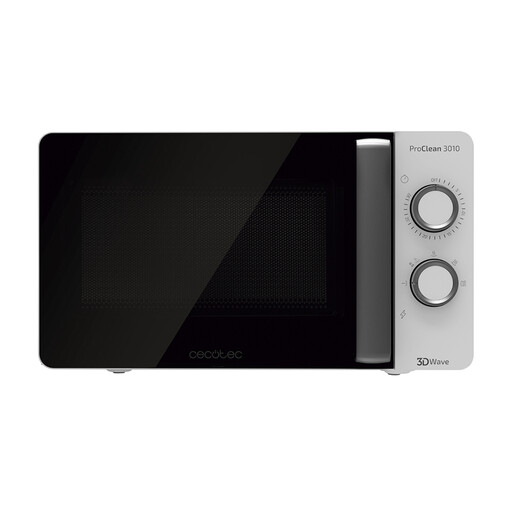 No image available
Before reheating a lunch portion, check that your lunchbox fits and that there’s enough space around the microwave for ventilation.
20 l, 700 W, six power levels and Ready2Clean coating.
Allow at least 10 cm of space behind, 5 cm at the sides and 20 cm above for ventilation.
Don’t rely on a fixed heating time alone: keep pre-cooked food chilled while you’re on the way and stir the dhal part-way through heating. The BfR recommends heating it to at least 70 °C for two minutes throughout; if in doubt, check the temperature.
No. Glass and ceramic are suitable materials; for plastic, check the label and instructions for the specific container. Also make sure the lunchbox fits in the cooking cavity and, if there’s a turntable, can rotate freely.
The BfR recommends keeping leftovers in the fridge and eating them within two to three days. So you can’t automatically prepare enough to cover the whole working week.
According to the German Environment Agency, microwave ovens do not have an energy consumption label. So don’t take an energy efficiency class listed on a product page at face value as an official EU rating.
A flat cooking cavity may offer more usable space for wide or square containers. Still, check your lunchbox dimensions against the cooking cavity and door opening; if there’s a turntable, the box also needs to rotate freely.