
Lieferung heute & morgen

Qualitätsgarantie

Willkommens-Angebote freischalten: KOSTENLOSE Lieferung | Bis zu 80 % RABATT | Kostenlose 30-Tage-JoyPlus-Testphase
App herunterladen
A remote control car is often more than just a toy—it's a gateway to a world of technology, speed, and adventure. But the selection is vast, and manufacturers' promises can be over-the-top. The result: the expensive gift ends up unused in a corner after a short time because it's too complicated, breaks too easily, or is simply unsuitable. As your Joybuy Product Recommendation Officer, I'll help you navigate the common pitfalls and make an informed decision.
Before we dive into the technical details, let's look at the three most common reasons for a purchase you'll regret. Understanding these will help you search more effectively for the right model.
To avoid the pitfalls mentioned above, it's essential to look at a few core technical features. These provide objective clues about the vehicle's performance, durability, and suitability.
Drive Type (2WD vs. 4WD): The drive system is crucial for handling.
Remote Control Technology (2.4 GHz): Look for the 2.4 GHz specification on the remote control. This frequency is the modern standard and offers two key advantages: it is largely interference-free and allows multiple vehicles to operate simultaneously without their signals interfering with each other. This is especially important if friends or siblings want to drive together.
Battery Specifications (Voltage and Capacity): The battery is the heart of any electric vehicle.
Vehicle Type (RC Model vs. Ride-On Car): It's important to distinguish between a classic remote control car and a kids' electric car they can sit in. The latter, also called a ride-on car, is designed for toddlers and often includes a ride-on car with a parental remote so parents can maintain control and ensure safety.
Instead of making a one-size-fits-all recommendation, we've selected models for different user profiles and requirements.
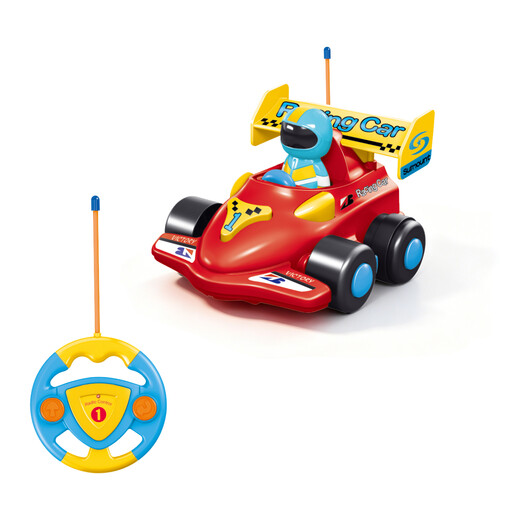
Why It's a Great Fit: This vehicle is specifically designed for the youngest drivers. Its robust construction forgives rough handling, and the controls are simplified to the essentials to prevent frustration.
It solves the "Age Trap" with an extremely simple two-button control system and a chunky, durable design made for toddler hands.
The removable driver figure also encourages imaginative role-playing and hand-eye coordination.
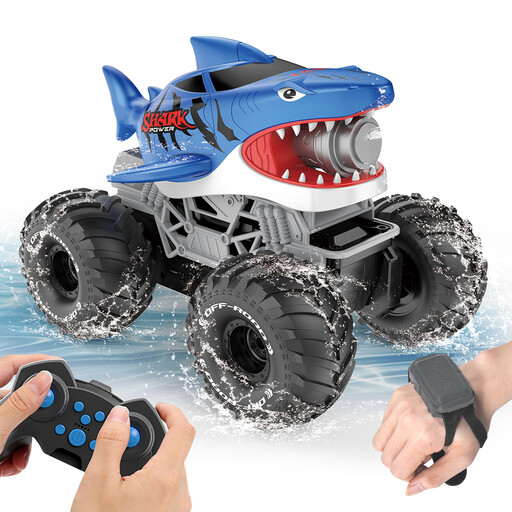
Why It's a Great Fit: This vehicle offers more than just driving. It's amphibious, meaning it can be used on land and in water. The gesture-controlled watch and 360° stunt function provide varied fun for curious kids.
It bypasses the "Battery Illusion" by providing two rechargeable batteries, allowing for a total playtime of about 40 minutes. The waterproof construction solves the problem of lacking durability for use in water.
The dual control modes (classic remote and gesture watch) offer variety and promote different motor skills.
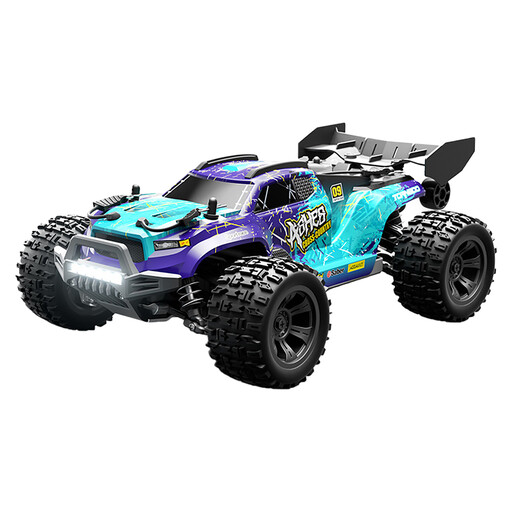
Why It's a Great Fit: This model is aimed at teens and adults looking for a high-performance, durable vehicle. It's no longer just a toy, but an entry into the RC hobbyist world.
It escapes the "Material Deception" with a reinforced aluminum chassis and metal components. The 7.4V 1500mAh battery ensures long runtime and high performance, countering the "Battery Illusion."
The professional 2.4 GHz transmitter allows for fine-tuning, such as speed limiting and steering trim, enabling precise control and adaptation to your own skill level.
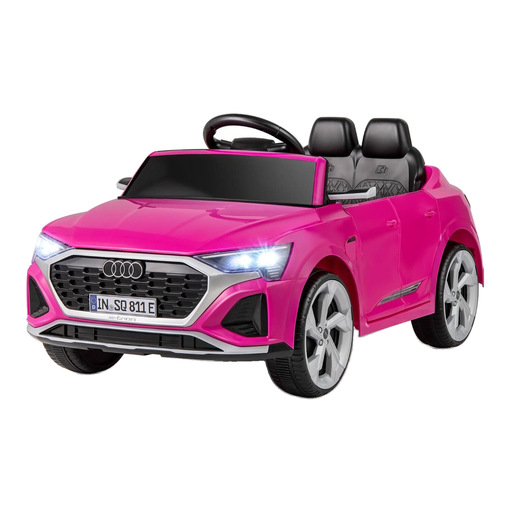
Why It's a Great Fit: This ride-on car offers young children a realistic driving experience. It's ideal for parents who prioritize safety and want to supervise and control their child's first driving attempts.
This isn't a classic RC car, so it sidesteps the typical traps. The parental remote with 3 speed levels and the soft-start function ensure maximum safety and age-appropriate use.
The dual driving mode (child drives or parent controls) allows for flexible use and grows with the child's abilities. The officially licensed design provides an authentic feel.
We've compiled a complete, up-to-date list of products that fully meet these strict selection criteria and UK safety regulations.
1. How long does the battery of a remote control car last? Battery life varies greatly depending on the model, driving style, and battery capacity (mAh). Basic models for children often run for 15–25 minutes. More powerful hobby-grade models with larger batteries (e.g., 1500 mAh or more) can last 30–40 minutes or longer. An aggressive driving style with many stops and accelerations will shorten the runtime.
2. What does 2.4 GHz technology mean for an RC car? The 2.4 GHz technology is a frequency band for radio transmission between the remote control and the vehicle. Its main advantage is the digital encoding of the signal, which prevents interference from other radio sources (like Wi-Fi or other RC cars). This allows multiple vehicles to run at the same time without interfering with each other—ideal for racing with friends.
3. Is a remote control car suitable for a 3-year-old? Yes, if the model is specifically designed for this age group. Look for simple controls (often just two buttons), a robust, shock-proof design with no small parts, and a low speed. Complex models are unsuitable for three-year-olds. Alternatively, a ride-on car with a parental remote is an excellent option, as parents can maintain full control.