
Lieferung heute & morgen

Qualitätsgarantie

Willkommens-Angebote freischalten: KOSTENLOSE Lieferung | Bis zu 80 % RABATT | Kostenlose 30-Tage-JoyPlus-Testphase
App herunterladen
A remote control stunt car promises action-packed fun. However, the market is vast, and not every model lives up to the promises on the box. As a Joybuy Product Recommendation Officer, I'm here to help you identify the key features and make an informed decision that prevents disappointment. This guide will show you what to look for to find a suitable and durable RC car for kids.
Many buyers are drawn in by flashy designs or advertising claims, overlooking critical technical flaws. This often leads to frustration for children and unnecessary expenses for parents.
To avoid the problems mentioned above, you should check three technical aspects before buying. These largely determine the vehicle's performance, fun factor, and durability.
The drivetrain is critical for the car's versatility.
The type of control significantly impacts the driving experience.
A good stunt car is more than just its electronics. The physical build is essential for long-term use. Look for a body made of impact-resistant ABS plastic and a reinforced chassis. Independent suspension with shock absorbers helps to absorb the forces from jumps and on uneven terrain, protecting the internal electronics.
Here are some recommendations tailored to different needs and requirements.
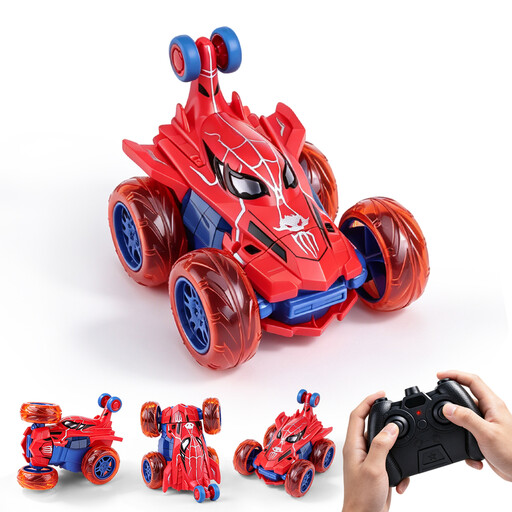
Why it's a good fit: Ideal for anyone looking for a versatile and robust stunt car without breaking the bank. It makes a great gift for boys getting their first experience with action-packed RC cars.
The 2.4 GHz technology prevents signal interference. The robust construction with fall-resistant rubber tyres counters the risk of breakage during initial stunts.
The 4-Wheel Drive (4WD) system ensures good off-road capability. Simple controls for 360° flips and 90° upright driving.
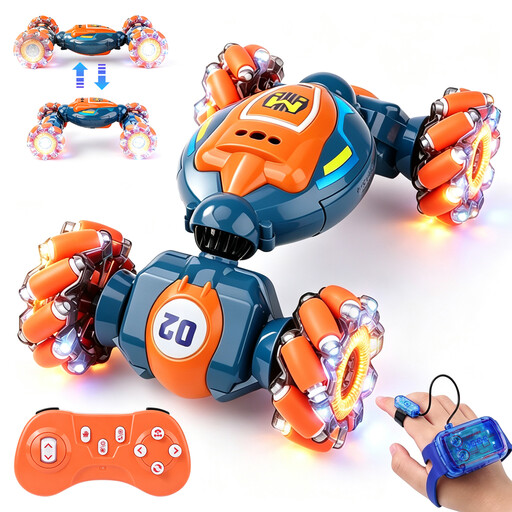
Why it's a good fit: Perfect for kids who are fascinated by new technology. The dual control options—a classic remote and innovative gesture control—provide varied and interactive fun.
The body, made of thickened ABS plastic, is designed for shock and drop resistance. The intuitive hand control bypasses the frustration of complex button layouts.
Two control modes (hand control and remote). Omnidirectional Mecanum wheels enable cool sideways drifts and 360° spins.
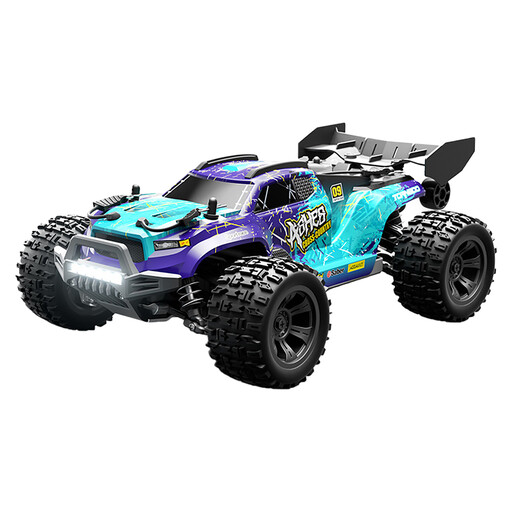
Why it's a good fit: For users who prioritise maximum performance and durability. This model is designed for challenging terrain and features components typically found in more expensive hobby-grade models.
The reinforced aluminium chassis offers superior resilience. The large 7.4V 1500mAh battery ensures longer run times, and the professional 2.4 GHz remote provides precise control.
Powerful brushed motor and 4WD system for excellent climbing and racing performance. Adjustable parameters on the remote control (e.g., speed, steering).
We have compiled a complete, up-to-date list of products that fully meet these strict selection criteria and rigorous safety standards.
Battery life varies greatly depending on the model and driving style, but it typically ranges from 15 to 30 minutes per charge. Models with a higher battery capacity (e.g., 1200 mAh or more) offer longer run times. Some sets include a second battery, which doubles the playtime without long interruptions.
Yes, hand control can be very intuitive for children aged 6-8 and older. It responds to natural hand movements, which makes it easy to get started and creates an engaging, interactive experience. For younger children or for more precise manoeuvres, a classic remote control is often the better choice. Models that offer both options are particularly flexible.
4WD stands for Four-Wheel Drive, where all four wheels are powered by the motor. It's not strictly necessary, but it is highly advantageous if the car will be driven outdoors on uneven surfaces like grass, sand, or gravel. A 4WD toy car offers significantly more grip and control in these conditions than a 2WD (Two-Wheel Drive) model. For purely indoor use on smooth floors, 2WD is usually sufficient.