
Lieferung heute & morgen

Qualitätsgarantie

Willkommens-Angebote freischalten: KOSTENLOSE Lieferung | Bis zu 80 % RABATT | Kostenlose 30-Tage-JoyPlus-Testphase
App herunterladen
A remote-control stunt car should be able to drift, flip over and drive on different surfaces. In practice, some models can disappoint if key specifications are missing or marketing terms are misunderstood. Before you buy, it’s worth checking the drive system, controls, battery, age recommendation and intended surface.
A stated 360° spin usually describes a possible driving feature, but says nothing about the surroundings. An RC stunt car may behave very differently on carpet, rough tarmac or a damp surface than it does on smooth tiles or wooden flooring. The tyre type and the surface are both important for controlled drifts.
A 4WD RC car distributes power to all four wheels. This can help with climbing and acceleration, but it doesn’t automatically make the car suitable for all types of terrain. Ground clearance, tyre tread, suspension, body protection and wheel size also need to suit where you plan to use it.
A rechargeable battery means you’ll need fewer disposable batteries for the car itself. However, the remote control may still need AA or AAA batteries. Charging time, run time and battery capacity also vary. A model with a 3.7-volt battery isn’t directly comparable with one that has a 7.4-volt system.
For a remote-control drift car used on smooth surfaces, interchangeable tyres are useful. Drift tyres make controlled slides easier, while racing tyres are generally designed for straight-line driving and cornering on even surfaces. Depending on their design, models with Mecanum wheels may also be able to move sideways or diagonally.
A double-sided RC car can keep going whichever way up it lands after a flip. This is especially useful for stunts, as you won’t have to turn the car over by hand after every landing. For grass, gravel or sand, larger tyres with a good tread and a shock-absorbing design are important things to look for.
A 2.4 GHz remote control is used with many modern RC vehicles. It provides a digital radio connection and is designed to let several vehicles run at the same time, provided the models support this feature.
For younger children, simple button controls may be more suitable than complex gesture controls. Some cars can also be controlled using a motion-sensor watch. This offers a different way to control the car, but takes a little time to get used to.
Before you buy, check:
Two comparable drift models list a run time of around 20 to 40 minutes per charge. Actual run time depends on driving style, surface, temperature and whether the lights are on. If you use the car a lot, a spare battery can reduce the breaks between runs, provided a compatible battery is available.
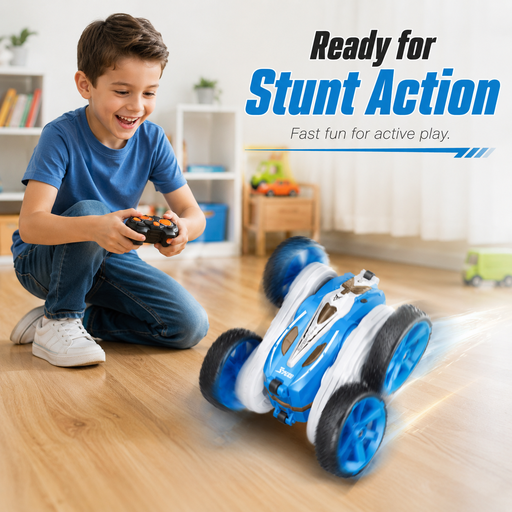
Why this product suits this profile: This compact model is designed for simple stunts, making it a good introduction to remote-control vehicles. According to the product details, colours are supplied at random.
The double-sided design means you’re less likely to need to turn the car over by hand after a flip. Check the age guidance, battery details and what’s included before you buy.
2.4 GHz radio technology and double-sided driving for easy-to-enjoy stunt sequences.
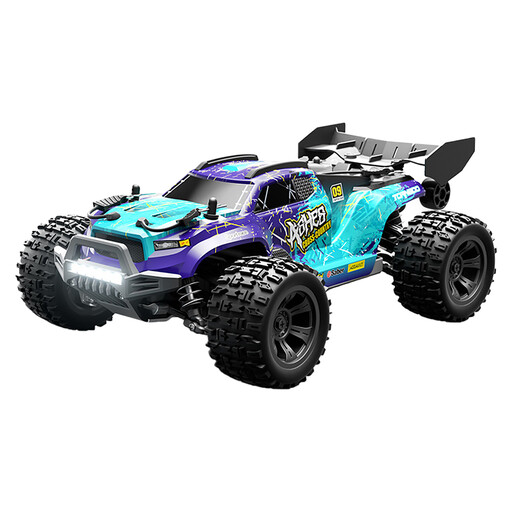
Why this product suits this profile: This model is aimed at teenagers and adults who value four-wheel drive, an aluminium chassis and larger tyres.
The product details specify 4WD, an aluminium chassis, shock absorbers, treaded tyres and LED headlights, rather than relying on vague claims about speed.
7.4-volt, 1,500 mAh battery, 2.4 GHz remote control and all-terrain tyres.
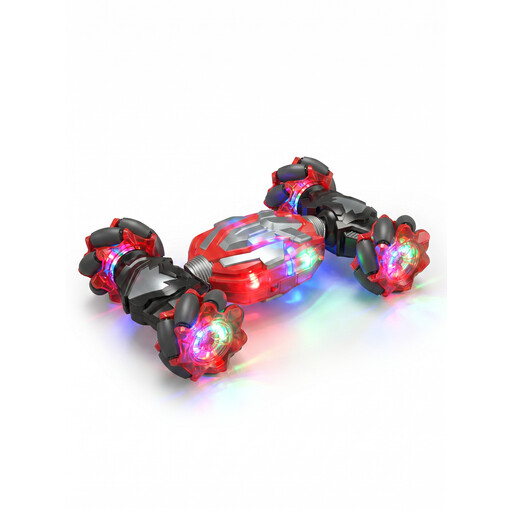
Why this product suits this profile: Combining a handheld remote, gesture control, a transforming design and sideways drifting, this car offers several ways to play and control it. It’s suitable for older children aged 8 and over.
The specific age recommendation of 8+ helps distinguish this more technically advanced vehicle from a simple RC toy car for toddlers.
4WD, Mecanum wheels, double-sided driving and two control methods.
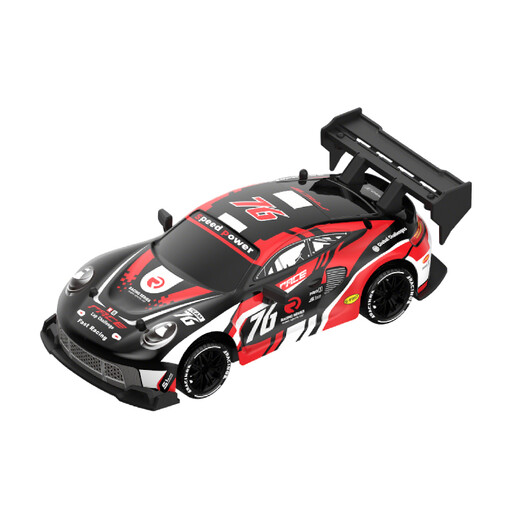
Why this product suits this profile: Designed for flat surfaces such as tiles and smooth outdoor paths, this model is for anyone who wants to switch between racing and drifting.
The two sets of tyres make it clear how the car can be used for drifting or racing. According to the product’s usage information, it isn’t designed for rough terrain.
4WD, interchangeable drift and racing tyres, LED lights and a stated run time of 20 to 40 minutes per charge.
We’ve put together a complete, regularly updated list of products that meet these strict selection criteria and fully comply with the safety regulations in force in the EU.
For children under three, it’s especially important to check the relevant warnings. Several of the models listed are explicitly not suitable for children under three years old. Some more advanced vehicles have a higher minimum age, such as 6 or 8 years. Children should use them under close adult supervision to begin with.
You should also bear the following in mind:
For younger children, a straightforward remote control, lower speed and robust double-sided design are useful features. Follow the manufacturer’s age recommendation. Models with gesture controls, high speeds or complex drifting features are generally better suited to older children and teenagers.
Run time depends on battery capacity, driving style, surface and lighting. Some drift models on offer state a run time of around 20 to 40 minutes per charge. Also check whether the battery is replaceable and whether the remote control needs its own batteries.
That depends on the model. A remote-control off-road car with treaded tyres, suspension and greater ground clearance is better suited to grass, gravel or sand. A drift racing car with smooth tyres, on the other hand, is usually designed for even surfaces such as tiles or smooth paths. Only drive through rain, puddles or deep sand if the manufacturer specifically says it’s suitable.