
Lieferung heute & morgen

Qualitätsgarantie

Willkommens-Angebote freischalten: KOSTENLOSE Lieferung | Bis zu 80 % RABATT | Kostenlose 30-Tage-JoyPlus-Testphase
App herunterladen
A remote control for babies and toddlers might look familiar to adults, but it isn’t automatically suitable for little hands or the stated age. There are clear differences between a baby remote control with lights and music, a remote-controlled car for children, and an interactive learning toy – in terms of operation, sound output, battery requirements and safety standards.
Many toys boast numerous melodies, voice commands or programming options. For a six-month-old baby, however, large, easy-to-reach controls are far more important than an extensive list of features. A baby controller with two easy-to-move levers can be more practical in everyday use than a complex model with lots of tiny buttons.
“Suitable for toddlers” is not a sufficient selection guide. What really matters is the specific age rating, any small parts, and how the toy will be used. A toy remote control for ages 1+ is not automatically suitable for younger babies. With remote-controlled vehicles, there may also be swallowable accessories or detachable figures to consider.
Lights and music need power. Before buying, parents should check whether batteries are included, what type is needed, and whether the battery compartment can be screwed shut. Cleaning is also often underestimated: electronic toys generally cannot be submerged in water and need to be wiped clean with a slightly damp cloth.
The age recommendation is your first filter. For babies and younger toddlers, look for models with larger, fixed controls and a manageable number of functions. Products that carry an explicit warning about small parts should not be given to children under the stated minimum age.
Also look out for:
An interactive learning toy needs to suit the size of your child’s hands. Large buttons, grips or levers are easier to press. The weight affects whether a baby can hold the toy remote control for any length of time. For comparison: the VTech 80-606274 Baby Remote Control weighs 255 g and measures 7.75 × 17.3 × 4.1 cm. The Fisher-Price Laugh & Learn Puppy Remote Control is significantly lighter at around 149.5 g according to product specifications.
A volume control is particularly useful indoors. Check whether the toy can be switched off completely and whether it has an automatic shut-off feature. Power supply options range from a single CR2032 button cell to several AA or AAA batteries.
Button cells and batteries must always be kept out of reach of children. A swallowed battery can be dangerous. Only use the products according to the instructions and regularly check the battery compartment to make sure it is secure and undamaged.
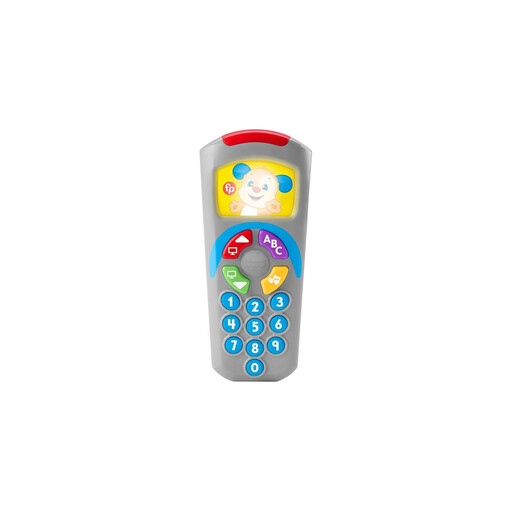
Why this product fits the profile: This lightweight model is designed for children aged 6 months to 3 years and combines button operation with lights, music and sounds.
The specifications mention a volume control and straightforward button operation rather than relying solely on complex features.
Weighs around 149.5 g, includes two AAA batteries, and features over 35 songs, sounds and phrases.
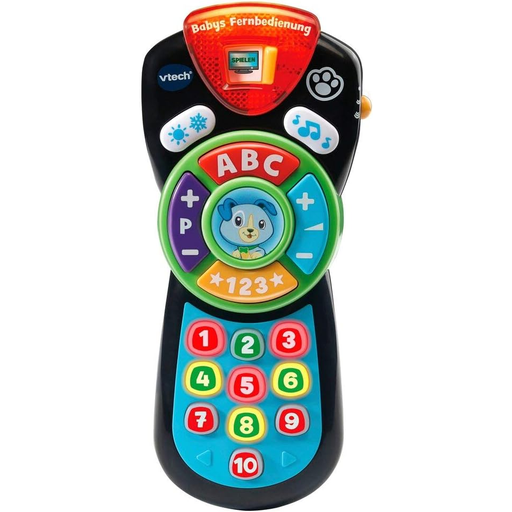
Why this product fits the profile: This baby remote control is designed for ages 12 months to 3 years and features ten illuminated number buttons plus a volume control.
The age rating, screw-secured battery compartment and cleaning instructions (damp cloth only) are clearly stated.
Ten illuminated number buttons, multilingual content including English phrases, and a CR2032 battery included.
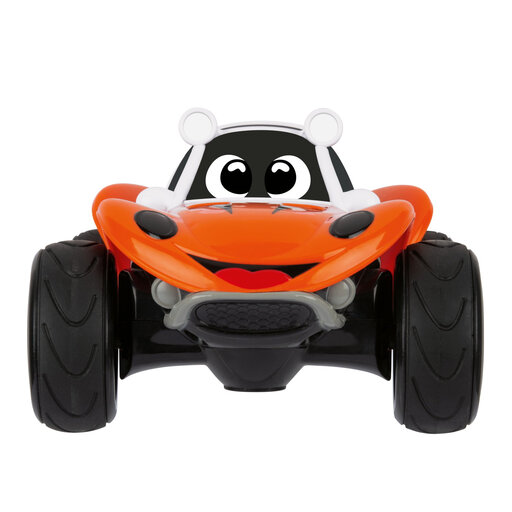
Why this product fits the profile: Designed for children aged 24 months and over who want to do more than just press buttons – they can steer a vehicle in different directions.
The target age of 24 months and the need for supervision are explicitly stated, which helps avoid unsuitable purchases for younger children.
Four directions, off-road wheels and a steering-wheel-shaped remote control with four directional buttons.
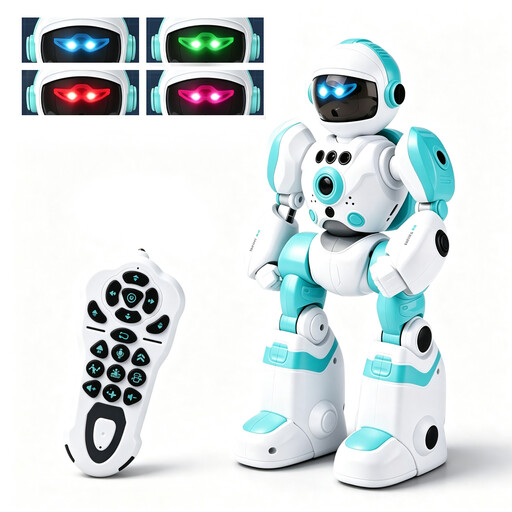
Why this product fits the profile: According to its warning label, this interactive robot for children is aimed at ages 3 and up, and offers remote control, gesture control and programmable sequences.
The note “not suitable for children under 3 years” makes it clear that this is not a baby remote control.
Voice recording and playback, four-colour LED eyes, obstacle detection and a programmable sequence of actions.
We’ve put together a complete, regularly updated list of products that fully meet these strict selection criteria and current EU safety regulations.
For babies from around 6 months, look for models with large, easy-to-reach buttons, a light weight and a limited number of fixed features. The specific age rating of the product should always take priority. A model that carries a small-parts warning for children under 3 years should not be used with younger babies.
A generally suitable volume depends on the room, the distance and how long the toy is used. An integrated volume control is very practical. The toy should not be held directly against your child’s ear for extended periods. For longer play sessions, a lower volume setting and regular breaks are recommended.
Battery life depends on the battery type, volume level, motor use and how long the toy is played with. A remote-controlled car for children typically uses more power while driving than a simple baby remote control with buttons. So before you buy, check the battery type, whether batteries are included, and whether the device can be switched off completely.