
Lieferung heute & morgen

Qualitätsgarantie

Willkommens-Angebote freischalten: KOSTENLOSE Lieferung | Bis zu 80 % RABATT | Kostenlose 30-Tage-JoyPlus-Testphase
App herunterladen
Choosing a durable toy off-road vehicle can be a challenge. The market is filled with models that look impressive at first glance but quickly prove to be unsuitable. Many buyers find that after just a short period, the vehicle can't withstand the rigors of play in the bedroom or garden. This guide will help you identify the crucial features and make an informed decision.
As a Joybuy Product Recommendation Officer, I analyse product data to provide you with objective and practical shopping advice. My goal is to help you distinguish marketing promises from actual performance.
Before we dive into the key features, let's look at three common problems that often lead to disappointment:
To avoid the issues mentioned above, it's helpful to focus on a few core technical parameters. These are the primary factors that determine a model's durability and play value.
The type of drivetrain is crucial for a vehicle's performance off of smooth floors. A 4WD toy car (All-Wheel Drive) offers significantly better traction on uneven surfaces like grass, sand, or gravel. Power is distributed to all four wheels, which improves climbing ability and prevents the vehicle from getting stuck. Models with two-wheel drive (2WD) are often more affordable but are primarily suited for flat surfaces.
An independent wheel suspension is another key feature for an RC Off-Road Car. It allows each wheel to adapt to bumps individually. This provides greater stability and prevents the vehicle from tipping over when crossing obstacles.
A good Off-Road Toy Car must be able to withstand bumps and falls. Look for models made from high-quality, flexible ABS plastic. This material is resilient and doesn't splinter as easily as cheaper plastics. A shock-resistant body and a reinforced chassis are indicators of a durable design.
For children's safety, it's also important that all edges are rounded and there are no sharp protruding parts. On remote-controlled models, the battery compartment should be securely sealed.
For remote-controlled models, 2.4 GHz radio technology has become the standard and is a key quality feature. Unlike older infrared or 27 MHz systems, this frequency is significantly less prone to interference. This means that multiple vehicles can be driven simultaneously without their signals affecting each other. This is especially important when kids want to play together with friends.
Instead of making a one-size-fits-all recommendation, we have selected models tailored to different needs and age groups.
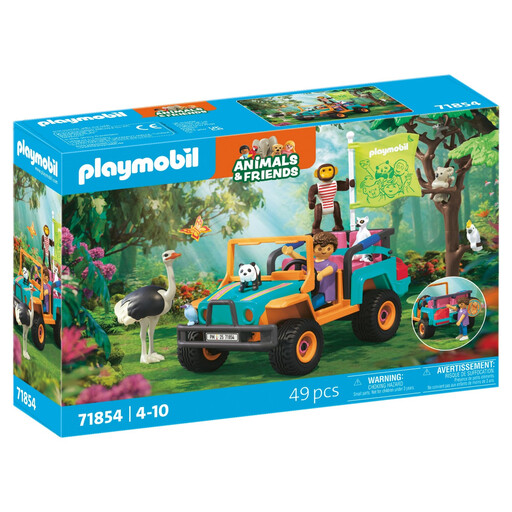
Why It's a Good Fit: Ideal for younger children who love imaginative role-playing. It operates without complex electronics and fosters creativity with accessories like figures and animals.
The proven PLAYMOBIL quality, using robust plastic, bypasses the problem of short-lived materials. Since it's manually operated, worries about battery life or complicated controls are eliminated.
Promotes tactile play and imaginative stories away from screens. The set is compatible with other PLAYMOBIL worlds.
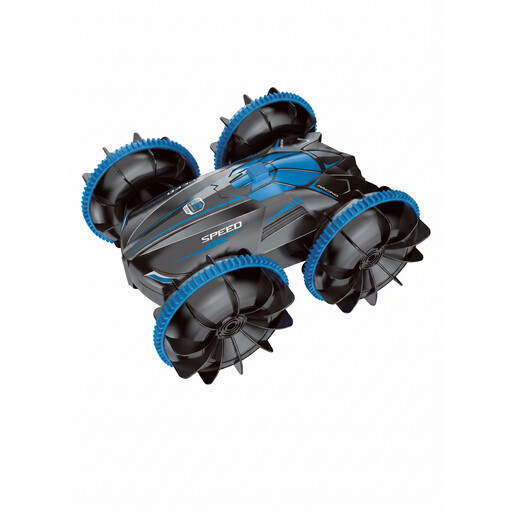
Why It's a Good Fit: This `RC Stunt Car` is designed for action-packed play. It can drive on land and in water, performs 360° spins, and can be controlled in two different ways.
The dual control system (classic remote and gesture control watch) solves the problem of imprecise operation by offering an intuitive alternative. Its double-sided driving design prevents the car from getting stuck after flipping over.
The amphibious design with propeller-style tyres allows for use in pools or at the beach, significantly expanding the play possibilities.
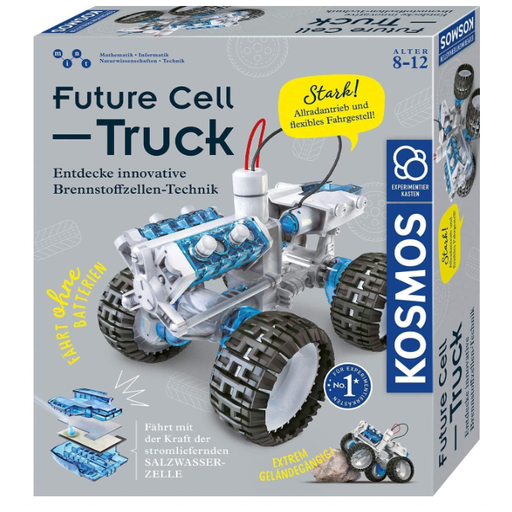
Why It's a Good Fit: This building kit is intended for children (ages 8 and up) who love to tinker and understand how technology works. The vehicle is assembled from over 80 parts and runs on a saltwater fuel cell.
The issue of battery life is elegantly sidestepped here, as the vehicle requires no conventional batteries. The instructions explain the assembly and function of the fuel cell, preventing frustration from a lack of understanding.
Combines the fun of driving with an educational insight into a future technology. The flexible chassis and all-wheel drive ensure true off-road capability.
We have compiled a complete, up-to-date list of products that fully meet these strict selection criteria and rigorous safety standards.
1. How long does the battery last on a remote-controlled off-road vehicle? Battery life varies widely depending on the model and usage, typically ranging from 15 to 30 minutes per charge. Models with larger batteries (measured in mAh) or those that come with two batteries offer longer playtime. Charging time is often 1 to 3 hours. It's advisable to use the manufacturer's specifications as a guideline and observe the actual runtime during everyday use.
2. Are toy off-road vehicles suitable for both outdoor and indoor use? Most Off-Road Toy Cars are designed for outdoor use. Their large tyres and rugged construction are well-suited for grass, sand, or uneven paths. For indoor use, they are often too fast or too large. However, smaller models or those with adjustable speed can also be fun indoors. Look for waterproof models if the vehicle might come into contact with water.
3. What should I look for in a remote control's frequency? A 2.4 GHz remote control is the recommended standard today. This technology pairs the remote firmly with the vehicle and prevents interference from other remote-controlled toys or radio signals. This allows multiple children to play with their vehicles at the same time without signal crosstalk.