
Lieferung heute & morgen

Qualitätsgarantie

Willkommens-Angebote freischalten: KOSTENLOSE Lieferung | Bis zu 80 % RABATT | Kostenlose 30-Tage-JoyPlus-Testphase
App herunterladen
A remote-controlled car is a classic toy that lights up any child's eyes. But the market is vast, and quality can vary dramatically. Before you make a decision, it's crucial to understand the common pitfalls that often lead to disappointment. Many models overpromise and underdeliver, ending up unused in a corner after just a short time.
This guide will help you separate the wheat from the chaff. We'll focus on the key features that define a durable and entertaining RC car, showing you what to look for to make an informed choice.
To find the right model, you should focus on a few technical fundamentals. These are what primarily determine performance, durability, and driving enjoyment.
The type of drive system determines where the car can be driven.
The remote control is the interface between the driver and the vehicle. Today's standard for an interference-free connection is 2.4 GHz technology. It provides a stable connection over long distances (often 30 metres or more) and allows multiple vehicles to operate in parallel without interfering with each other.
A distinction is also made between simple and proportional controls:
The manufacturer's age recommendation is an important guideline. A remote-controlled car for ages 6 and up is typically built more robustly and has a speed that is manageable for this age group. For younger children, speeds are often limited, and components are larger to minimise the risk of choking hazards from small parts. Look for the CE mark, which confirms compliance with EU safety standards.
Here are some recommendations tailored to different user profiles and age groups.
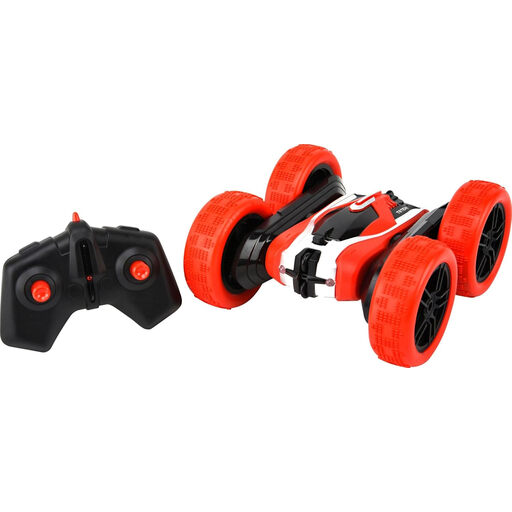
Why This Fits Their Persona: Ideal for children aged 5 and up who want a straightforward, action-packed toy. The simple controls and the ability to flip over and keep driving deliver instant fun with no steep learning curve.
Uses interference-free 2.4 GHz radio technology. The body is made of robust ABS material to withstand impacts and flips. All required batteries are included, so there are no hidden running costs.
Specialises in flips and 360-degree spins. Thanks to its double-sided design, the car doesn't get stuck after flipping over. A classic remote-controlled stunt car.
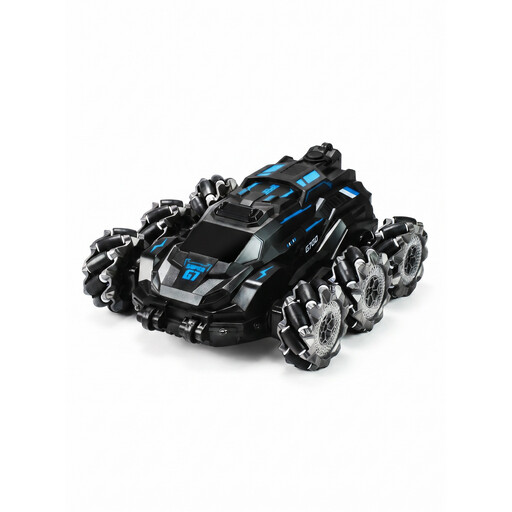
Why This Fits Their Persona: For kids aged 6 and up who want to drive on more than just smooth floors. This model is designed for action in the garden or on uneven paths and offers extra visual appeal with light and mist effects.
The 6WD all-wheel drive and robust alloy-and-plastic construction provide the necessary stability for off-road use. It is controlled via the reliable 2.4 GHz frequency. The battery is rechargeable.
Excellent traction on various surfaces thanks to its six-wheel drive. Additional features like a mist spray function and LED lights set it apart from standard models.
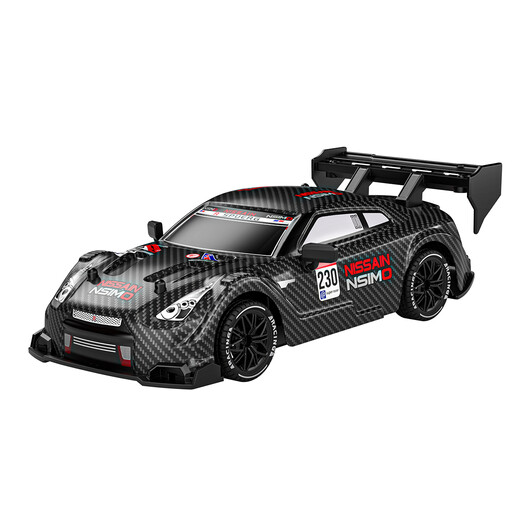
Why This Fits Their Persona: Perfect for older children (ages 8+) and teens who are interested in racing and want precise control over their vehicle. This model is less of a toy and more of an entry into the RC hobbyist world.
Features a proportional 2.4 GHz remote that allows for sensitive throttle and steering control—a rarity in this price range. The robust construction with shock absorbers protects the mechanics during high-speed manoeuvres.
Comes with two sets of tyres: rubber tyres for racing and hard plastic tyres for drifting. This allows for two completely different driving experiences with just one car.
If you're looking for more models selected based on objective criteria like material quality, radio technology, and safety, you can find our full range here.
1. How long does the battery last in a remote-controlled car? Battery life varies depending on the model, driving style, and battery capacity. On average, you can expect 15 to 30 minutes of drive time per charge. Many models come with two rechargeable batteries, which extends the playtime accordingly. Charging time via a USB cable is typically 1 to 2 hours.
2. What does 2.4 GHz mean for an RC car? 2.4 GHz is the frequency the remote control uses to communicate with the car. Unlike older frequencies (e.g., 27 MHz), this technology is significantly less susceptible to interference. It allows multiple vehicles to run at the same time without their signals affecting one another. It is the de facto standard for reliable RC products today.
3. Is a fast remote-controlled car suitable for a 6-year-old? That depends on the child's experience. A fast remote-controlled car for kids can reach speeds of over 15 km/h, which can be difficult for beginners to control. For a 6-year-old, a model with a top speed of around 10 km/h or a vehicle with an adjustable speed limiter is often a better choice. More important than pure speed are durability and ease of use.