
Lieferung heute & morgen

Qualitätsgarantie

Willkommens-Angebote freischalten: KOSTENLOSE Lieferung | Bis zu 80 % RABATT | Kostenlose 30-Tage-JoyPlus-Testphase
App herunterladen
A remote-controlled drift car for children combines technology, racing and controlled driving manoeuvres. However, choosing the right model is not always straightforward for parents. Product pages often advertise high speed, LED effects or a long range, while important details about surfaces, batteries and spare parts are less prominently displayed.
It is therefore worth taking a closer look at the actual features before buying. The key factors are not just the design or stated top speed, but the combination of drive system, controls, tyres, power supply and intended use.
A high-speed RC car can deliver dynamic performance on smooth surfaces. For children aged 8 and over, however, finely adjustable controls are at least as important. A proportional 2.4 GHz remote control allows the throttle and steering to be operated gradually. With simple on/off controls, precise cornering and controlled drifting are more difficult.
An RC drift car with 4WD transfers motor power to all four wheels. This can be helpful for drifting and rapid changes of direction. Nevertheless, these vehicles are generally designed for level tiled floors, smooth indoor surfaces or paved outdoor paths. Carpets, gravel and uneven paths can alter handling and increase wear.
Battery-life figures depend on driving style, surface and use of the lights. The RC models described here are stated to offer a runtime of around 20 to 40 minutes per charge. Buyers should also check whether the battery is removable, how it is charged and whether a spare battery is available. A rechargeable RC car with USB charging may be easier to use day to day than a model that regularly requires disposable batteries.
For drift racing, a 4WD drive system provides a sound technical foundation. The 1:24 scale is particularly suitable for indoor use and smaller, level driving areas. Proportional speed control makes it easier to approach corners and drifting movements gradually.
Look out for the following details:
A stated range of, for example, 50 metres should always be considered in relation to the surroundings. Walls, other radio sources and line of sight can affect the practical range.
An RC car with interchangeable tyres offers two clearly different driving styles. Drift tyres are intended for sideways sliding on smooth surfaces, while racing tyres can be used for straight-line driving on level ground. Changing them should be possible without complicated tools.
Before buying, check whether replacement tyres can be ordered individually. Particularly with regular use, wear parts are more important than additional cosmetic features.
An integrated lithium battery with USB charging reduces the need for disposable batteries. Check the charging time, whether a charging cable is included and whether the battery can be removed safely. During charging, the vehicle should be placed on a clear, non-flammable surface and charged only with the supplied cable.
An RC car with LED lights is easy to see in subdued lighting. However, LEDs are no substitute for a safe environment. For indoor use, remove fragile objects and allow sufficient distance from furniture, stairs and pets.
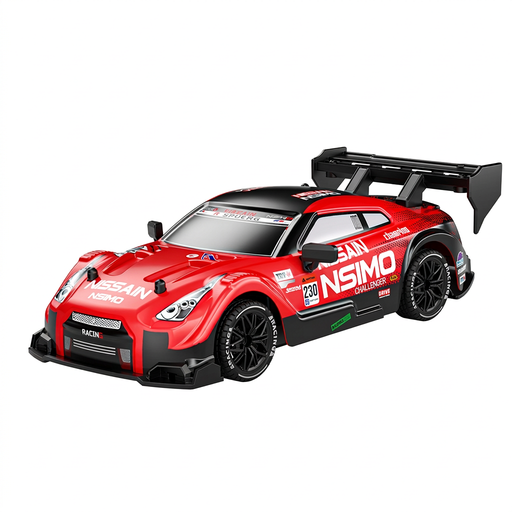
Why this product suits this profile: This model combines 4WD drive, proportional 2.4 GHz controls and two sets of tyres. This gives beginners several driving modes without requiring them to move straight to a larger vehicle.
The product description specifies use on tiles and level roads, along with a battery life of around 20 to 40 minutes, rather than making only general performance claims.
4WD drive, interchangeable drift and racing tyres, USB charging and a shock-absorbing chassis according to the product details.
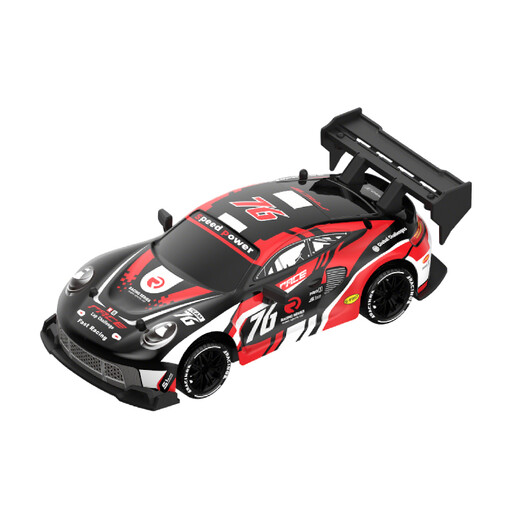
Why this product suits this profile: Anyone looking to compare technical specifications will find details here about the 25,000-RPM motor, 50-metre range, LED lights and two sets of tyres.
The features are described using specific parameters. At the same time, the intended use remains limited to level indoor and outdoor surfaces.
25,000-RPM motor according to the product details, 50-metre range, LED lighting and rechargeable lithium battery.
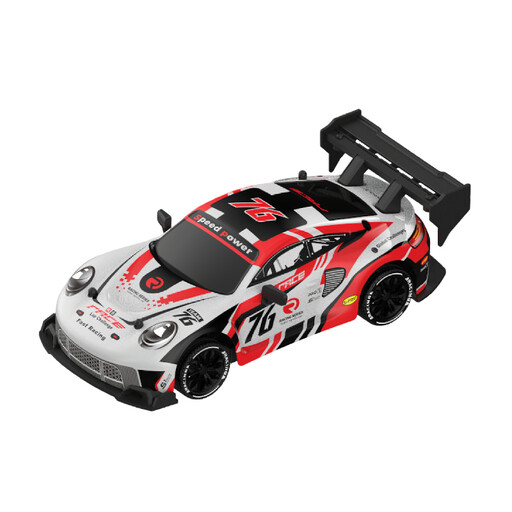
Why this product suits this profile: This model is designed for different ways to play: racing with racing tyres, drifting with drift tyres and clearly visible LED lighting for driving in lower ambient light.
The two sets of tyres prevent the car from being limited to just one driving mode. For long-term use, the surface, battery care and availability of spare parts still need to be considered.
4WD system, 25,000-RPM motor according to the product description, USB charging, LED lights and a stated range of 50 metres.
We have put together a complete, regularly updated list of products that fully meet these strict selection criteria and the safety regulations applicable in the EU.
With a remote-controlled car for children aged 8 and over, the recommended age and safety warnings on the packaging should be observed. Small accessories should be kept out of the hands of younger siblings. Before every drive, check the wheels, body, battery connection and remote control.
For a safe play environment, we recommend:
If you are also looking for a stunt scooter for children, a freestyle scooter or a 3D wooden marble-run puzzle, assess these products separately based on age, protective equipment and space requirements. An RC drift racing car is designed for controlled driving manoeuvres, a scooter for outdoor activity and a mechanical wooden model for calm building and observation.
According to the product descriptions, the models mentioned are intended for children aged 8 and over. The child’s hand-eye coordination, the size of the driving area and supervision during the first driving attempts are also important factors.
The vehicles described are stated to offer a playtime of approximately 20 to 40 minutes per battery charge. Frequent full-throttle driving, drifting and use of the lights can affect the runtime. A second compatible battery may reduce waiting time between drives, provided it is approved by the supplier.
Drift tyres generally require a smooth, level surface. Tiles or other smooth indoor surfaces are suitable according to the product details, while racing tyres can be used on level outdoor surfaces. Carpets, sand, gravel and damp paths are generally unsuitable for these compact models.