
Lieferung heute & morgen

Qualitätsgarantie

Willkommens-Angebote freischalten: KOSTENLOSE Lieferung | Bis zu 80 % RABATT | Kostenlose 30-Tage-JoyPlus-Testphase
App herunterladen
The selection of toy helicopters is vast, ranging from simple models for toddlers to complex kits for hobby pilots. But not every model lives up to its promises. Many buyers get frustrated with fragile parts, controls unsuitable for children, or unexpected follow-up costs. As your Joybuy Product Recommendation Officer, I'll help you identify these pitfalls and make an informed decision that ensures long-lasting enjoyment.
This guide focuses on the objective criteria that truly matter, showing you what to look for before you buy to avoid disappointment.
Before we get to the recommendations, it's important to understand the typical problems that often only become apparent after unboxing.
remote-controlled helicopter, controls that are too complex can quickly lead to frustration. When a child spends more time fighting imprecise controls than flying, the fun is lost. The complexity must absolutely match the user's age and experience.RC helicopter with an integrated, USB-rechargeable battery is often the more economical and eco-friendly choice.To avoid the problems mentioned above, you should carefully examine three core parameters. These will help you objectively assess a model's quality and suitability.
The most important distinction lies in the intended play purpose, which is directly related to the child's age.
helicopter for kids in this age group should primarily inspire imagination and develop motor skills.Playmobil helicopter or a themed set like a police helicopter toy or rescue helicopter toy provides the perfect foundation for hours of creative missions with figures and accessories.Lego helicopter or another helicopter building kit promotes technical understanding and fine motor skills. For an introduction to the world of flight, RC helicopters with beginner-friendly features like an altitude hold function and adjustable speeds are suitable.The durability of a toy is largely determined by its material. Look for models made of high-quality ABS plastic. This material is more impact-resistant and flexible compared to conventional plastic, which reduces the risk of breakage during crashes. For RC models, a fuselage made of a metal alloy provides additional stability. Also, check that all edges are cleanly finished and rounded to minimize the risk of injury.
The type of power supply affects both gameplay and running costs.
remote-controlled helicopter should ideally have a built-in lithium-ion battery that can be easily charged via a USB cable. This avoids the constant need to buy new batteries and is easy on the wallet.Here are some models that are well-suited for specific user profiles based on objective features.
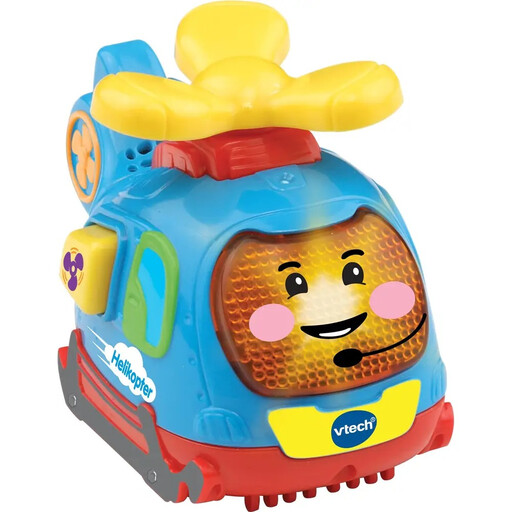
Why this model is a great fit: This toy is specifically designed for toddlers. It's robust, has no small parts that can be swallowed, and stimulates the senses with lights, melodies, and phrases without being overwhelming. The operation is intuitive and promotes motor skill development.
The robust design withstands rough handling. Since it's not a flying model, the frustration of complex controls is eliminated. The batteries are only for long-lasting sound and light effects.
Reacts to movement and to magic sensors on other Tut Tut Baby Flitzer playsets, which increases play value and encourages collecting.
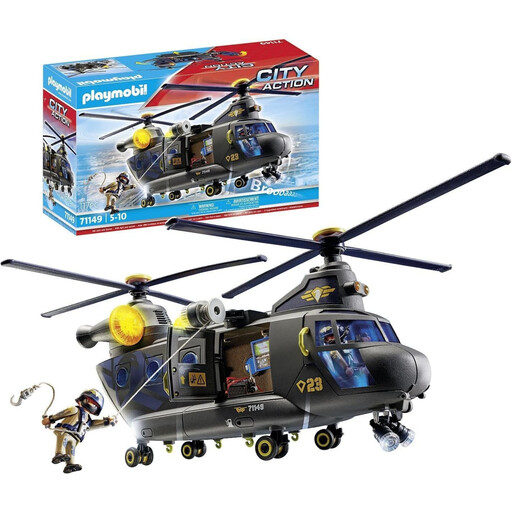
Why this model is a great fit: This set is ideal for children who love rescue and police stories. It offers numerous features like a winch, light and sound effects, and space for figures and even a small vehicle, enabling deep, imaginative play.
The high-quality plastic, typical of PLAYMOBIL, is designed for durability and active play. The complexity lies in the role-playing, not in difficult controls, which prevents frustration.
Large model (approx. 51-60 cm long) with an integrated light and sound module. The cargo bay is large enough to transport the separately available SWAT Multi-Terrain Quad (71147).
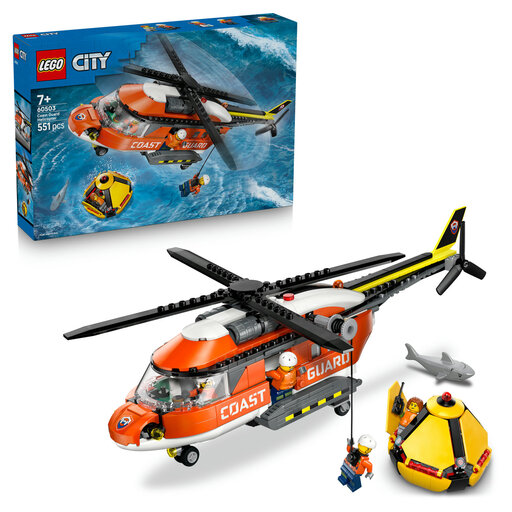
Why this model is a great fit: This set combines the fun of building with subsequent role-playing. As a `helicopter building kit`, it promotes concentration, fine motor skills, and an understanding of mechanical principles like a working winch.
The high precision and quality of LEGO bricks ensure a stable final product and a frustration-free building experience. The value here lies in both the building process and the finished toy.
Comprehensive set with 551 pieces, four minifigures, and a working winch. The included digital building instructions in the LEGO Builder App offer additional 3D views.
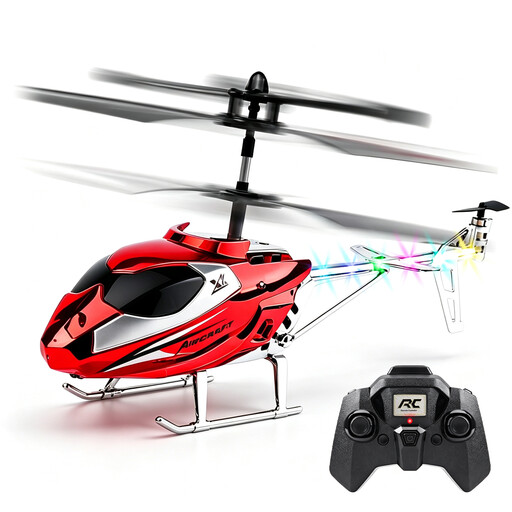
Why this model is a great fit: This `RC helicopter` is tailored for beginners. Features like one-key takeoff/landing, automatic altitude hold, and two speed levels make it much easier to get started and ensure quick successes.
The beginner-friendly controls prevent the frustration of complex models. The metal alloy fuselage offers protection during collisions. The USB-rechargeable battery avoids high follow-up costs for batteries.
The combination of altitude hold, trim control for calibration, and two speed modes allows for a controlled learning process, from indoor hovering to faster outdoor flight.
We've compiled a complete, up-to-date list of products that fully meet these strict selection criteria and German safety regulations.
Simple models with infrared or hand controls that primarily fly up and down can be suitable for children from around 8 years old. More complex RC helicopters with multi-channel controls that allow for precise maneuvers are better recommended for children aged 12 and up, as well as teenagers or adults, as they require more patience and fine motor skills.
A classic RC helicopter mimics the operation of a real helicopter with a main rotor and a tail rotor for stabilization. Their controls are considered more challenging. A drone (usually a quadcopter) has four or more rotors. Its flight attitude is stabilized by complex electronics and gyroscopes, which generally makes flying significantly easier, especially for beginners.