
Lieferung heute & morgen

Qualitätsgarantie

Willkommens-Angebote freischalten: KOSTENLOSE Lieferung | Bis zu 80 % RABATT | Kostenlose 30-Tage-JoyPlus-Testphase
App herunterladen
Choosing the right model car can be a challenge. Whether it's a gift for a car enthusiast, a durable toy car for a child, or a new centrepiece for your own collection, the market is overwhelming. Vague product descriptions and clever marketing often lead to disappointment: the model that arrives is unexpectedly small, a collector's car intended as a toy breaks after just a few days, or a supposedly rare edition turns out to be a mass-produced item. This guide will help you identify the crucial criteria and make an informed choice.
Before you make a decision, you should be aware of two common problems that often lead to frustration and unnecessary expense.
To avoid a bad purchase, focus on three objective characteristics that determine the quality and suitability of a model car.
The scale indicates the reduction ratio compared to the original vehicle. It is an initial reference point for size and potential detail.
The choice of material depends directly on the intended use.
Clearly define who the model car is for.
Here are some recommendations tailored to specific user profiles that avoid the pitfalls mentioned.

Why This Fits Their Persona: This set is designed for active and imaginative play. The large 1:16 scale and numerous functions, like the winch and loading ramp, offer high, long-lasting play value for children aged 4 and up.
It bypasses the "fragile collector's item" trap. According to the manufacturer, the model is made of high-quality ABS plastic, known for its durability in everyday play, rather than brittle die-cast metal.
Comprehensive playset including a roadster, light & sound module, and a functional winch. The doors can be opened and the ramps are extendable.
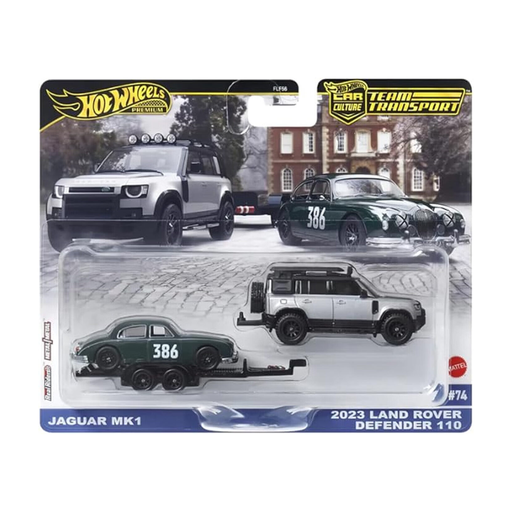
Why This Fits Their Persona: This set is aimed specifically at collectors. As part of the "Car Culture" series, it offers a high level of detail, premium metal and plastic construction, and a thematic pairing that holds a special place in collections.
It is clearly positioned as a collector's car and not a rugged children's toy. Its inclusion in the established Hot Wheels Premium series signals a defined collector's value and avoids the trap of overpriced, artificially scarce models.
The set includes two detailed vehicles (Jaguar MK1 and Land Rover Defender 110) with a hauler. The models are meticulously crafted to mirror the original vehicles.
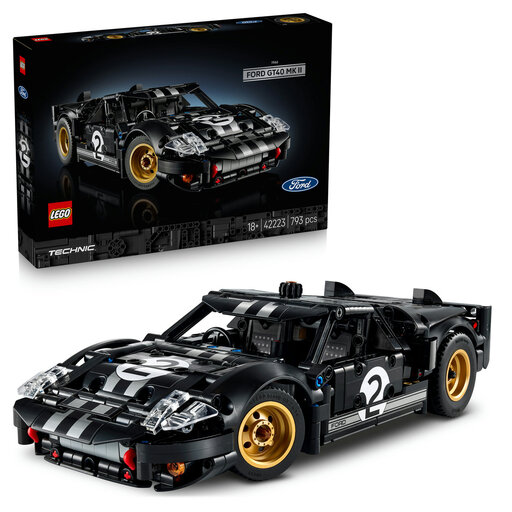
Why This Fits Their Persona: For those who appreciate the building process as much as the finished model. This set for adults offers a challenging building experience and a deep understanding of a race car's mechanics.
It avoids the trap of ambiguous size. The dimensions of the finished model (29 cm long) and the piece count (793) are clearly defined. The focus is on technical function, not just the external shape.
The model features functional details like steering, an opening hood and doors, and a replica of the V8 engine. It is both a building kit and an appealing display piece.
We have compiled a complete, up-to-date list of products that fully meet these strict selection criteria and UK/EU safety regulations.
The scale indicates how much a model is scaled down compared to the original vehicle. For example, a scale of 1:18 means that 1 cm on the model corresponds to 18 cm on the real car. The smaller the second number, the larger the model car.
Most manufacturers of die-cast collector models recommend an age of 14 years and up. For younger children (from 3 years), models made of robust plastic or metal vehicles specifically declared as toy cars (e.g., from Siku or Majorette) are more suitable, as they do not contain small parts that can be swallowed and are designed for play. Always observe the manufacturer's warnings on the packaging.
To preserve the value and condition of your collector cars, you should protect them from direct sunlight and dust. A glass display case is ideal. For cleaning, a soft brush or a microfibre cloth is usually sufficient to remove dust. Avoid water and harsh cleaning agents, as they can damage the paint and decals.