
Lieferung heute & morgen

Qualitätsgarantie

Willkommens-Angebote freischalten: KOSTENLOSE Lieferung | Bis zu 80 % RABATT | Kostenlose 30-Tage-JoyPlus-Testphase
App herunterladen
A remote-controlled stunt car should spin, drift or tackle obstacles at the touch of a button. In practice, though, you may not find out until after buying whether the vehicle, surface and controls are really a good match. That’s why parents and family members should look beyond LED lights and spectacular product photos.
An RC stunt car with 360° rotation may work well on smooth tiles, while wet grass, sand or gravel place different demands on its tyres and drive system. A vehicle with drift tyres isn’t automatically a suitable remote-controlled off-road car. So check which surfaces the manufacturer says the model is designed for.
Claims such as ‘long running time’ are hard to assess without specific battery details. The key things to look at are battery voltage, capacity, charging time and whether the batteries are replaceable. Play time also depends on speed, surface and how often you use light or sound features. A spare battery or a break to recharge can be useful during longer play sessions.
A remote-controlled car for children aged 3 and over may have simple controls, but fast vehicles with powerful 4WD drive systems aren’t equally easy for every child to control. Check the warnings, range and speed, and see whether you can start in a slower mode. Models with small, detachable parts should be kept out of the hands of children under three.
A 4WD RC car sends power to all four wheels. This can help when pulling away, tackling small obstacles and driving over uneven ground. For drifting, smooth drift tyres or specialist Mecanum wheels are often more suitable. Interchangeable tyres let you switch between racing and drifting.
If you’re looking for a remote-controlled off-road car, also check the following:
A 2.4 GHz remote control is used with many current models. It’s designed to let several vehicles be used at the same time, provided the relevant product information confirms this. Proportional controls usually allow finer acceleration and steering than simple on/off controls.
Some gesture-controlled RC cars supplement the hand-held remote with gesture control via a watch or motion sensor. This can make it easier to get started, but it doesn’t replace checking the range, battery type and instruction manual.
With a remote-controlled amphibious vehicle, it’s important to distinguish between a water-resistant design and one that’s specifically described as suitable for use in water. Only use the model in water if the manufacturer states that it can be driven on both land and water. After play, it’s important to clean and dry the vehicle and follow the charging instructions.
An RC car with LED lights is easier to see and looks more striking in low light. However, LED wheels, spray mist or music add to the number of features and may affect power consumption. Choose extra features that suit how the vehicle will actually be used.
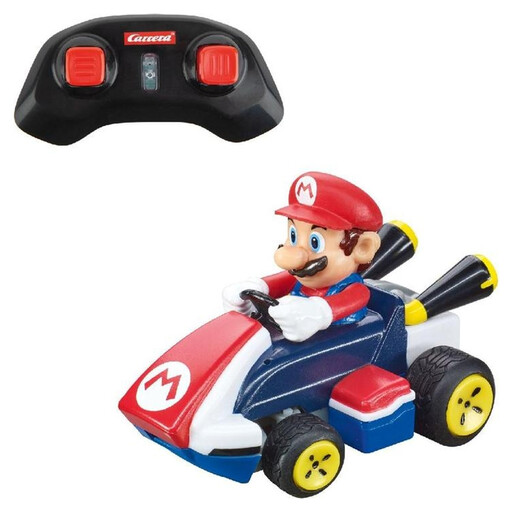
Why it suits this profile: This compact model uses 2.4 GHz technology and features full-function steering and anti-slip rubber tyres. According to the product information, it’s intended for children aged 6 and over and comes with two AAA batteries.
The product details clearly state the recommended age, power supply and radio technology, rather than relying on vague promises about running time.
2.4 GHz control, a compact design and AAA batteries included.
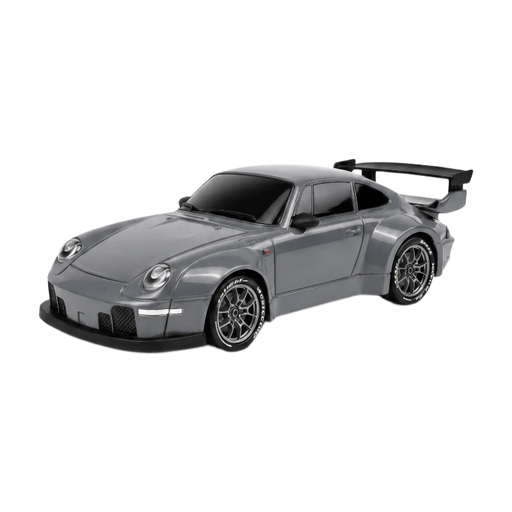
Why it suits this profile: This model is aimed at users who want to switch between drifting and racing. Features include an adjustable gyroscope, two speed settings, proportional controls and interchangeable sets of tyres.
The two types of tyres and adjustable stabilisation provide a clear basis for trying different driving styles.
4WD drive, gyroscope system, LED lights and two speed settings.
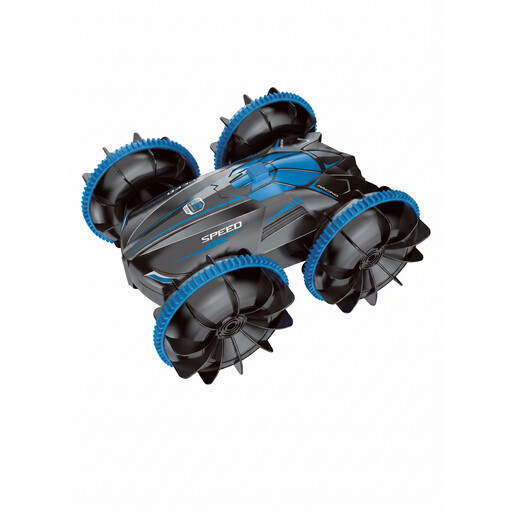
Why it suits this profile: According to the product description, this amphibious vehicle is designed for driving on land and in shallow water. It combines propeller wheels, 4WD drive, a 180° turning function, 360° rotation, and hand-held and gesture controls.
The stated water use is supported by a sealed design. Even so, use it only in the shallow water specified and follow the charging instructions.
Suitable for land and water, 4WD drive and two control methods.
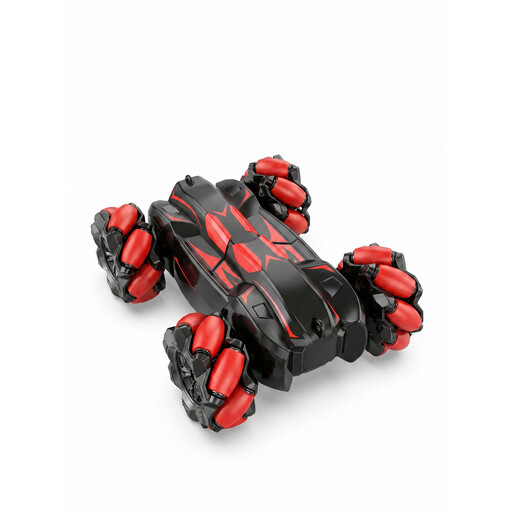
Why it suits this profile: The Mecanum wheels described allow the car to move forwards, backwards and sideways. It can also turn through 360°, drive upside down and use its LED wheels in low light.
The stated wheel design explains how it moves sideways, rather than simply advertising a generic drifting feature.
Mecanum wheels, driving on both sides, 360° rotation and LED lights.
We’ve put together a complete, regularly updated list of products that meet these strict selection criteria and fully comply with the safety regulations in force in the EU.
Running time depends on battery capacity, speed, surface and extra features. Some RC models, for example, are listed as running for around 20 to 40 minutes or up to 20 minutes. These are manufacturer or product claims and actual performance may vary. Charging time and whether you can use a spare battery are also important.
It depends on the model. Some vehicles are marked as suitable for children aged 3 and over, while others are intended for children aged 6 or 8 and over. Fast models with powerful stunt features may require better coordination. Always follow the recommended age and warnings, and make sure an adult supervises directly.
Only if the manufacturer explicitly says it can be used in water. Even then, use the vehicle only in clean, shallow water. After use, dry and check the vehicle and battery as instructed. Salt water or dirty water can put extra strain on the casing and contacts.