
Lieferung heute & morgen

Qualitätsgarantie

Willkommens-Angebote freischalten: KOSTENLOSE Lieferung | Bis zu 80 % RABATT | Kostenlose 30-Tage-JoyPlus-Testphase
App herunterladen
A remote-controlled stunt car for children can drift, turn somersaults and drive across carpets, lawns or concrete. However, RC toys vary considerably when it comes to their drive systems, controls, batteries and safety features. Focusing only on LED lights or spectacular product images can mean overlooking important details.
A 360-degree stunt car with Mecanum wheels needs plenty of space and a reasonably level surface. On deep-pile carpet, damp grass or coarse gravel, the wheels may jam. Claims such as “off-road” should therefore always be considered alongside the vehicle’s design: tyre size, tread, ground clearance and drive system are all crucial.
Many models are designed as rechargeable RC toys, but still require additional AA batteries for the remote control. Before buying, parents should check:
For example, the Dreamora CV-D500 is listed with an integrated lithium battery and a USB charging cable. The remote control uses 2.4 GHz radio and can be supplemented with gesture control.
A remote-controlled car for children aged 8 and over may feature complex driving functions, smaller components and a more powerful motor. A model approved for children aged 3 and over is not automatically suitable for intensive stunts. The child’s abilities, the size of the play area and supervision while charging and playing are also important.
A 4WD RC car is powered by all four wheels. This can be helpful on inclines, grass and over small obstacles. Mecanum wheels are often needed for sideways drifting. Depending on their design, they allow movement to the left and right as well as diagonal gliding.
When choosing a remote-controlled off-road vehicle, buyers should also look out for the following:
An RC car with remote control generally offers more precise handling. A gesture-control RC car, on the other hand, is operated using a sensor watch or hand movements. This feature is fun, but requires some practice.
A 2.4 GHz connection is practical for families and groups, as several vehicles can be operated at the same time. Nevertheless, the range stated in the product description should not be treated as a guarantee of interference-free use in every environment.
An RC car with LED lights is easy to see at dusk, but the lighting does not automatically improve driving performance. Music, spray mist or automatic stunt programmes are additional features that can enhance playtime. They should come after the drive system, battery and safety information when making a purchase decision.
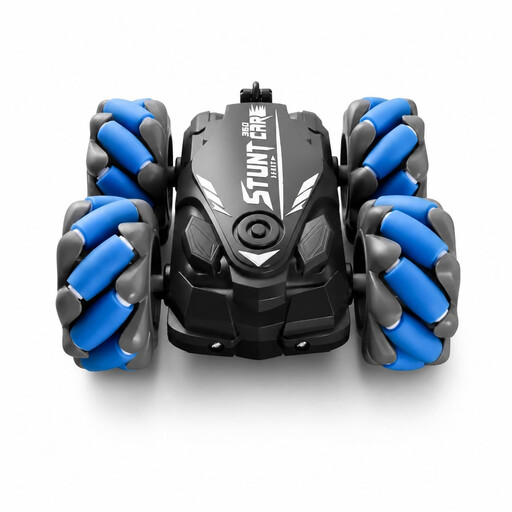
Why this product suits the profile: This model combines conventional remote control with gesture control. It is suitable for children aged 8 and over, and for use indoors and on level outdoor surfaces.
The product details specify the integrated battery, USB cable and three control modes. This makes important additional costs and control options clear before purchase.
4WD drive, sideways drifting, 360-degree spins, LED lights and music; according to the supplier, the ABS body is designed to be impact-resistant.
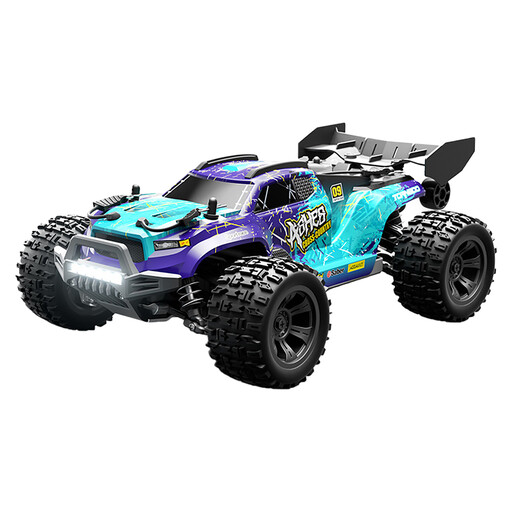
Why this product suits the profile: The combination of 4WD drive, an aluminium metal chassis, shock absorbers and treaded tyres is aimed at teenagers and adults who also want to drive over uneven surfaces.
The description specifies a battery rated at 7.4 V and 1,500 mAh, as well as a USB cable. The remote control requires three AA batteries, which are not included.
Aluminium chassis, independent shock absorbers, LED headlights and large non-slip tyres; according to the product information, it is intended for sand, mud, grass and snow.
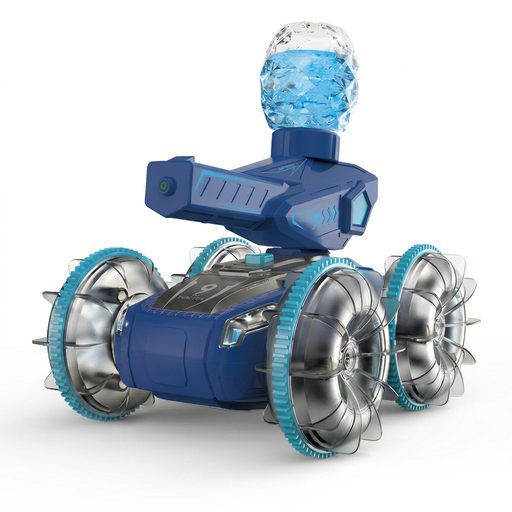
Why this product suits the profile: For families looking for an RC car for the garden, beach or shallow water, this vehicle offers land-and-water functionality and a water-spraying feature.
The water function is described as being suitable for shallow water. This is not the same as approval for deep water; after use, the body and connections should be checked according to the instructions.
4WD propeller wheels, 360-degree rotation, gesture and hand control, plus LED lights; according to the description, several vehicles can be operated simultaneously via 2.4 GHz.
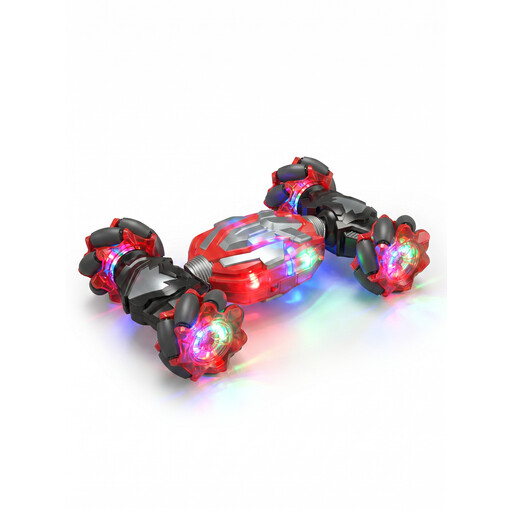
Why this product suits the profile: Measuring 26 cm, this vehicle combines a deformable body, Mecanum wheels and two control methods. It is ideal for children who want to try drifting, climbing and rolling over.
The manufacturer’s information specifies an age recommendation of 8 and over, motor overload protection and two-sided driving. These are verifiable details to consider when choosing, but they do not replace supervision.
Sideways gliding, two body shapes, individual 4WD drive and a 2.4 GHz remote control with additional gesture control.
We have put together a complete, regularly updated list of products that fully meet these strict selection criteria and the safety regulations applicable in the EU.
Before the first drive, parents should read the instructions and check the vehicle for cracks, loose wheels or damaged cables. The following basic rules apply to lithium batteries:
Taking breaks between long stunt sequences is also advisable for extending the vehicle’s service life. An RC stunt car should be stored somewhere cool and dry. If it is not going to be used for an extended period, follow the manufacturer’s guidance regarding the battery charge level.
It depends on the individual model. Some vehicles are intended for children aged 3 or 6 and over, while the Dreamora CV-D500 and the 26 cm 4WD gesture-control car are described as suitable for children aged 8 and over. The age recommendation, small-parts warning and required supervision should be checked before purchase.
Running time depends on the battery, motor, surface and driving style. It would not be accurate to give one general figure for all models. One model is stated to offer approximately 20 to 40 minutes of playtime per charge. For longer play sessions, a spare battery may be useful, provided it is approved by the manufacturer.
Many models are designed for wooden and tiled floors, carpets, concrete or level paths. A remote-controlled drift car needs plenty of clear space for sideways movement. Larger treaded wheels and 4WD drive are useful for grass, sand and gravel. Water driving is only suitable for vehicles specifically designed for it, with appropriate sealing, and only in the types of water stated by the manufacturer.