
Lieferung heute & morgen

Qualitätsgarantie

Willkommens-Angebote freischalten: KOSTENLOSE Lieferung | Bis zu 80 % RABATT | Kostenlose 30-Tage-JoyPlus-Testphase
App herunterladen
Remote-controlled toys for children combine movement, technology and interactive features. But choosing the right one isn’t always easy for parents, grandparents and other family members. Product pages may showcase spectacular 360-degree stunts, LED lights and sound, while less prominent details such as charging time, age suitability and the right surfaces can be easy to miss.
As a Joybuy Product Recommendation Officer, I’ll explain the key features clearly and objectively. This will help you decide whether a remote-controlled car for children, robot, RC dinosaur or construction vehicle is right for the way your child will play.
An RC stunt car with drifting, sideways movement and 360-degree stunts can be exciting. But younger children may find several control modes and complicated button combinations difficult to understand. A standard 2.4 GHz remote control is often a more suitable starting point. Gesture-controlled toys offer extra interaction, but are best chosen when a child is confident trying movement-based controls.
“Rechargeable RC toy” doesn’t automatically mean every power source is included. The vehicle may have a built-in lithium battery, while the remote control requires additional AA batteries. Before you buy, check:
Lithium batteries must be charged under adult supervision. Disconnect the product from the power supply once fully charged, and don’t store it somewhere hot or in direct sunlight.
Not every indoor or outdoor toy is suitable for grass, sand or uneven paths. A vehicle with four-wheel drive may handle a range of firm surfaces better, while product information may state that a small robot should only be used on flat, hard indoor surfaces. Stairs, wet floors and raised edges are generally unsuitable for remote-controlled toys.
The age rating is important too. Small parts can pose a choking hazard. Models rated for ages 6 and over aren’t intended for younger children, even if they look technically simple.
A 2.4 GHz remote control is useful when several vehicles are being used at the same time, as product information states that these models use a signal designed to minimise interference. This can make things easier for families with several RC vehicles. For gesture-controlled toys, also check whether a conventional remote control is included as an alternative.
A remote-controlled excavator has different priorities from a drift car. For an excavator, a movable loading bed or bucket and easy-to-follow channel controls matter most. For a stunt car, manoeuvrability and impact resistance are key.
ABS plastic is listed as the casing material for several of the models featured. The specific design still matters: check moving joints, wheels, axles and attachments for damage before each play session. Don’t assume a toy is waterproof unless this is explicitly stated.
Also check:
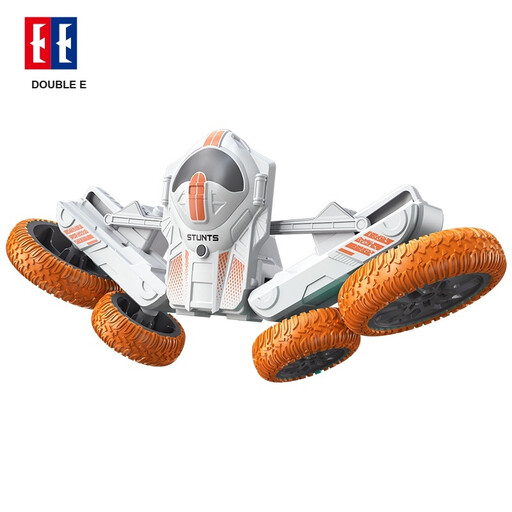
Why this product suits this profile: Designed for children aged 6 and over, this model combines conventional remote control with two-sided driving, spins and rolls.
The age rating, rechargeable battery, LED lights and music are all clearly listed as product features.
2.4 GHz controls, two-sided driving and stunt moves make this a good introduction to RC toys.
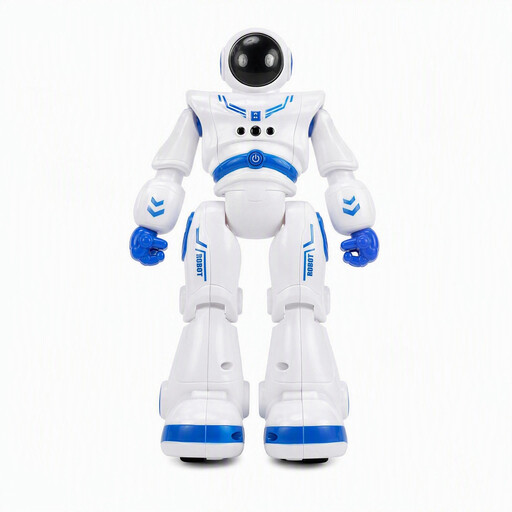
Why this product suits this profile: This remote-controlled robot offers both remote and gesture controls, as well as programmable movements for play on flat indoor surfaces.
Product information includes the material, dimensions, age rating, volume control and automatic shut-off after a period of inactivity.
ABS casing, movable arms and legs, an LED display, plus built-in music and stories.
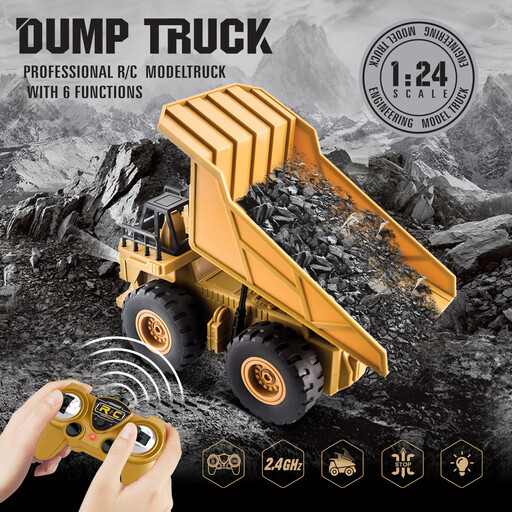
Why this product suits this profile: This remote-controlled excavator or tipper is aimed at children who enjoy construction vehicles and functional movements.
The six control channels and separately listed power requirements make it easy to understand what the toy can do and what it needs.
Raising loading bed, rubber tyres, light and sound effects, plus a built-in 3.7 V battery with USB cable.
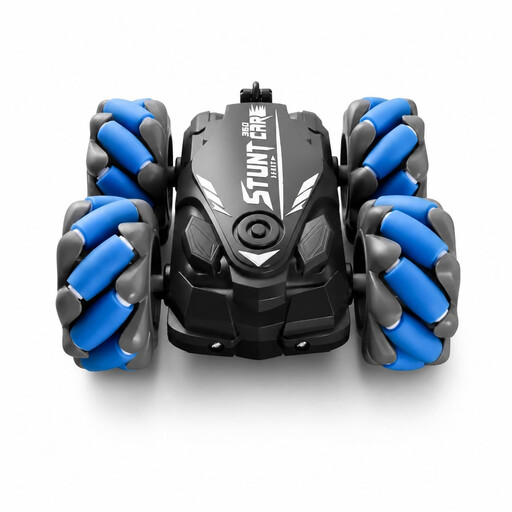
Why this product suits this profile: Designed for children aged 8 and over, this model is for those who want to try drifting, sideways movement and driving on either side.
The product description specifies the age rating, 4WD drive, three control modes, and clear guidance on charging and supervision.
Mecanum wheels, 360-degree turns, two-sided driving, plus lights and music.
We’ve put together a complete, regularly updated list of products that meet these strict selection criteria and fully comply with the safety regulations in force in the EU.
Look for models with a clear age rating of 6 and over, an easy-to-use remote control and a sturdy design. An RC car with simple forward, reverse and turning functions can be a good introduction. Models with water-shooting projectiles, small gel balls or lots of moving parts need particular care and continuous supervision.
Battery life depends on the battery, motor, surface and use of the lights and sound features. Some product information, for example, gives an approximate play time of 40 minutes for a tank model. This is the manufacturer’s or product listing’s estimate, and actual play time may vary. Remember to allow for charging time before each use.
It depends on the model. Product information says stunt cars with 4WD or 6WD are suitable for firm outdoor surfaces such as concrete or level paths, as well as indoor floors. A robot, on the other hand, may be limited to hard, flat indoor surfaces. Only use toys on grass, sand or damp surfaces, or near stairs and edges, if the product description explicitly says they’re suitable.