Photographing invitations on a tripod
If you want to photograph several printed invitations using the same framing, a stable setup will help. Check which release works with your camera before choosing an accessory.


For photos of invitations by a window, first set up your camera securely, then choose a release method that’s confirmed to work with its model and connection. A compatible cable is a good option if you’ll be staying close to the tripod; a supported app or Bluetooth remote can give you more freedom to move around as you arrange everything. A remote shutter release won’t replace a stable setup or the need to check your lighting and framing.
If you want to photograph several printed invitations using the same framing, a stable setup will help. Check which release works with your camera before choosing an accessory.
If you’ll be moving between the camera and the invitation, a supported app or wireless option can make it easier to take photos from where you’re working. The available features depend on your camera.
If you’re taking repeated variations, it’s worth checking whether remote control or an interval function will genuinely make the process easier, and what extra components you’ll need.
| What matters | What to check before buying | Who is it important to? |
|---|---|---|
| Compatibility | Check the exact camera model and connection type against the remote’s specifications. For Bluetooth, also check that remote control is supported. | I want to be sure the remote and camera will work together. Around 36% of consumers put compatibility first. |
| Taking a shot without touching the camera | Check whether the self-timer or an app will do the job; otherwise, consider a compatible cable if you’ll be nearby. | When my camera is on a tripod, I don’t want to touch it to take a photo. Around 29% of consumers prioritise taking photos with minimal contact. |
| Freedom to move around | Decide where you want to operate the camera from, then check that the camera supports the app, Bluetooth or wireless function you need. | While arranging everything, I want to be able to take a photo or check settings from where I’m working. Around 21% of consumers put freedom of movement first. |
| Shooting workflow and accessories | Choose interval control only if you actually need it. Check whether a receiver, compatible camera cable and any required batteries are included. | When taking several variations, I want to know whether an interval function will make the process easier and what extra parts I’ll need. Around 14% of consumers prioritise a repeatable shooting workflow. |
Matching the brand isn’t enough: connections and supported remote-control functions vary between camera models.
Compare the full camera and remote model names with the manufacturer’s compatibility information. For Bluetooth, also check that remote control is supported and how to set it up.
A wireless transmitter won’t necessarily connect to the camera on its own. According to Rollei, the Wireless Remote Shutter Release 28146 also requires a compatible camera cable.
Check the receiver, camera connector and included items as a complete system before choosing a wireless kit.
Taking a photo without touching the camera can help prevent movement as you press the shutter. But it won’t stabilise a wobbly tripod or your subject, or fix unsuitable lighting.
Set up your camera securely and check the lighting, paper position and framing. Then choose the release method that suits your workflow.
Cable and app control for supported EOS cameras.
The MC-DC2 is a wired option for certain cameras with a compatible accessory port.
The RMT-P1BT Bluetooth remote is designed for supported Sony cameras.
According to the manufacturer, the Wireless Remote Shutter Release 28146 offers an interval function for compatible camera setups.
The DMW-RS2E is a cable option for compatible LUMIX cameras; compatibility depends on the model.
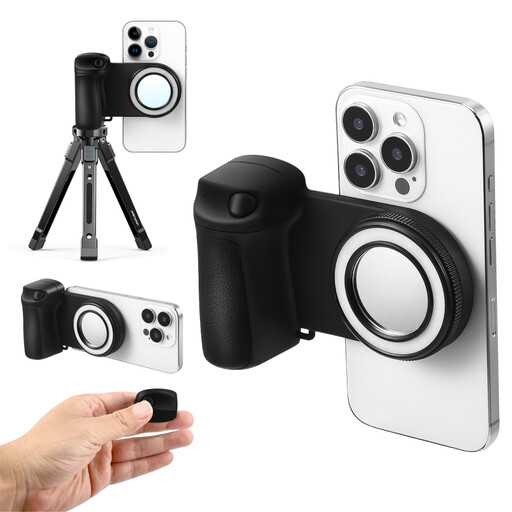
The following pick is for smartphone photography with a detachable remote shutter release; it is not a substitute for a camera remote shutter release that’s compatible with a specific camera model.
 No image available
For smartphone photography, the product details describe the detachable Bluetooth shutter release as suitable for taking photos remotely.
The 1/4-inch tripod thread lets you attach it to a compatible tripod.
Not necessarily. If your camera has a suitable self-timer or supported app-based remote control, you can start by trying these features with the camera set up securely. An accessory remote is more useful if you want to choose exactly when to take the photo or move away from the camera while arranging everything.
First, check whether your camera model supports Bluetooth remote control. Sony also advises turning on Bluetooth and Bluetooth remote control, then pairing the devices. If you’ve used the remote with another camera, you may need to pair it again.
Check whether a wireless kit requires an additional compatible camera cable and whether any required batteries are included. In general, consumers who enter into distance contracts have a statutory 14-day right of withdrawal, subject to legal requirements and exceptions. For goods, claims relating to defects generally become time-barred two years after delivery; this is separate from any voluntary manufacturer’s guarantee.
For wireless products, the German Federal Network Agency checks, among other things, CE marking, manufacturer information, German operating and safety instructions, and conformity documents. A CE mark alone is not an independent assessment of quality. According to the German Environment Agency, used batteries and rechargeable batteries should be taken to collection points, not put in household waste. This guidance applies to wireless and battery-powered options, not to every wired remote shutter release.