
Lieferung heute & morgen

Qualitätsgarantie

Willkommens-Angebote freischalten: KOSTENLOSE Lieferung | Bis zu 80 % RABATT | Kostenlose 30-Tage-JoyPlus-Testphase
App herunterladen
Remote-controlled cars for children combine movement, technology and creative play. However, eye-catching LED effects and claims such as “for all terrains” alone reveal little about whether a model is suitable for the child, the surroundings and the planned budget. Before buying, parents, grandparents and other family members should pay particular attention to the recommended age, controls, battery and intended use.
A remote-controlled toy car may be advertised as suitable for use in water when this only means splash resistance. Specific information about sealing and permitted use is crucial. If there is no IP rating or clear guidance, the vehicle should not be used in a swimming pool, bath or deeper water. Even with models explicitly designed for use in water, remember: the battery and charging port must be completely dry before charging.
Many children's cars come with a rechargeable battery, while the remote control requires additional AA batteries. Stated play times depend on driving style, surface and charge level. So check the following:
A low purchase price can be offset by frequent battery purchases.
An RC car with 360° rotation or high speed may be difficult for younger children to control. For RC toys from age 3, parents should look for a straightforward remote control, moderate speed and a sturdy body. Small parts, batteries and accessories should be kept away from children under three. The toy should be used in accordance with the manufacturer's instructions and under direct supervision.
A 4WD RC car transfers power to all four wheels. This can be useful on grass, sand, gravel or uneven ground. Large, treaded rubber tyres improve traction, but they cannot compensate for an unsuitable driving surface. For carpets, tiles and tarmac, a more compact model with a simpler drive system is often sufficient.
With a remote-controlled monster truck, ground clearance and suspension are also important. A low centre of gravity can reduce the risk of tipping over, while a high body helps the vehicle clear obstacles more easily. The term “off-road” should therefore always be considered alongside the tyre tread, suspension and vehicle size.
A 2.4 GHz remote control is practical for family use, as several vehicles can usually be operated at the same time. The actual range depends on the surroundings and any obstacles. For younger children, large buttons and clear forward/reverse controls are often more useful than numerous special functions.
Some models combine a handheld remote control with gesture control. This option can make it easier to get started, but it requires a certain degree of coordination. Consider whether the child would prefer precise buttons or trying out movements with a sensor watch.
An RC car with LED lights is visible at dusk and provides additional play effects. However, LED lighting is not a substitute for adequate indoor or outdoor lighting. With a remote-controlled car with 360° rotation, buyers should also check whether the function works reliably when operated manually, automatically or only on smooth surfaces.
The body is also important. Rounded edges, durable plastic and protected wheels can be advantageous during everyday impacts. However, a manufacturer's statement about material quality is not a guarantee that the toy will remain undamaged under every type of strain.
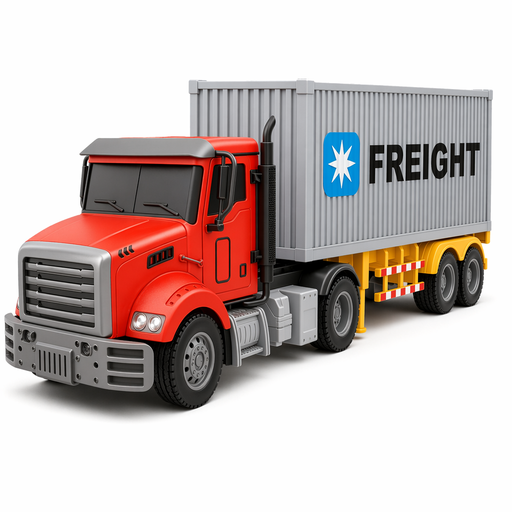
Why this product suits this profile: According to the product details, the container truck offers straightforward controls with forward, reverse and steering functions, and is suitable for children aged 3 and over.
The functions are clearly defined: there are no vague claims about water use or high speeds, just a vehicle for controlled play on suitable surfaces.
45 cm body, 2.4 GHz remote control, front and roof lights, plus a USB-rechargeable 3.7 V battery according to the product description.
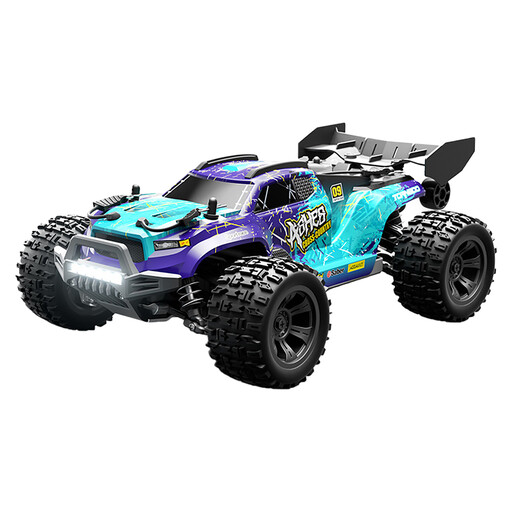
Why this product suits this profile: According to the product details, this model is aimed at older children, teenagers and adults who value four-wheel drive, suspension and off-road capability.
The description specifies components such as an aluminium chassis, shock absorbers, 4WD drive and a 7.4 V battery. This makes it easier to compare with broad “off-road” marketing claims.
4WD system, metal chassis, wear-resistant tyres, shock absorbers and LED headlights; the remote control also requires 3 AA batteries.
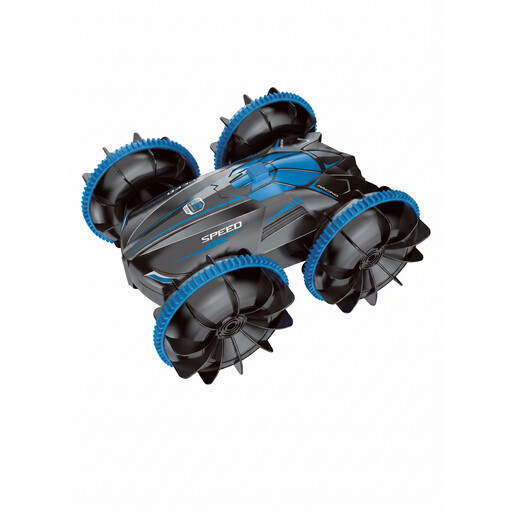
Why this product suits this profile: For children who want to try stunts and different surfaces, this vehicle combines a handheld remote control with gesture control.
The product details distinguish between land and water use and mention a sealed construction. Before use, check the instructions and the permitted water depth.
4WD drive, 180° double-sided driving, 360° rotation, automatic stunt demonstration and two control methods according to the product description.
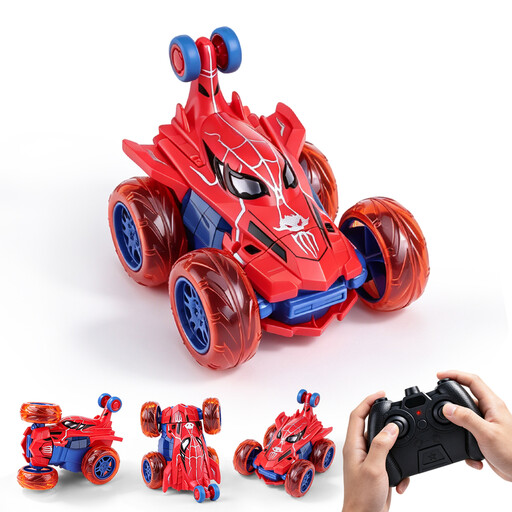
Why this product suits this profile: According to the product details, this compact stunt car is aimed at children aged 4 to 12 and combines LED wheels with automatic rotation and flip functions.
The stated age range and intended use on sand, grass and roads make the choice easier to assess than a general recommendation without a defined usage context.
2.4 GHz remote control, USB battery, LED wheels, 360° stunts and automatic demonstration according to the product description.
Before the first drive, check the battery, remote control and wheels for visible damage. Only charge lithium batteries with the supplied cable, and never leave them unattended while charging. After driving on sand or gravel, clean the vehicle with a dry or slightly damp cloth. Water vehicles must be completely dry before being opened, cleaned or charged.
Also check the CE marking, age recommendation, warnings and the details of the responsible person in the EU. The marking should be clearly identifiable on the product, packaging or accompanying documents. For an RC car for boys and girls, colour is not what matters; what matters is whether the controls, size and functions are suitable for the child.
We have put together a complete, regularly updated list of products that fully meet these strict selection criteria and the safety regulations applicable in the EU.
Battery life depends on battery capacity, driving mode, surface and use of the lights. Specific voltage and capacity figures, such as 3.7 V or 7.4 V and the capacity stated in mAh, are more reliable than broad advertising claims. A spare battery can be useful for longer play sessions, provided the manufacturer explicitly supports it.
That depends on the individual model. A product marked “from age 3” may be intended for this age group; even so, supervision, a clear driving area and safe handling of batteries are essential. Powerful 4WD models or complex stunt vehicles may be more suitable for older children.
Depending on the manufacturer's specifications, suitable surfaces include firm outdoor areas, grass, sand, gravel or level indoor floors. Before driving, check whether the tyres, ground clearance and drive system are suitable for the surface. Use in water is only advisable when the model is explicitly designed for it and the instructions specify the relevant limits.