
Lieferung heute & morgen

Qualitätsgarantie

Willkommens-Angebote freischalten: KOSTENLOSE Lieferung | Bis zu 80 % RABATT | Kostenlose 30-Tage-JoyPlus-Testphase
App herunterladen
Stubborn yellow-brown deposits in the toilet are a common nuisance. This so-called urine scale forms from a chemical reaction between limescale in the water and urine, and it's nearly impossible to remove with conventional cleaning products. Out of frustration, many people turn to unsuitable products or methods, unknowingly making the problem worse. As your Joybuy Product Recommendation Officer, I'll help you identify the common pitfalls and make an informed choice.
The search for a solution often leads to one of two dead ends:
To remove urine scale and limescale from your toilet without damaging the ceramic, specific product features are crucial. Before you buy, pay attention to the following three parameters.
Urine scale is a mineral compound. To dissolve it, an acid-based cleaner is required. Products containing amidosulfonic acid, phosphoric acid, or similar acids are particularly effective for this purpose. They chemically react with the limescale and urine scale, breaking down the deposits so they can be easily flushed away. Chlorine-based cleaners, on the other hand, primarily serve to disinfect and bleach but are less effective at dissolving mineral encrustations.
Effectiveness largely depends on whether the cleaner can cling to the affected areas long enough, especially on the vertical sides of the toilet bowl and under the rim. A thick gel or a high-viscosity cleaner has a clear advantage here. It adheres better and can work for several minutes or even hours to penetrate even the most stubborn layers. This is a critical factor when you need to descale a toilet that already has heavy build-up.
Not every product is equally suited for every task. There's a difference between a highly concentrated power cleaner for acute removal and a product for regular use and prevention. For a deep clean, such as when you need to clean a urinal in a commercial setting, a strong, specialised cleaner is necessary. For weekly maintenance to prevent new build-up, a milder yet still acid-based formula is often sufficient.
Based on these objective criteria, we have put together a selection of products suitable for different needs and use cases.
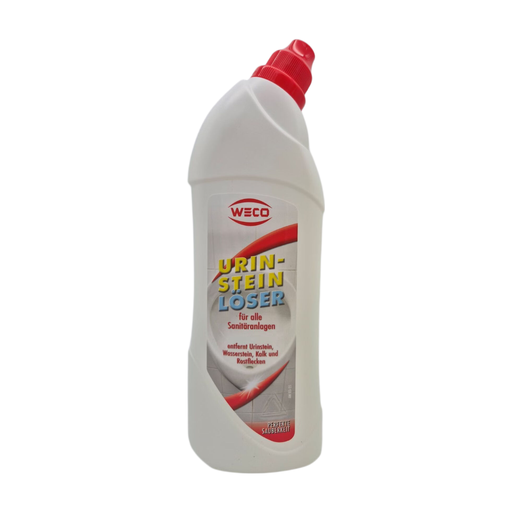
Why This Fits Their Persona: Ideal for users facing massive, old deposits in toilets or urinals. The 1-litre bottle offers an economical solution for repeated applications or for use in high-traffic restrooms.
This product is a specialised cleaner with a formula specifically designed to dissolve urine scale and limescale. It is not a weak, all-purpose solution.
Effectively removes urine scale, limescale deposits, water stains, and rust spots. Suitable for toilets, urinals, sinks, and drains.
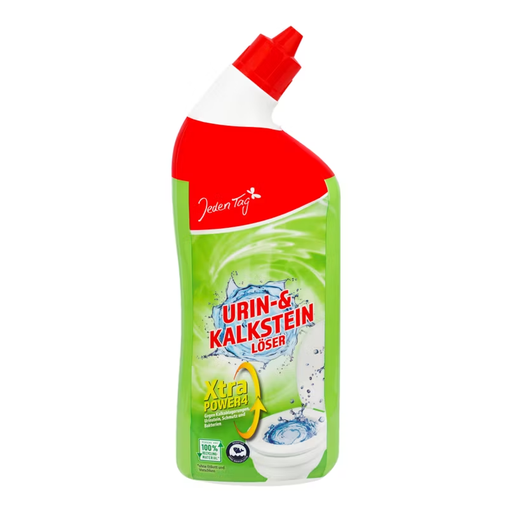
Why This Fits Their Persona: Perfect for households that want to maintain a clean toilet through regular, straightforward application. The formula is designed to prevent new build-up with weekly use.
This product combines cleaning and prevention. It avoids the need to resort to aggressive methods later by tackling the problem at its source.
Powerful formula against stubborn deposits and odours. The convenient bottle allows for precise application.
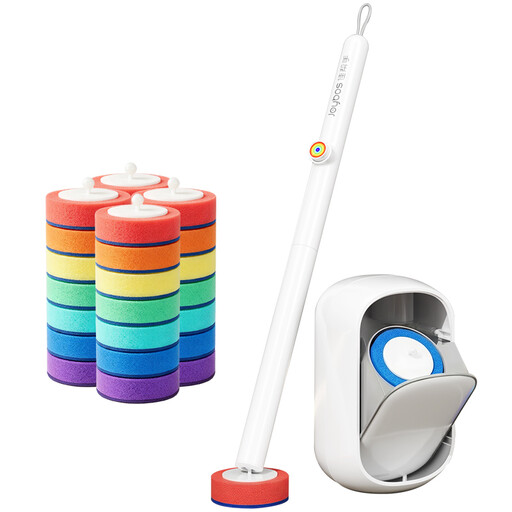
Why This Fits Their Persona: For anyone who finds the idea of a reusable, dirty toilet brush unhygienic. This system with disposable cleaning heads offers a clean alternative for mechanical scrubbing.
It solves the hygiene problem of conventional brushes. Instead of spreading germs, the cleaning head is simply disposed of after use. This perfectly complements chemical cleaning.
Disposable cleaning heads for maximum hygiene. No direct contact with a dirty brush. Includes a caddy for clean storage.
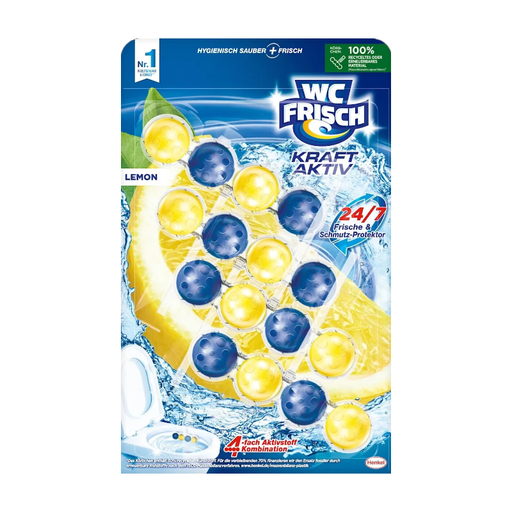
Why This Fits Their Persona: For users who want a consistently clean and fresh toilet between deep cleans. This product works with every flush and helps to slow the formation of new deposits.
This is not just an air freshener. The 4-in-1 active ingredient combination creates a cleaning foam that actively works against limescale and dirt, providing preventative action.
Works with every flush. The combination of cleaning foam, anti-limescale formula, dirt protector, and extra freshness provides all-around care.
We have compiled a complete, up-to-date list of products that fully meet these strict selection criteria and German safety regulations.
For heavy, visible build-up, an intensive initial application is recommended, possibly with an overnight contact time. For prevention and maintenance, an application every one to four weeks is sufficient, depending on water hardness and frequency of use, to prevent new urine scale and limescale from forming.
No, generally not. Most urine scale removers are highly acidic and specifically formulated for use on the non-sensitive ceramic of toilets and urinals. They can cause irreparable damage to acid-sensitive materials like marble, enamel, certain plastics, or chrome fittings. Always read the manufacturer's instructions for use.
When used correctly according to the manufacturer's instructions, the acids used in toilet cleaners are safe for high-quality sanitary ceramic. The glaze on modern toilets is very resilient. A far greater danger to the ceramic surface comes from mechanical abrasion with scratching tools like hard sponges or metal brushes.