Start by using the window as your main light, then add a dimmable bi-colour panel only where your hands or the seam are in shadow. This lets you make the most of the available daylight. For a larger work area, a point light with a suitable light modifier may be an option, while a small battery-powered light is better suited to brightening a limited area. Adobe Lightroom Academy and Nikon explain how window light can vary and how fill light can soften shadows. Check colours, shadows and any potential banding with a test recording under your actual filming conditions.
Which setup is right for you?
Filming seams by a window
You want to use the available window light and brighten your hands so the seam remains visible. Adobe Lightroom Academy explains that window light changes with conditions, while Nikon describes how fill light can soften shadows.
Showing fabric colours in a tutorial
You want to assess the fabric, thread and repair in the same shot, so consistent lighting and white balance matter. Adobe gives 5,600 K as a starting point for daylight.
Filming longer tasks
You need a light that stays securely in position and want to check the power supply, image flicker and any possible noise during a full test recording.
What should you look for when choosing?
Window light alone
A good fit if: The work area stays sufficiently and evenly lit throughout filming.
The trade-off: Daylight costs nothing to use, but changes with the weather and time of day.
Small battery-powered light
A good fit if: Only a small area beside your hands is too dark and there’s little room for a stand.
The trade-off: A compact light won’t necessarily provide broad coverage. Check the battery life and mounting options for the specific model.
Bi-colour LED panel
A good fit if: You want to add a controlled amount of light to the window light and adjust the colour temperature and brightness.
The trade-off: Check whether a stand, diffuser and mains adapter are included with your chosen version. Additional parts may be needed for battery operation.
Point light with softbox
A good fit if: You want to light a larger work area or create a repeatable setup when daylight changes.
The trade-off: Light modifiers and stands take up space and aren’t always included. Lux figures measured with a narrow reflector don’t describe the light output with a softbox.
When filming a repair by a window, your main buying considerations will depend on whether shadows, fabric colours, fine stitches or longer recording times matter most to you.
| Consideration |
What to check before buying |
Who is this particularly important to? |
| Shadows on hands and seam |
Adjustable brightness; room to position the light to the side and, if needed, add a diffuser. |
When I film myself sewing a seam, I don’t want my hands to hide the details. Around 36% of consumers are primarily concerned about shadows on their hands and the repair area. |
| Fabric and thread colours |
Adjustable colour temperature and model-specific colour rendering information; film the fabric and thread under your planned lighting to test them. |
When I want to show fabric and thread in a tutorial, I need to be able to assess both in the same shot. Around 29% of consumers are most concerned about fabric colours. |
| Fine stitches in shot |
Check the lit area, mounting angle and the effect of a diffuser in your actual camera frame; only compare lux figures at similar distances and with similar attachments. |
When I want to show small stitches, the light needs to reach the seam, not just the background. Around 21% of consumers are most concerned about fine details in the image. |
| Longer recording sessions |
Check the power supply and what’s included; run a test using your intended camera, frame rate, dimming level and audio recording setup. |
When I want to film a longer task without interruption, the power supply needs to suit my setup and the recording should remain free from interruptions. Around 14% of consumers are primarily concerned about recording time. |
Common misconceptions
-
Comparing lux figures without checking the test conditions
The lux figure quoted for the amaran COB 60x S applies at 1 m with a narrow reflector. It doesn’t describe the light output once a softbox is attached.
Compare the distance and attachment, and also check which area is lit within your own camera frame.
You may need to buy a suitable light modifier separately.
-
Assuming a stand or battery is included with a panel
The NEEWER NL660 is available in versions with and without a stand. The documented NEEWER and Rollei listings don’t include batteries for optional battery operation.
Before ordering, compare what’s included with the specific version against the setup you have planned.
-
Assuming a high colour-rendering rating guarantees accurate fabric colours
White balance and the mix of window and artificial light also affect the colours captured.
Film the fabric and thread together under the conditions you’ll use later, then assess the result on your intended playback device.
Brands to consider
NEEWER
According to NEEWER, the NL660 is a bi-colour panel for supplementary lighting. Depending on the version, it’s available with or without a stand.
- NEEWER lists a colour temperature of 3,200–5,600 K, dimming and a CRI of at least 96 for the NL660.
- A mains adapter and diffuser are listed for the documented versions; an NP-F battery isn’t included. Check what comes with the specific version, including whether it has a stand.
Rollei
The LUMIS LED Panel Bi-Color, model 28573, is a panel option for an adjustable tabletop setup.
- Rollei lists a colour temperature of 3,200–5,600 K in 100 K increments, dimming in 1% increments, a CRI above 96 and a TLCI above 97.
- These figures are from the manufacturer and aren’t independent measurements. According to Rollei, two compatible NP-F batteries for optional battery operation aren’t included.
Godox
The Godox P260C Pro is a bi-colour panel for adjustable lighting across your work area.
- Godox lists a colour temperature of 2,800–6,500 K, an average CRI and TLCI of at least 98, and several power options.
- Check the connections and what’s included with the specific version. The manufacturer’s description of softer light isn’t a comparison test against other panels.
amaran
According to amaran, the COB 60x S is an adjustable bi-colour point light with a Bowens mount for compatible light modifiers.
- amaran lists a colour temperature of 2,700–6,500 K and stepless dimming.
- The manufacturer’s lux figure applies at 1 m with a narrow Hyper Reflector and at 5,600 K, not with a softbox attached. The compatible light modifiers listed aren’t included in the stated package.
Ulanzi
According to the manufacturer, the VIJIM VL120 Bi-Color is a compact light for brightening a specific area. Don’t assume it can replace a large panel without checking first.
- For the VIJIM VL120 Bi-Color, Ulanzi lists a colour temperature of 3,200–6,500 K, a built-in 3,100 mAh battery and USB-C charging.
- Battery life and light output figures apply to this model. Check they’re suitable for your planned recording time and work area.
Joybuy products
This selection includes smartphone ring lights and compact handheld lights for adding light to a specific area. Check in your actual camera frame whether they light your hands and the seam sufficiently; they aren’t necessarily a substitute for a panel or softbox.
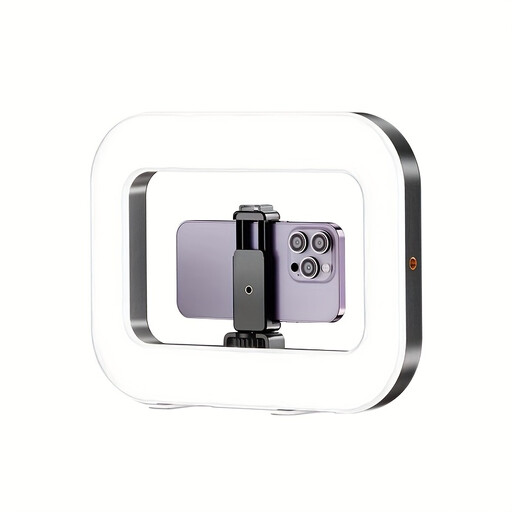 No image available
Yoever smartphone ring light with built-in battery
For smartphone filming when you need extra light in a specific area.
The product title specifies a built-in battery.
View on Joybuy
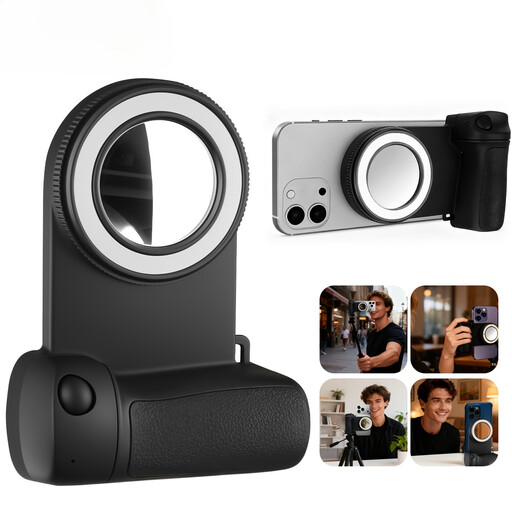 No image available
Yoever Magnetic Phone Fill Light with camera grip and Type-C charging
An option for smartphone filming when you can position an extra light close to your subject.
The title specifies a camera grip and Type-C charging. Check whether your smartphone or case supports magnetic attachment.
View on Joybuy
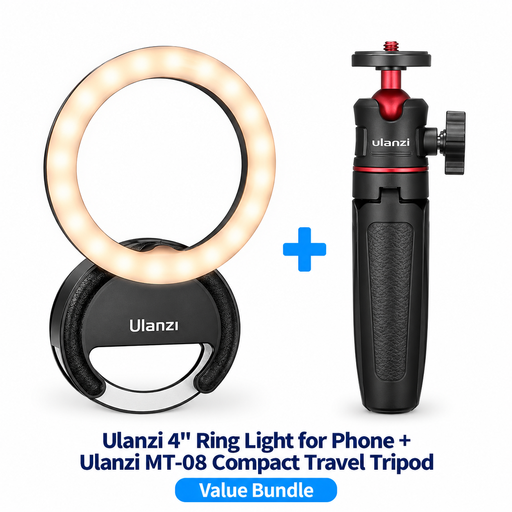 No image available
ULANZI 4-inch selfie ring light with MT-08 compact tripod
This set may suit you if you’re looking for a ring light with a compact tripod for tabletop or mobile filming.
The product title specifies a 4-inch ring light and an MT-08 compact tripod.
View on Joybuy
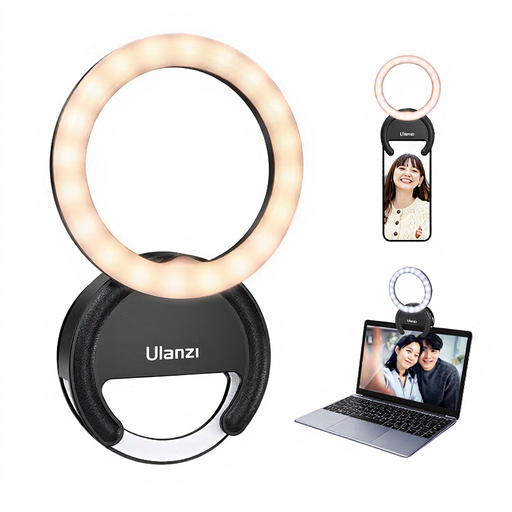 No image available
ULANZI 4-inch ring light for smartphones
For smartphone filming when you need an extra light attached directly to your device.
The product title specifies three colour temperatures from 3,000–7,000 K and five brightness levels.
View on Joybuy
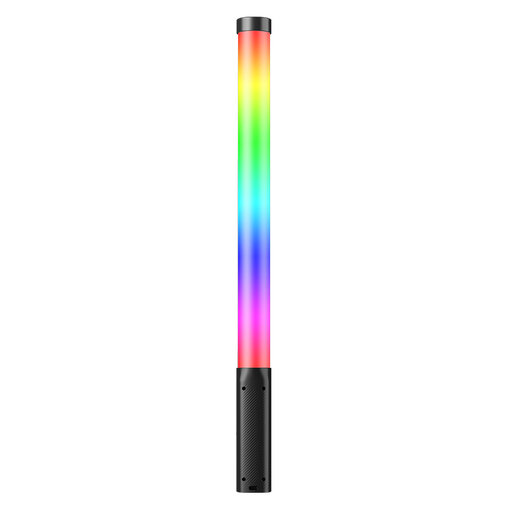 No image available
Ulanzi VL119 Handheld Video Light 10W
A handheld option for mobile filming when you want to position the light close to your work area.
The product title specifies 10 W, 360 lux at 0.5 m, a built-in 3300 mAh battery and an adjustable colour temperature of 2,500–9,000 K.
View on Joybuy
Frequently asked questions
How should I position extra lighting beside a window?
Start by using the window as your main light, then check the camera image to see whether a dimmed fill light positioned to the side softens the shadows cast by your hands. A diffuser can soften harsh shadows; the best position depends on your window, table and camera frame.
Can I simply select the daylight setting to show fabric colours?
5,600 K can be a useful starting point, but it isn’t a fixed setting for every window. Adobe gives this value as a standard for natural daylight and notes that conditions vary with the weather and time of day. Use a test recording of the actual fabric to adjust your lighting and white balance.
Why does my video show bands when I use LED lighting?
Some LED light sources can cause banding when combined with the way a sensor reads the image. Canon describes this as a possible image issue with an electronic shutter. Make a test recording with your camera and intended lighting and filming settings; product specifications alone can’t replace this test.
Which accessories should I check for a panel, and how long do I have to cancel an online purchase?
Check whether a stand, light modifier and compatible batteries are included with your chosen version; batteries aren’t included with the documented NEEWER and Rollei listings. The Verbraucherzentrale explains that for online orders in Germany, you generally have 14 days from delivery to withdraw from the purchase (as at 5 August 2026). Check the specific retailer’s terms and note that this refers to the right of withdrawal.
How can I tell which markings apply to an electric video light?
Check the markings and documentation for the specific product. Your Europe, the European Union’s information portal, explains that CE marking is only required for products covered by relevant harmonised EU rules that require it. CE marking says nothing about image quality.


