
Lieferung heute & morgen

Qualitätsgarantie

Willkommens-Angebote freischalten: KOSTENLOSE Lieferung | Bis zu 80 % RABATT | Kostenlose 30-Tage-JoyPlus-Testphase
App herunterladen
Choosing a new LED ceiling light can quickly become overwhelming. Hidden among technical specifications like lumens, Kelvin, and IP ratings are pitfalls that often only become apparent after installation. A mismatched fixture not only compromises a room's atmosphere but can also lead to unexpected costs or safety concerns. This guide will help you identify the crucial features and make an informed decision that perfectly suits your needs.
We'll highlight the three most common buying mistakes and show you what to look for to avoid them:
To avoid these mistakes, it's essential to interpret product specifications correctly. Instead of being swayed by marketing terms, you should focus on three objective parameters.
In the past, wattage was a reliable indicator of a light bulb's brightness. With LED technology, this is no longer the case. An LED produces the same or even more brightness with significantly lower energy consumption (Watts). The decisive value is therefore the lumen (lm), which indicates the actual luminous flux, or brightness.
The following guidelines apply for ambient lighting in living spaces:
The colour temperature, measured in Kelvin (K), determines whether the light is perceived as warm and cosy or cool and stimulating. There are clear distinctions:
Many modern LED ceiling lights offer an adjustable colour temperature (CCT - Correlated Color Temperature), allowing you to flexibly adapt the lighting mood.
The IP (Ingress Protection) rating indicates how well a light is protected against the ingress of foreign objects (first digit) and water (second digit). This is particularly crucial in damp areas like the bathroom or kitchen.
Installing a light with an inadequate IP rating in a damp room is not only a safety risk but will also void the warranty.
Based on these objective criteria, we have identified several models that provide a suitable solution for specific requirement profiles.
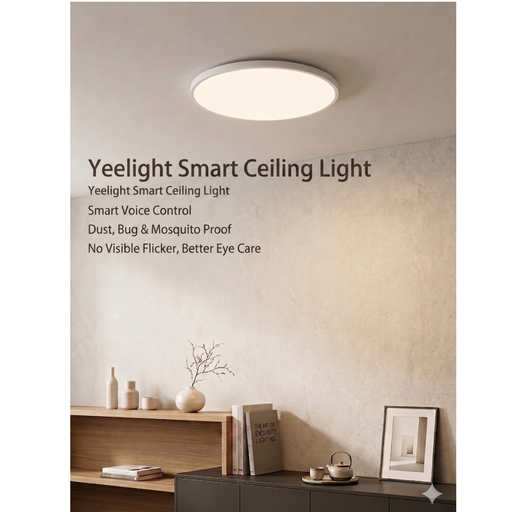
Why It Fits This Persona: Ideal for users who want to fully integrate their lighting into their Smart Home system (Alexa, Google Home). Control via app or voice allows for maximum flexibility for any situation, from focused work to a relaxing evening.
The colour temperature trap is bypassed with its continuously adjustable colour temperature. The dimming dilemma is eliminated as dimming is handled digitally via the app or voice commands, requiring no external dimmer switch.
Seamless compatibility with popular smart home platforms; dust- and insect-proof design for low maintenance.
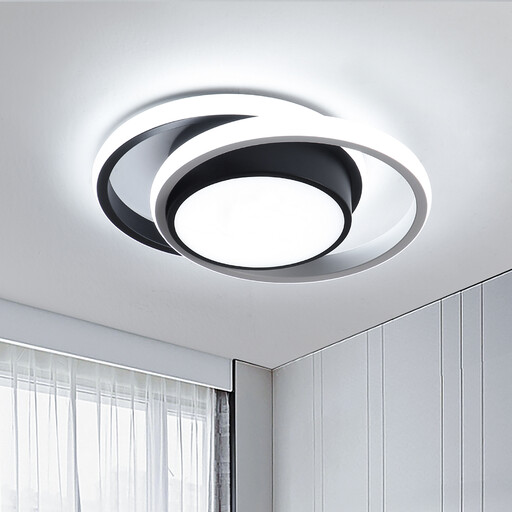
Why It Fits This Persona: Perfect for renovators and users looking for a versatile light for multi-functional rooms. The modern, black aesthetic complements many interior styles, and control via remote control offers high convenience without complex installation.
Solves the dimming dilemma and the colour temperature trap with the included remote control. Brightness (dimmable) and colour temperature (3000K-6000K) are adjustable without any structural changes to the wall switch.
High flexibility with adjustable brightness and colour temperature; simple operation via remote control; modern, slimline design in a black ceiling light finish.
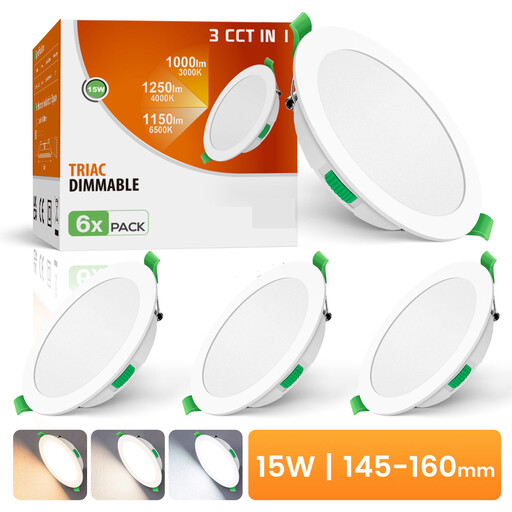
Why It Fits This Persona: A functional choice for DIY enthusiasts who need safe and adaptable lighting for damp areas like bathrooms, kitchens, or covered balconies. The set allows for uniform illumination of larger areas.
Sidesteps the damp room mistake with its IP44 certification, which ensures protection against splashing water. The colour temperature can be selected via a switch before installation between warm white, neutral white, and cool white.
Suitable for damp rooms (IP44); ultra-slim design for seamless ceiling integration; selectable colour temperature (3CCT).
We have compiled a complete, up-to-date list of products that fully meet these strict selection criteria and UK safety regulations.
The required brightness depends on the room's size and use. As a rule of thumb, you can plan for 100-150 lumens per square metre for living rooms and bedrooms, and 250-300 lumens per square metre for work areas like kitchens and bathrooms. Therefore, a 20 m? living room would need about 2,000-3,000 lumens for good ambient lighting.
No. An LED ceiling light must be explicitly marked as "dimmable." Additionally, the wall switch (dimmer) used must be compatible with LED technology. Older dimmers designed for incandescent bulbs can cause flickering or buzzing with LEDs. Lights with an integrated dimming function via remote control or app bypass this problem.
The colour temperature, measured in Kelvin (K), describes the colour of the light. Low values (e.g., 2,700 K - 3,000 K) produce a warm, yellowish light (warm white) that is perceived as cosy. High values (e.g., 5,000 K - 6,500 K) produce a cool, bluish light (cool white) that resembles daylight and promotes concentration. The choice depends on the room and the desired atmosphere.