
Lieferung heute & morgen

Qualitätsgarantie

Willkommens-Angebote freischalten: KOSTENLOSE Lieferung | Bis zu 80 % RABATT | Kostenlose 30-Tage-JoyPlus-Testphase
App herunterladen
Rescue vehicles as toys combine role play, an interest in vehicles and technical details. For parents and relatives, however, it is not just about lights, sirens or eye-catching packaging. The key considerations are suitable age recommendations, durable materials, genuinely useful features and a size that suits the intended play area.
When it comes to fire engines and rescue vehicles, costly mistakes often result from three common pitfalls:
The manufacturer's age recommendation is an important guide. According to the product information, the SIKU Mercedes-Benz Sprinter ambulance model is intended for children aged 3 and over. The two Bruder models mentioned are aimed at children aged 4 and over and contain smaller accessories.
Small parts may pose a choking hazard to children under 3. With older children, you should also check whether they can safely handle detachable parts, ladders, figures and accessories. Adult supervision is advisable for water and sound features, particularly with younger children.
For regular play, ABS plastic, metal components and sturdy axles are important criteria. A realistic emergency vehicle toy should roll smoothly without doors, ladders or attachments coming loose easily during normal use.
You should also look for:
A combination of metal and plastic, as used in the SIKU model, can be an appealing choice for compact models. Larger Bruder vehicles made from ABS plastic, on the other hand, offer more room for features and role play.
The scale affects more than just the appearance. It also determines how easy the toy is to store and whether it is compatible with figures. 1:16 is suitable for larger play areas and clearly visible details. 1:50 takes up less space and is easier to take with you.
For fire engine toys with lights and sound, you should check the power requirements. The Bruder 02680 and Bruder 02673 each require three LR44 button cells; according to the product information, these are not included. The SIKU 2115 does not require batteries. This reduces ongoing hassle if the vehicle is often used away from home.
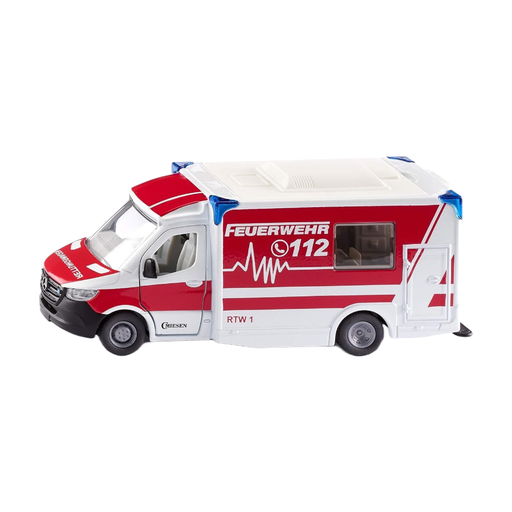
Why this product suits this profile: This compact 1:50 rescue vehicle toy does not require batteries and is ideal for smaller play areas, taking on the go or as an introduction to the SIKU vehicle range.
Your purchase decision does not depend on battery-powered features. The scale, dimensions and contents are clearly stated.
Metal and plastic construction, removable roof, opening doors, rubber tyres, plus a carrying case and spineboard as accessories.
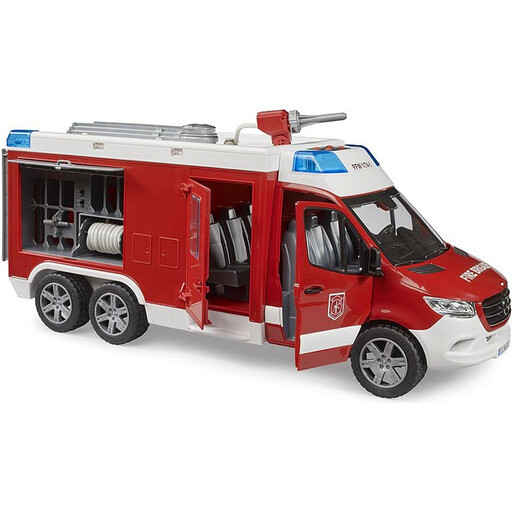
Why this product suits this profile: This 1:16 model combines a larger vehicle size with opening doors, accessories and an integrated light and sound module.
The water feature is clearly explained: the tank, water cannon and additional hose can all be used. The water should be removed after play.
ABS plastic, working water pump, two hoses, ladder, shovel and broom, plus an engine sound, three siren tones and lights.
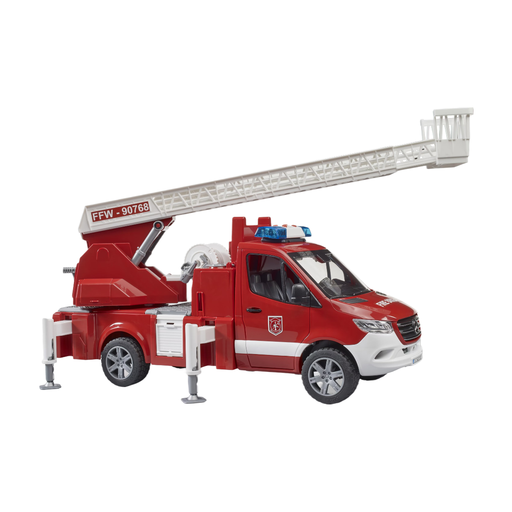
Why this product suits this profile: This large fire engine with turntable ladder is intended for children aged 4 and over who want to create detailed emergency scenarios with a ladder, water jet and accessories.
The ladder is more than a decorative feature: it extends, can be used with the rescue basket and is stabilised by support feet. This reduces the risk of buying a mere replica.
Extendable ladder, water jet, functional support feet, rescue basket, opening doors and storage compartments, plus a light and sound module.
We have compiled a complete, regularly updated list of products that fully meet these strict selection criteria and the safety regulations applicable in the EU.
A fire engine with a water pump should have its tank, hose and water cannon emptied after every use. A dry cloth is sufficient for cleaning the exterior; electrical modules must not come into contact with water. For models with button cells, it is advisable to remove the batteries if the toy will not be used for an extended period. This can prevent damage caused by leaking batteries.
Store the toy in a dry, dust-free location. Extendable ladders and small accessories should not be placed underneath heavy objects. This keeps moving components accessible and the accessories complete.
This depends on the specific model and the manufacturer's recommendation. According to the product description, the SIKU 2115 is intended for children aged 3 and over. Models with more accessories, water features or button cells are often aimed at children aged 4 and over. Check the age rating and safety information on the product page before buying.
Lights and sound can enhance role play, but they also use additional battery power. Check whether batteries are included, which battery types are required and whether the module can be switched off. For frequent use in a child's bedroom, a model without electronics may be more practical.
A 1:16 model is considerably larger and usually offers more visible features and accessories. A 1:50 rescue vehicle takes up less space and is easier to transport. For shared play, vehicles, figures and accessories should ideally use the same scale.