Removing residual water in a targeted way
You want to clear accessible puddles and wet, coarse dirt after a small, uncontaminated water leak. Look for a clearly specified wet-vacuuming function and a nozzle suitable for your floor.


For accessible, uncontaminated residual water, a machine specifically designed for wet vacuuming may be suitable, provided it can be used safely and the water can be emptied conveniently. A suitable pump is another option when you need to move larger volumes of water. If contamination is possible, electrical systems are affected or the building is damaged, get a professional assessment first.
You want to clear accessible puddles and wet, coarse dirt after a small, uncontaminated water leak. Look for a clearly specified wet-vacuuming function and a nozzle suitable for your floor.
You need to move the machine through a narrow entrance or carry it to the place where it can be emptied. Hose length, machine dimensions and an easily accessible drainage point may therefore be crucial.
Before choosing a machine, you need to assess whether the water, electrical system and building allow it to be used safely. If contamination is possible or there is visible damage, getting a professional assessment matters more than extra convenience features.
Suitable if: You want to collect limited amounts of uncontaminated water from accessible floor areas.
Keep in mind: The container capacity does not confirm the usable water capacity or continuous pumping performance, so remember to plan for emptying it.
Suitable if: Directing water along a discharge route matters more than collecting it in a vacuum cleaner's container. A clean-water submersible pump is a separate type of appliance for this purpose.
Keep in mind: The discharge route and connections must be suitable. The manufacturer's maximum figures do not guarantee the flow rate at your particular location.
Suitable if: The water may be contaminated, electrical systems are affected or there is visible damage to the building.
Keep in mind: Removing visible water does not assess damp building components or potential consequential damage.
| Concern | What to check before buying | Who this matters most to |
|---|---|---|
| Safe access | Only use the machine if the area is safe to access; rule out possible contamination. | If I’m not sure whether the electricity or water poses a risk, I’ll get this checked before using any equipment. Around 29% of consumers put safety and clean water first. |
| Water collection | Check that the specific version has a clearly stated wet-vacuuming function and a suitable floor nozzle. | If I want to collect accessible residual water, I need a function designed for the job and an application suitable for the floor. Around 29% of consumers prioritise collecting residual water. |
| Access and emptying | Check the machine's dimensions and hose length, and make sure you can reach the place where it will be emptied. | If the cellar entrance is narrow or the emptying point is awkwardly located, I’ll plan the route for both the machine and the water. Around 28% of consumers pay particular attention to access and emptying. |
| Care and spare parts | Check the cleaning instructions for the specific filter and the spare-parts details for that version. | If I want to clean the machine after use and keep using it for longer, care and suitable spare parts matter to me. Around 14% of consumers put these points first. |
Collecting water does not assess damp building components or resolve any damage to the building. The Verbraucherzentrale discusses these remediation issues, particularly in the context of flooding; this does not mean that every small, clean water leak requires full remediation.
Use a vacuum cleaner only for the limited task of collecting water, and get any visible damage assessed by a professional.
If building components have actually been affected, a professional inspection, drying or remediation may also be needed.
A wet and dry vacuum cleaner category may include different types of appliance. MediaMarkt also lists vacuum mops in this category; the category name alone does not confirm that a particular model is suitable for residual water in a cellar.
Check the wet-vacuuming function and usage limits on the product page for the specific model and in its user manual.
A vacuum cleaner's container capacity and a pump's flow rate are different specifications. A drain plug does not prove that the machine can actively pump water under pressure.
Plan water collection and emptying separately. For a pump, the discharge route and connection size must suit the job.
The WD 6 P S V-30/8/35/T described by Vergleich.org does not have the same full model name as Kärcher's German WD 6 P S V-30/6/22/T. The 500-ml test described there does not establish a general volume or pumping limit for cellar water damage.
Before buying, check the full model name, model number and items included, rather than applying test results to a different version.
The WD range is relevant when considering residual water; the features mentioned here relate specifically to the WD 6 P S V-30/6/22/T.
The TC-VC 1930 S is an example of features to consider when planning container emptying and hose routing.
The UniversalVac 15 is an example of wet and dry cleaning, as well as planning for care and transport.
The clean-water submersible pump 11000 Aquasensor, article 9034-20, is an alternative for pumping water, not a wet and dry vacuum cleaner.
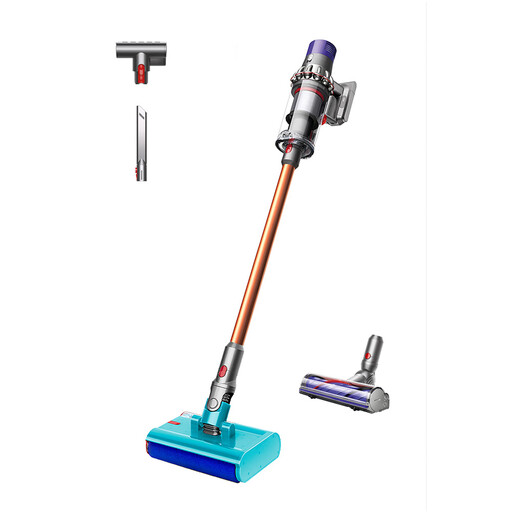
The Joybuy products below are described as wet and dry cleaners for hard floors. Before using one to collect residual water in a cellar, check the manufacturer's explicit approval, the intended floor type and the limits for liquids in the manual for that particular model.
 No image available
The description mentions a motorised wet cleaning head for collecting liquid from hard floors; check that the specific application and flooring are suitable for your cellar.
The description also mentions a separate container for loose dirt.
 No image available
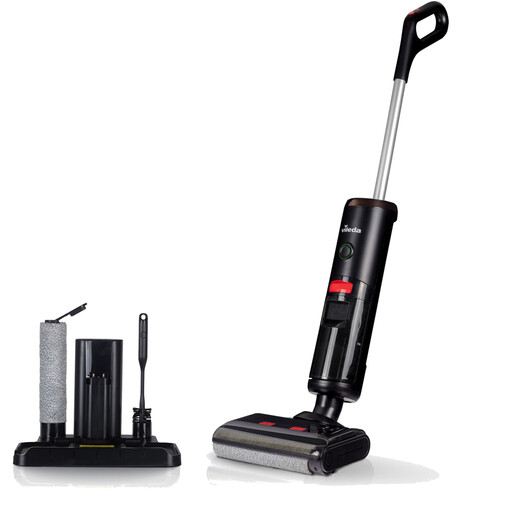
This model is described as combining vacuuming and mopping on hard floors; before using it to collect residual water in a cellar, check that wet vacuuming is explicitly approved for this purpose.
The description lists a 750-ml clean water tank and a 600-ml dirty water tank. According to the product information, petrol, alcohol, strong acids or alkalis, and flammable liquids are not suitable.
 No image available
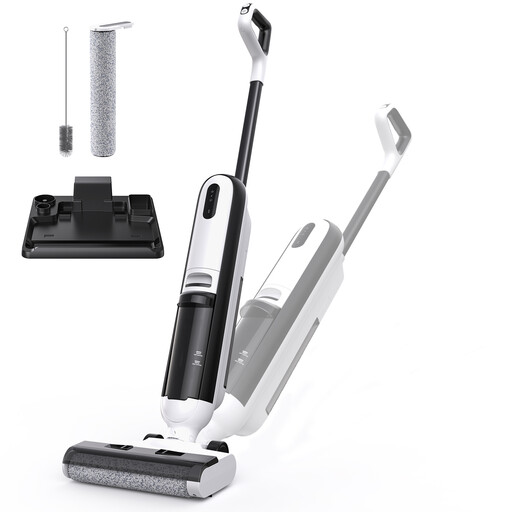
This model is described as a wet and dry vacuum cleaner with a dirty water tank; check the manufacturer's information on the specific floor surface and intended use with liquids.
The description lists a 460-ml dirty water tank and up to 30 minutes of runtime. According to the product information, flammable liquids are not suitable.
 No image available
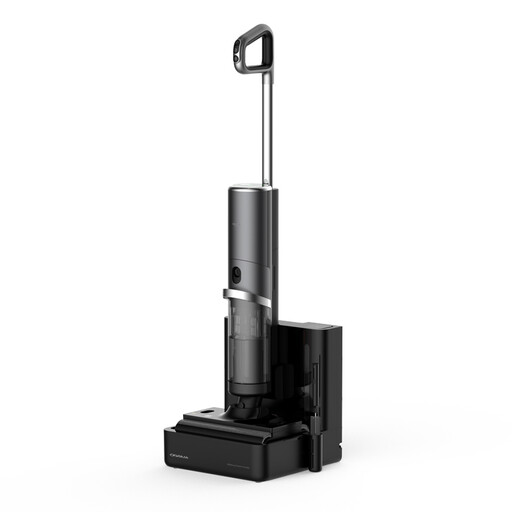
The description lists vacuuming and mopping functions for cleaning floors; before using it to collect residual water in a cellar, check that wet vacuuming is approved for the purpose and suitable for the floor conditions.
The product title mentions an additional 5-l clean water tank, and the description lists up to 40 minutes of runtime. According to the product information, highly flammable liquids and toxic chemicals are not suitable.
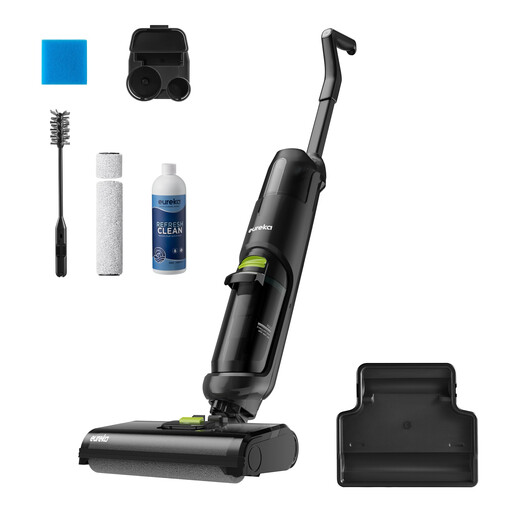 No image available
This model is described as suitable for sealed hard floors; check that the manufacturer intends it for your specific cellar floor and the task of collecting residual water.
The description lists a dual-tank system for clean and dirty water, as well as up to 30 minutes of runtime.
Do not enter the water to reach the mains connection, meter or fuse box. BG ETEM advises contacting the local energy supplier to switch off the power in this situation; if in doubt, assume that the electricity is still live. The Verbraucherzentrale advises entering flooded areas only once the electricity and gas have been switched off.
No. An electrical system affected by flooding should not simply be switched back on. BG ETEM recommends having it professionally checked for damage first. This applies to an affected system, not automatically to every socket in the building that has not been exposed to the water.
Do not use a vacuum cleaner if the water may contain heating oil, chemicals, sewage or other pollutants. Get the situation assessed by a professional rather than treating the removal of visible water as remediation.
Bosch recommends gently tapping the cartridge filter against a hard surface or rinsing it under water. Do not apply these care instructions to filters on other models.
No. GARDENA's specification refers to the residual water depth when using the pump; it does not mean that damp building components will be dry. Collecting water is no substitute for drying the building or assessing possible damage.