Which setup is right for you?

Photographers working with shiny pendants

You want to control distracting light reflections on resin without losing the shape and detail. The position of the light and the reflections it creates matter more than getting set up particularly quickly. Nikon and broncolor highlight lighting and reflections as important considerations in jewellery and product photography.

Online shop owners taking lots of product shots

You photograph small pendants on white repeatedly and need a tabletop setup that’s easy to reproduce. The inside of a light tent and its camera openings should suit your subject and camera angle. Nikon and NEEWER cover light tents and camera positioning in their information on jewellery photography and the LP40 model respectively.

Photographers who already own studio lights

You may only want to add a light modifier rather than buy another light. The key things to check are the connection on your specific light and what’s included with the model you choose, as the product information from Godox, walimex pro and Rollei shows.

What should you look for when buying?

LED light tent with white background

A good fit if: You photograph small pendants repeatedly at the same table and the front or top opening gives you the angle you need.

The trade-off: The NEEWER LP40 has built-in LEDs and a white background, but its walls and openings limit how freely you can position the camera and light.

Separate softbox with a compatible light

A good fit if: You want more control over reflections and light position, and already own or are planning to buy a compatible light.

The trade-off: A softbox is a light modifier, not a complete lighting kit. The mount, light and, if needed, tripod must all suit your setup. Godox, walimex pro and Rollei list these details for their respective models.

Priority What to check before buying Who is it important to?
Reflections and edges Check whether you can adjust the light position and diffusion, and whether a grid is included with a separate softbox. When photographing shiny resin pendants, I want to be able to move reflections without losing the edges. Around 36% of consumers put reflection control first.
Repeatable shots on white Check for a white background, enough interior space, camera openings and adjustable lighting. Take a test shot with a light-coloured or transparent pendant. For repeat shots, I need a fixed tabletop setup that accommodates a white background and my camera angle. Around 29% of consumers prioritise taking a series of shots on white.
Accurate pendant colours Check the lighting specifications for the specific kit and photograph a neutral reference under the same lighting. A CRI rating is no substitute for testing the colours in your own shot. When the pendants are colourful, I want to be able to spot and correct colour casts under my actual lighting. Around 21% of consumers prioritise consistent colours.
Connection and complete setup Compare the light’s connection with the softbox adapter, and check whether the offer includes a light, tripod, power supply, diffusers and background. If I already own studio lighting, I want to check the connection and what’s included before adding a light modifier. Around 14% of consumers put this first.

Avoid common buying mistakes

  • Assuming a softbox is a complete lighting kit

    A separate softbox doesn’t produce light by itself. For the Quick-Parabol 65 cm, Rollei specifically states that the light shown in the product image is not included.

    Compare the list of included items with the equipment you already own, and check the connection against the full model name of your light.

  • Choosing a light tent based only on its external dimensions

    Your pendant and preferred camera angle also need to fit inside the tent and work with its openings.

    Check the interior, white background, and front and top openings against the shot you have in mind.

  • Assuming the brightest possible background will give you well-defined edges

    In a documented product photography setup, broncolor found that a white background that was overexposed too much caused flare. The effect on your pendant will depend on your specific setup.

    Assess the background and the edge of the pendant together in a test shot. Adjust the light position or use flags to control the light before simply increasing the brightness.

  • Taking light specifications as a guarantee of accurate colours

    Light source specifications are no substitute for setting the white balance under your actual shooting conditions.

    Use a neutral reference and check the colours in the finished shot.

Relevant brands to consider

NEEWER

The product range includes LED light tents and separate softboxes, offering different types of setup.

  • For the LP40, NEEWER lists built-in adjustable LEDs, a white background and several camera openings.
  • A separate softbox such as the SB-BW6090 requires a Bowens mount and a compatible light. These specifications don’t guarantee reflection-free resin photos.

Godox

The SB-FW6060 is a light modifier for use with a compatible light.

  • Godox lists a Bowens mount and a grid for this model.
  • These specifications apply to the SB-FW6060 and don’t automatically apply to other Godox softboxes. Check the light and the specific items included.

walimex pro

According to the manufacturer, the Softbox II 60 × 60 cm is also designed for small product photography.

  • walimex pro says the front and inner diffusers are included with this model.
  • The product information says a grid is not included. Check the connection and the light you’ll need before buying.

Rollei

The 65 cm Quick-Parabol softbox is an option for a setup with a separately lit softbox.

  • Rollei lists diffusers and a grid among the items included with this model.
  • Rollei says the light shown in the product image is not included; the Bowens S-type mount must be compatible with your light.

Photo boxes at Joybuy

The Joybuy products below are photo boxes for small product photography. When photographing resin pendants, assess the background, reflections and edges together in a test shot.
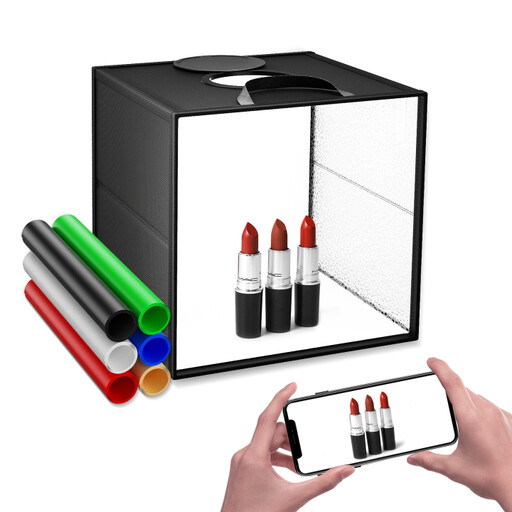
Black foldable photo box, 30 × 30 cm, with dimmable lighting and six coloured backgrounds

30 × 30 cm foldable photo box with dimmable lighting and 6 coloured backgrounds, black

For small tabletop shots when you want a foldable setup and a choice of backgrounds.

30 × 30 cm; dimmable lighting; six coloured backgrounds; Oxford fabric.

View at Joybuy
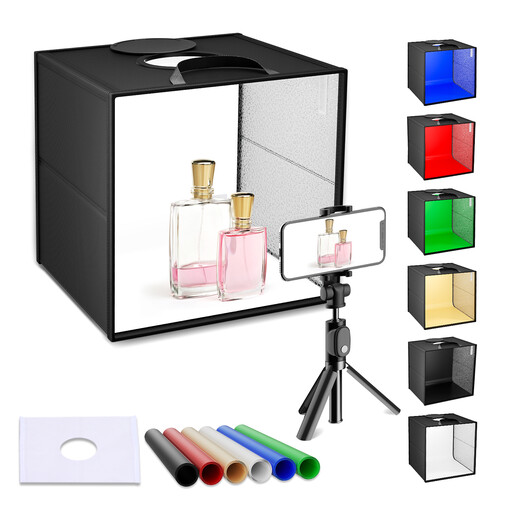
Foldable LED photo box with coloured backgrounds and adjustable brightness

Foldable LED photo box with coloured backgrounds and adjustable brightness

For small product shots when you want to adjust the brightness and choose from a range of backgrounds.

Foldable design; LED lighting; coloured backgrounds; adjustable brightness.

View at Joybuy

Frequently asked questions

Can I use a standalone softbox as a photo light straight away?

Only if a suitable, compatible light is included in your setup or you already own one. The softboxes covered here are light modifiers; for the 65 cm Rollei Quick-Parabol, the manufacturer specifically excludes the light shown from the items supplied.

What works better for resin pendants on white: a light tent or a softbox?

A light tent is a compact starting point for repeat tabletop shots, as long as the pendants and your preferred angle fit inside. A separate softbox is an option if you want more freedom to change the light position and have a compatible light in mind.

What can I do if the white background or colours look wrong in my photo?

Before buying another softbox, check the white balance under the lighting you’re actually using, with a white or neutral reference. Nikon’s comparison shows how image colours can differ with automatic and reference-based white balance.

How should I prepare the pendants and white background for a shot?

Start by diffusing the light, then check reflections and visible edges in a test shot. In an example of jewellery photography, Nikon emphasises clean surfaces; broncolor notes that a white background that is overexposed too much can cause flare.

Can I return photo lighting bought online?

For a standard online consumer purchase in Germany, you generally have 14 days from receiving the goods to withdraw from the purchase; you must notify the retailer. Exceptions and the terms of the specific purchase should be checked, as explained by Verbraucherzentrale.