
Lieferung heute & morgen

Qualitätsgarantie

Willkommens-Angebote freischalten: KOSTENLOSE Lieferung | Bis zu 80 % RABATT | Kostenlose 30-Tage-JoyPlus-Testphase
App herunterladen
A resistance band set can be a useful addition to strength training at home, Pilates, yoga and rehabilitation exercises. However, choosing the right set is not simply a matter of colour or the stated resistance. If you focus only on an extensive accessories picture or particularly high pulling force, you may end up buying a band that does not suit your training goal, height or intended exercise.
Colours are not standardised. A red fitness band may indicate medium resistance from one brand and high resistance from another. The pulling force also changes depending on how far the band is stretched. That is why the manufacturer's details on resistance level, material and intended use are crucial.
A set of mini bands is mainly suitable for exercises targeting the legs, hips and glutes. For upper-body pulling exercises, however, training bands with handles are often more practical. A single band with handles does not automatically cover several resistance levels either. Before buying, you should decide whether you need one band or a graded set.
Latex resistance bands are elastic, but they can be damaged by contact with sharp edges, direct sunlight or incorrect storage. Particular caution is required if you have a known latex allergy. TPE resistance bands can be an alternative, but they differ in feel and stretching behaviour. Every band should be checked for tears, brittle areas and other damage before use.
For beginners, mobility exercises or light rehabilitation applications, Extra Light and Light levels may be suitable. Medium, Heavy and Extra Heavy are more appropriate for users who need greater pulling force during leg, glute or full-body exercises. For resistance bands for legs and glutes, a set with several levels is practical because the load can be increased gradually.
With Pilates bands, yoga bands and exercise bands, controlled movement is often the priority. For strength training at home, higher levels or a band with handles may be more appealing. For physiotherapy applications, the choice of exercises and level of resistance should be agreed with your treating professional.
The dimensions affect which exercises can be performed safely and comfortably:
The products presented here have noticeably different designs: the mini loop set is specified as 5 cm wide and 30 cm long, while the TPE band with handles has a length of 120 cm. These dimensions are not interchangeable and should be checked against your available training space and intended exercises.
Before each use, the entire band should be clearly visible. Damaged bands should no longer be used, as sudden snapping or recoil can cause injuries. Depending on the material, a damp cloth with mild soap is usually sufficient after use. The band should then be left to dry completely in the air and stored somewhere dry and cool, away from direct sunlight.
For rehabilitation bands and exercises following an injury, no blanket recommendation for resistance can be given. A doctor or physiotherapy practice can advise which movements and resistance levels are suitable. The same applies if you are experiencing pain, restricted movement or recovering from an operation.
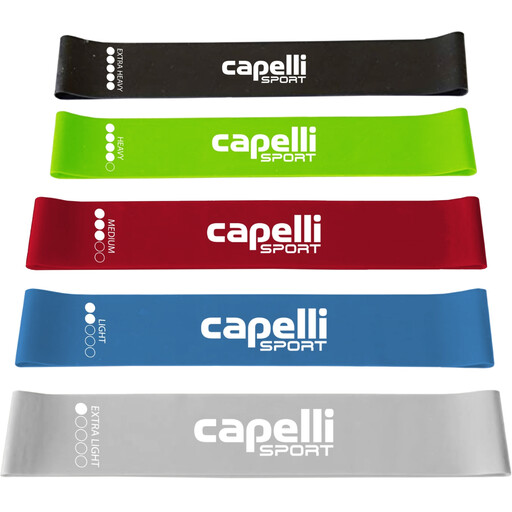
Why this product suits this profile: The set contains five mini bands in Extra Light, Light, Medium, Heavy and Extra Heavy levels. This allows beginners to start with a lighter level and choose a different load as they progress.
The five clearly labelled resistance levels reduce reliance on colour codes alone. The included bag also makes protected storage easier.
Five latex bands, 5 cm width, graded resistance levels and travel bag included.
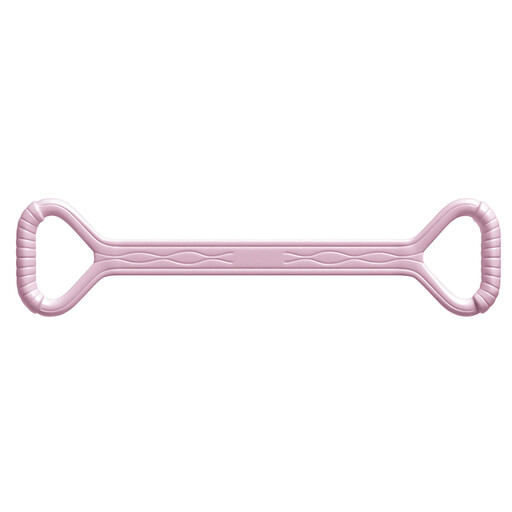
Why this product suits this profile: The silicone band is described as a trainer for full-body exercises at home. It is aimed at buyers who prefer a compact design without a multi-piece mini-band set.
The silicone material is more clearly specified than an unspecified rubber blend, making the construction easier to understand. Even so, you should check the dimensions and desired pulling force on the product page before buying.
Silicone construction designed for full-body training at home.
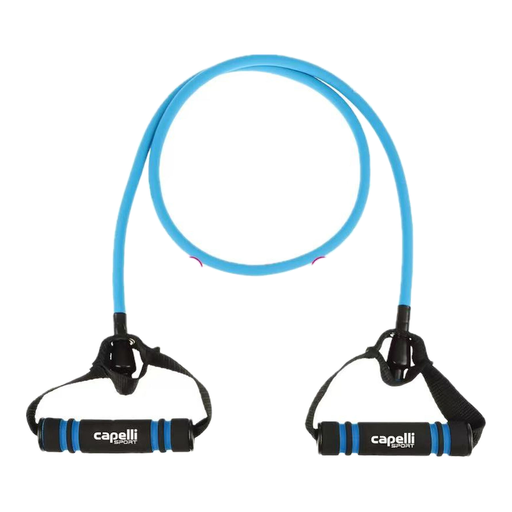
Why this product suits this profile: The 120 cm TPE band with foam handles is designed for arm curls, triceps kickbacks and front raises. It suits users looking for a traditional training band with handles for regular upper-body exercises.
The medium resistance level is clearly specified, while the handles help reduce the risk of an insecure grip. The band, handles and safety straps must be checked before every use.
TPE material, 120 cm length, medium resistance and foam handles with safety straps.
We have put together a complete, regularly updated list of products that fully meet these strict selection criteria and the safety regulations applicable in the EU.
It is not possible to give a reliable fixed lifespan. It depends on the material, frequency of use, stretching, storage and contact with sharp edges. With regular use, the bands should be checked before every session. Tears, porous areas or permanent deformation are reasons to replace them.
For beginners, Extra Light or Light bands are often a sensible choice, as they allow you to learn movement patterns with control. A set with several levels allows you to adjust the resistance later. With a band featuring handles, the medium level should only be chosen if it matches your strength and the exercise in question.
Both materials have different properties. Latex is widely used in fitness bands and is highly stretchable, but it is not suitable if you have a latex allergy. Depending on the product, TPE can be an alternative material. Alongside the material, the decisive factors are the dimensions, resistance level, construction quality and intended use.