
Lieferung heute & morgen

Qualitätsgarantie

Willkommens-Angebote freischalten: KOSTENLOSE Lieferung | Bis zu 80 % RABATT | Kostenlose 30-Tage-JoyPlus-Testphase
App herunterladen
Resistance bands have established themselves as a versatile and effective tool for at-home workouts. They are compact, affordable, and allow for a full-body workout without heavy weights. But the market is flooded with options, and not every fitness band lives up to its promises. Many buyers soon discover they've invested in a product that quickly loses its elasticity, is uncomfortable to use, or is simply unsuitable for their goals.
As your Joybuy Product Recommendation Officer, I'll help you identify the typical pitfalls and make an informed decision. We'll focus on the objective features that separate a quality training band from a useless one.
Before you buy a resistance band or set, you should be aware of the most common problems that often only become apparent after your purchase.
To avoid these pitfalls, it's crucial to focus on the fundamental product characteristics. These three parameters determine the quality, durability, and suitability of your fitness band.
The material is the most important factor for a band's performance and durability.
Not every band is suitable for every exercise. The shape determines its application.
Resistance is usually indicated in kilograms (kg) or pounds (lbs), but often it's just marked by color. For an effective at-home fitness band, it's important that the levels allow for meaningful progression. A good set should have clear and noticeable differences between the individual bands, so you can adapt your training to your progress (progressive overload).
Based on these objective criteria, we have identified some products that are particularly well-suited for specific user profiles and training goals.
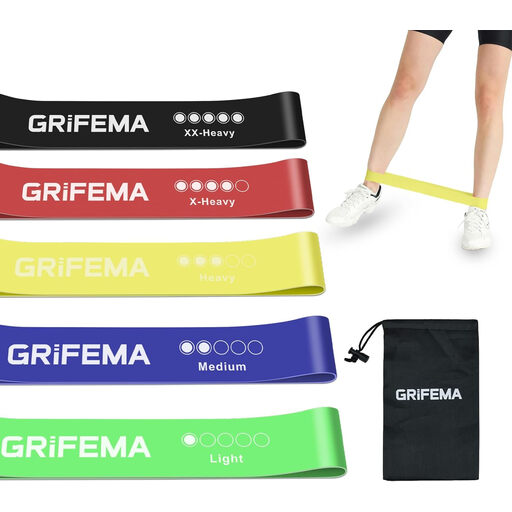
Why This Fits Their Persona: Ideal for anyone looking to start a versatile workout routine on a limited budget. The set covers a wide range of full-body exercises and provides an easy entry into strength training at home.
This set offers five clearly defined resistance levels (from 5 to 40 lbs), which bypasses the trap of misleading or useless levels. The TPE material is a solid, latex-free choice for getting started.
Complete set with 5 bands, a carrying bag, and an instruction guide. The bands are lightweight and portable, ideal for working out anywhere.
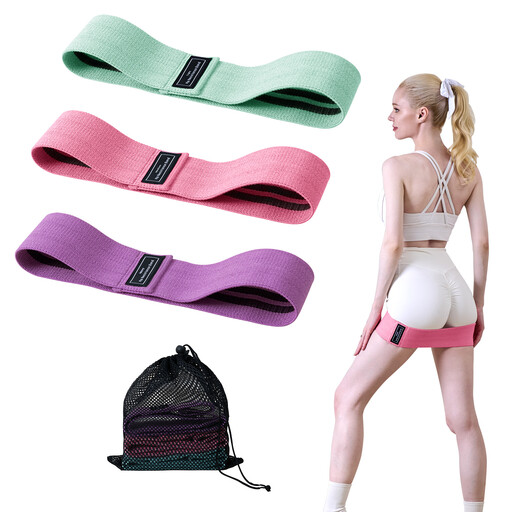
Why This Fits Their Persona: Perfect for users who want to specifically strengthen their leg and glute muscles and value comfort and effectiveness. Suitable for home fitness, yoga, and Pilates.
The wide fabric material completely solves the problem of rolling up and digging in. The bands stay in place throughout the entire workout and provide consistent resistance.
Non-slip and skin-friendly cotton fabric. The set of three levels (Light, Medium, Heavy) allows for ideal progression in lower-body training.
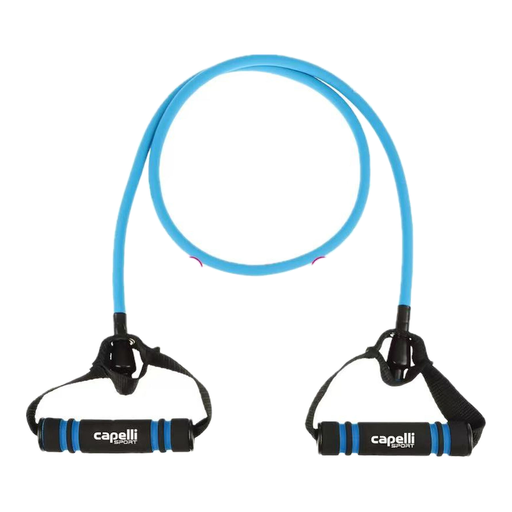
Why This Fits Their Persona: For users looking for a straightforward tool for strength training their arms, shoulders, chest, and back. It simulates classic dumbbell exercises and is ideal for targeted upper-body workouts.
The integrated foam handles provide a secure and comfortable grip. This prevents slipping and the uncomfortable handling that can occur when using flat bands for pulling or pressing exercises.
Ready to use out of the box for a variety of upper-body exercises like bicep curls or tricep pushdowns. The medium resistance is suitable for both beginners and intermediate users.
We have compiled a complete, up-to-date list of products that fully meet these strict selection criteria and safety regulations.
The lifespan of a resistance band depends heavily on the material, frequency of use, and care. High-quality training bands made from natural rubber or fabric are generally more durable than cheap TPE models. Inspect your band for small tears or porous spots before each use. Store the bands in a dry place, away from direct sunlight and extreme temperatures, to slow down material fatigue.
As a beginner, you should always start with the lightest band in a set. The initial focus is on clean and controlled execution of the exercises. A good guideline is to be able to complete 12 to 15 repetitions with proper form. If this feels too easy, you can move up to the next strongest band. In color-coded sets, this is often the yellow or red band.
Yes, you can effectively build muscle with resistance bands. The key is the principle of progressive overload: as soon as an exercise with a certain band becomes too easy, you increase the intensity by switching to a stronger band, combining multiple bands, or increasing the number of repetitions. This constantly increasing stimulus forces the muscles to grow.