When comparing similar types of toast and sandwich bread, check the unit price per kilogram. Only choose a pack size you can use up or freeze in portions. If you regularly buy wholemeal bread, check the ingredients and nutritional information per 100 g. If you have allergies, always go by the current labelling on the pack. Offers and availability for the products mentioned vary by location.
Who should compare what?
If you regularly buy toast or sandwich bread
If you buy bread regularly, it’s worth comparing similar types by pack weight and unit price per kilogram. REWE and EDEKA list documented 750 g packs of wholemeal sandwich bread; what matters is what’s available at your local store.
If you want to compare ingredients and nutritional information
If you eat the same everyday bread often, the wholemeal flour content, fibre and salt per 100 g can help narrow down your choice. According to the German Food Federation, ingredients are listed in descending order by weight.
Smaller households that don’t eat much bread
If you only need a few slices, consider whether a large pack could leave you with leftovers. The Verbraucherzentrale recommends storing bread at room temperature in a dry, dark place. If needed, you can freeze it in portions.
What should you look for when shopping?
First, work out how much you actually need. Then compare similar types of bread by unit price and, if needed, check the ingredients, nutritional information and allergen labelling on the pack.
| What matters to you | What to check | Who may find it especially important |
|---|
| Unit price and pack size |
Compare the weight and unit price per kilogram of similar types of bread, and consider how much you’ll use. |
I buy bread regularly and want to compare different pack sizes sensibly. For around 36% of consumers, this price comparison comes first. |
| Wholemeal content and ingredients |
Check the wholemeal flour content and ingredients list; compare fibre and salt per 100 g. |
If bread is a regular part of my meals, I want to know what’s in the type I choose. Around 29% of consumers prioritise ingredients and nutritional information. |
| Allergens |
Check the current ingredients and allergen labelling on every pack, including any precautionary ‘may contain’ statements. |
If I have an allergy that affects me, the specific pack must meet my needs. This is the main buying consideration for around 21% of consumers. |
| How much you’ll use and how to store it |
Check that the quantity you need matches the best-before date, and consider whether freezing in portions is practical. |
I only need a few slices and don’t want to throw the rest of the pack away. Avoiding food waste is a priority for around 14% of consumers. |
Common mistakes when buying bread
-
Comparing only the pack price
Toast and sandwich bread come in different pack sizes. The pack price alone doesn’t show how similar types of bread compare per kilogram. Any slices you don’t use also reduce the value of buying a larger pack.
Compare similar types by unit price and buy an amount you can use up or freeze.
-
Judging the wholemeal label instead of checking the pack
Wholemeal flour content, fibre and salt can vary between individual products. The wording on the front of the pack doesn’t replace the ingredients list and nutritional information.
Check the stated wholemeal flour content and compare fibre and salt using the same measure, such as per 100 g.
-
Removing only the mouldy slices if you can see mould
According to the Verbraucherzentrale, mould may have spread through a loaf beyond the visible patch.
If you can see mould, throw away the whole loaf. Next time, consider buying a smaller pack or freezing slices in portions.
-
Assuming online information applies to every pack
REWE displays offers that vary by location, while EDEKA notes that some products may not be available at every store. Always use the information on the specific pack to check ingredients and allergens.
Check which pack is available at your chosen store and read its current ingredients and allergen labelling.
Brands and own-label options to consider
REWE / ja! / REWE Beste Wahl
REWE stocks toast and sandwich bread in a range of varieties and pack sizes.
- Ingredients and nutritional information are available for REWE Beste Wahl wholemeal wheat sandwich bread in the 750 g pack.
- The unit price you pay depends on the store you choose.
EDEKA / GUT&GÜNSTIG
EDEKA lists a 750 g pack of GUT&GÜNSTIG wholemeal sandwich bread.
- The product information states that it contains 60% wholemeal wheat flour, and includes ingredients and allergen information.
- EDEKA notes that the product may not be available at every store; check the information on the pack you buy.
Golden Toast
Golden Toast sells wholemeal toast and wholemeal sandwich bread in different pack sizes.
- For Golden Toast wholemeal toast, the brand states that wholemeal flour makes up 90% of the total flour content and that it contains 6.6 g of fibre per 100 g.
- When choosing a specific product, check the ingredients and any precautionary ‘may contain’ statements on its current packaging.
Lidl / Unser Brot
Lidl describes ‘Unser Brot’ as a range of fresh bread and baked goods, including spelt and multigrain loaves.
- This is an alternative if you’re looking for fresh bread rather than packaged toast or sandwich bread.
- Compare a specific variety in store by weight, ingredients and unit price, rather than assuming it’s equivalent to packaged sliced bread based on the range name alone.
Sliced bread at Joybuy
This selection includes packaged sliced bread in two pack sizes: a 250 g pack for a smaller amount and a 500 g pack of pumpernickel. These are not the same type of toast or sandwich bread, so compare unit prices only after taking the type of bread and the amount you need into account.
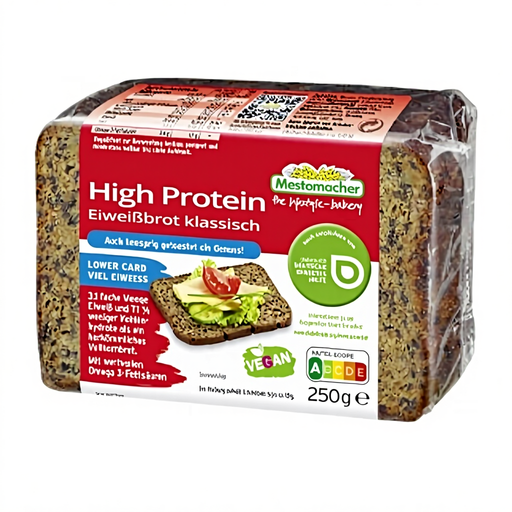 Image unavailable
Mestemacher Classic Wholemeal Protein Bread, 250 g
The 250 g pack may suit you if you only need a smaller amount of sliced bread. Before buying, check the current allergen labelling and make sure you can use up the opened pack in time.
View at Joybuy
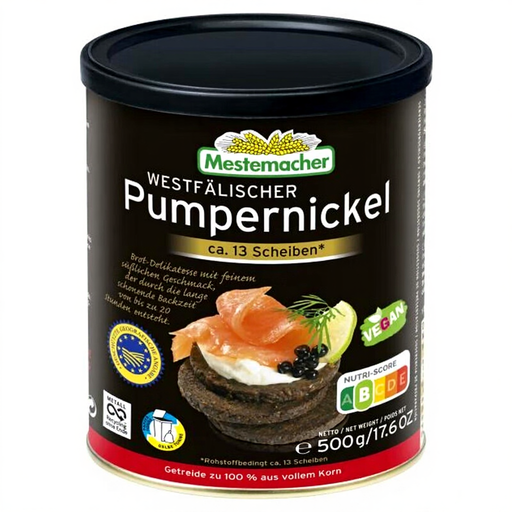 Image unavailable
Mestemacher Westphalian Pumpernickel Bread, 500 g
The 500 g pack is an option if you’re specifically looking for sliced pumpernickel and that amount suits how much you eat. Before buying, read the current ingredients and allergen labelling on the pack.
View at Joybuy
Frequently asked questions
When buying toast, should I compare the pack price or the unit price?
For similar types of bread, compare the unit price per kilogram, then consider how much you’ll actually use. The offers shown by REWE depend on the store you select.
How can I compare wholemeal toast and wholemeal sandwich bread?
Check the wholemeal flour content in the ingredients list and compare fibre and salt per 100 g. The information applies to each specific product. According to the German Food Federation, ingredients are listed in descending order by weight.
How should I store a larger pack of sliced bread?
The Verbraucherzentrale recommends storing bread at room temperature in a dry, dark place. If you don’t eat much bread, freezing it in portions is one option. Also follow the storage instructions on the pack, and throw away the whole loaf if you can see mould.
Can I rely on the variety name if I have allergies?
No. The ingredients and allergen information on the specific pack are what matter. The wholemeal sandwich bread products mentioned contain wheat. Check for precautionary ‘may contain’ statements every time you buy, as well as any changes to the recipe.


