
Lieferung heute & morgen

Qualitätsgarantie

Willkommens-Angebote freischalten: KOSTENLOSE Lieferung | Bis zu 80 % RABATT | Kostenlose 30-Tage-JoyPlus-Testphase
App herunterladen
Published on July 28, 2026 by Your Joybuy Product Recommendation Officer
We've all been there: the charging cable that ties itself into an impenetrable knot in your bag, the mess in the car, or the cable clutter on your desk. A retractable charging cable promises an elegant solution to this everyday problem. However, not every model lives up to its promise. Before you make a purchase, it's crucial to understand the common pitfalls that often lead to frustration and unnecessary expense.
Many products on the market entice with attractive designs, but their functionality often leaves much to be desired. Pay special attention to these two weaknesses:
To ensure your new tangle-free charging cable is a satisfying long-term solution, you should check three core aspects.
The longevity of a retractable charging cable hinges on the robustness of the retraction mechanism and the quality of the cable itself.
The charging power, measured in watts (W), determines how quickly your devices charge. A modern retractable USB C cable should deliver at least 20W for smartphones. For laptops, 65W to 100W is required.
Not every retractable cable is suitable for every purpose. Define your needs:
Here are some models tailored to specific use cases that avoid the pitfalls mentioned above.
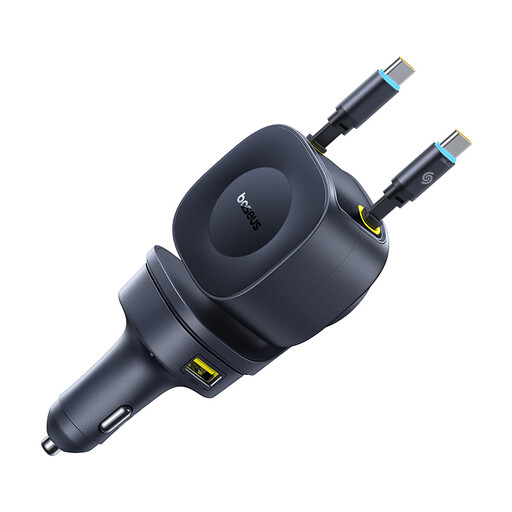
Why This Fits Their Persona: Ideal for people who spend a lot of time in the car and need a tidy charging solution for themselves and their passengers. The device plugs directly into the cigarette lighter, eliminating loose cables in the vehicle's interior.
The product description provides clear power specs per port (e.g., 30W Max per USB-C), which sidesteps the trap of misleading total output claims. The mention of a "smooth, stepless retractable cable" indicates a focus on mechanical quality.
Can charge up to four devices simultaneously. The combination of one retractable cable and three additional ports offers great flexibility for both driver and passengers.
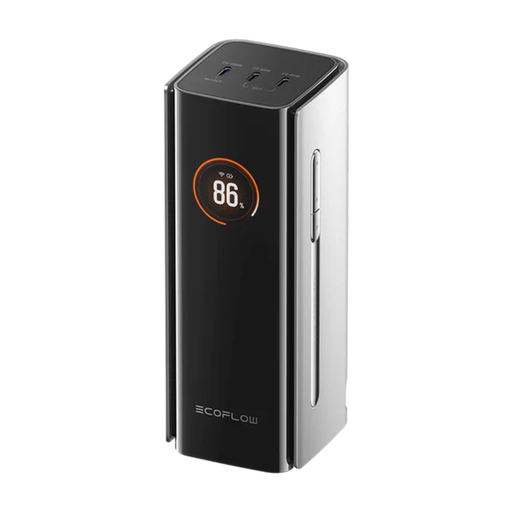
Why This Fits Their Persona: For business travelers and tech enthusiasts who need to reliably power high-performance devices like laptops (e.g., MacBook) and multiple gadgets on the go, without wanting to carry extra cables.
The specifications are highly detailed: 230W total output, 100W on the integrated cable, and a 20,000 mAh capacity. This creates transparency and avoids the trap of unclear power claims. The lifespan rating (80% capacity after 400 cycles) indicates high-quality components.
Extremely high output power that allows for charging laptops at full speed. The integrated 100W cable makes separate high-performance cables redundant. The LCD display provides full control over the charging status.
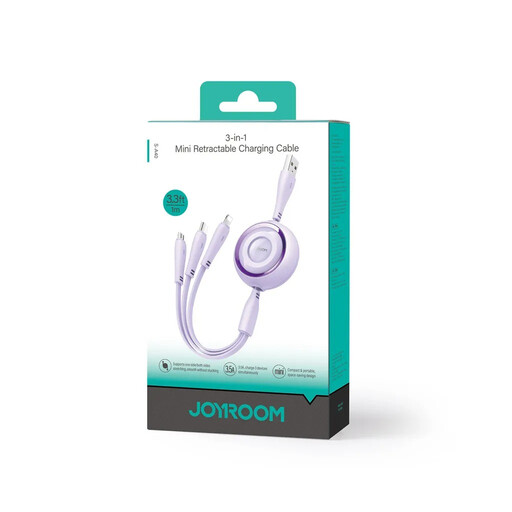
Why This Fits Their Persona: A practical and cost-effective solution for users who own a variety of devices with different ports (newer Android devices, older iPhones, accessories like headphones) and want to carry just one cable in their bag.
This cable solves the problem of poor compatibility by combining the three most common connectors in one housing. It's a simple charging solution that doesn't try to advertise exaggerated performance claims, but instead focuses on its core function.
Maximum compatibility thanks to its 3-in-1 connector (USB-C, Lightning, Micro-USB). The compact, retractable design makes it a very space-saving companion for everyday use.
We have compiled a complete, up-to-date list of products that fully meet these strict selection criteria and German safety regulations.
The lifespan of the mechanism heavily depends on the build quality and usage. Models from established brands sometimes specify they are designed for a certain number of cycles (e.g., 10,000 or more). Proper handling, where the cable is guided without a sharp tug, also significantly contributes to its longevity.
Yes, this is possible, provided the cable and the connected power adapter support the required power output and the Power Delivery (PD) protocol. Most laptops require a charging power of at least 45W to 65W, and up to 100W for more powerful models. Check the product description carefully for the maximum wattage rating. A simple 20W cable is not sufficient for this purpose.
These cables are typically designed for charging one device at a time. When only one device is connected, the charging speed should match the cable's specification (e.g., 3.5A total current). Many of these multifunctional cables are primarily designed for charging, not for high-speed data transfer.