Original consoles with analogue outputs
You want to record an older console with a composite or S-Video output. You’ll need a compatible input and a working way to display the game on screen.


Choose your capture device based on your console’s actual video output. If it outputs composite or S-Video, you’ll need a compatible analogue capture device; an HDMI capture card, meanwhile, requires a supported HDMI signal. If you want to play on a separate screen while recording, check the signal path to that screen. Passthrough resolution and recording resolution are not the same, and neither tells you how much delay there is in a software preview.
You want to record an older console with a composite or S-Video output. You’ll need a compatible input and a working way to display the game on screen.
Your console or existing signal chain outputs HDMI. Remember to consider passthrough resolution separately from recording resolution.
You want to record using a laptop and monitor in a student room. The connections, software support and route your game picture takes will determine whether the setup works in your space.
| Buying criterion | What to check before buying | Who it matters most to |
|---|---|---|
| Compatible video input | Console output and cables; if converting the signal, also check which formats the converter supports. | If my original console outputs composite or S-Video, I need a compatible input or a suitable signal converter. Around 36% of consumers put analogue connections first. |
| HDMI format | The source’s HDMI output, along with the separate limits for recording and passthrough. | If my source already outputs HDMI, I want to know which format is actually recorded and which reaches the screen. Around 29% of consumers prioritise HDMI capture. |
| Playing while recording | An HDMI output on the capture card or another suitable way to display the picture; don’t confuse preview with passthrough. | If I want to play on a separate screen while recording, the route the picture takes to that screen needs to work with my setup. Around 21% of consumers look at the game display first. |
| Computer and accessories | Operating system, available USB ports, items included in the box, and any cables, converters or power supplies you’ll need. | If I want to record with my existing laptop and the connections available in my student room, the whole setup needs to work together. Around 14% of consumers prioritise compatibility with their computer and overall setup. |
The HDMI models covered here list HDMI inputs, not composite or S-Video. A RetroTINK-2X Pro processes an analogue signal, but does not record it by itself.
Map out the connection from the console through the capture device and computer to the screen. Check every connection and whether you’ll need an additional converter.
Elgato lists up to 2160p60 passthrough for Game Capture Neo, but recording is limited to 1080p60. This does not tell you how much delay there is in the software preview.
Compare the recording and passthrough limits separately, and decide which screen you want to use to view the game while you play.
The PAL formats listed do not confirm that every console revision has been tested individually. RetroTINK also notes that composite signals from certain consoles may cause problems.
Check the signal from your specific console and the cables it uses. Treat any unconfirmed combination as something to clarify before you buy.
Your setup may also need an HDMI cable, compatible analogue cables, a converter or a separate power supply. Elgato says an HDMI cable is not included with Game Capture Neo; RetroTINK-2X Pro needs a suitable USB power source.
Check what’s included with the specific version and make a note of the cables, connections and power sources you already have.
According to Hauppauge Germany, the USB-Live2 is an external capture option for composite and S-Video sources connected to a computer.
According to StarTech.com, the SVID2USB232 is a USB capture device for analogue composite and S-Video sources, designed for Windows.
According to AVerMedia, the Live Gamer MINI GC311 is an HDMI capture card with passthrough for a compatible HDMI signal chain.
According to Elgato’s technical specifications, Game Capture Neo is a USB 3.0 HDMI capture card for an HDMI source and a separate HDMI screen for gameplay.
According to the manufacturer, the RetroTINK-2X Pro is an additional video processor for original analogue consoles, not a standalone capture card.
These products are intended for a capture setup with an HDMI output. If your console only outputs composite or S-Video, check first whether you’ll need a compatible signal converter.
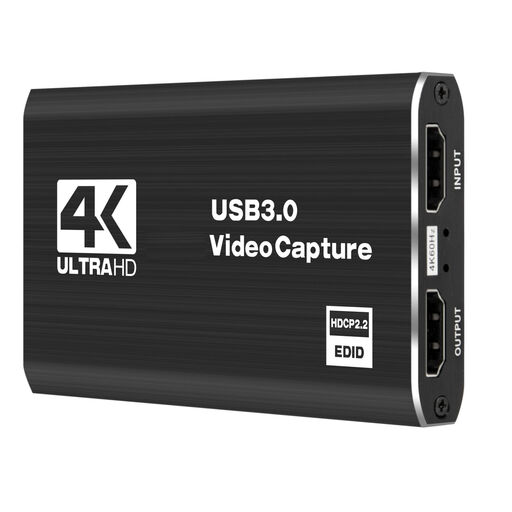 No image available
For a setup where you want to record an HDMI source on your computer. If you’re using an analogue console, you’ll need a separate, compatible signal converter.
USB 3.0; the product description lists 4K/60 Hz input and passthrough, and recording at 1080p/60 Hz. It also lists support for Windows, macOS and Linux.
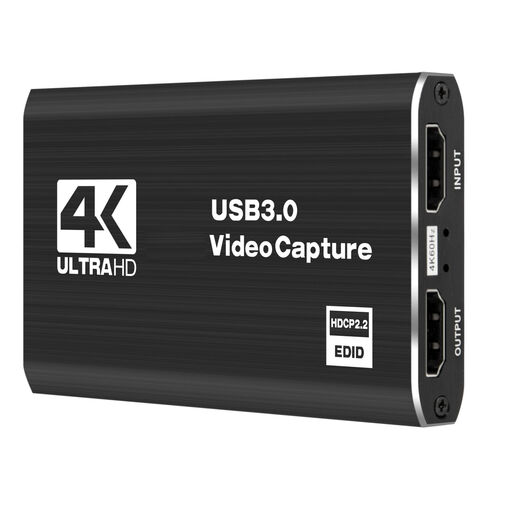 No image available
For an HDMI capture setup where you want to record and send the signal through to a screen.
USB 3.0; the product description lists 4K/60 Hz input and loop-through, and recording at 1080p/60 Hz. It also lists support for Windows, macOS and Linux.
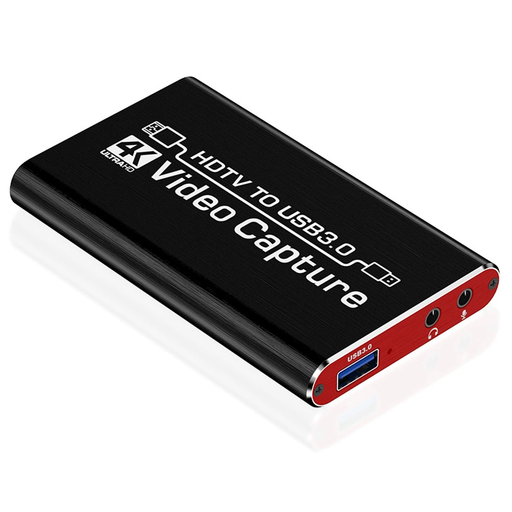 No image available
For a console or signal chain with an HDMI output. Check that its signal format is within the stated limits.
USB 3.0; the product title lists an HDMI input of up to 4K/30 Hz and recording at 1080p/60 Hz. The description also lists HDMI passthrough and support for Windows, macOS and Linux.
 No image available
For an HDMI console and recording on a computer. Remember that the stated passthrough resolution is different from the recording resolution.
USB 3.0; the product title lists 4K HDMI passthrough and 1080p recording. The description lists Windows, macOS and Linux, as well as use with OBS.
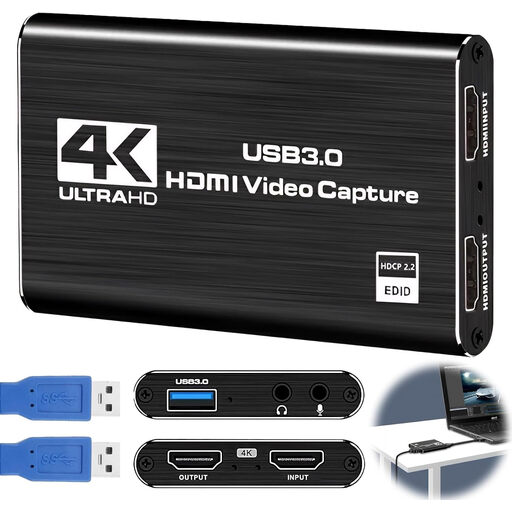 No image available
For an HDMI setup where recording and output via passthrough serve different purposes.
USB 3.0; the product title lists recording up to 1080p and 4K passthrough. It also lists UVC and UAC support, plus a microphone input and headphone output.
Not into the HDMI-only models described here. For composite video and stereo RCA audio, you could use a suitably equipped analogue capture device. Alternatively, you’ll need to convert the specific console signal before it reaches the HDMI capture card.
Connect the source to the appropriate input, then select the capture device in your recording software. OBS uses the source called “Video Capture Device”; the device must support your chosen resolution and frame rate. For Game Capture Neo, Elgato recommends connecting directly to USB 3.0 or faster, rather than to a USB hub.
First, check the input, cables, supported signal format and device settings in your software. For HDMI, also check whether the source is outputting an HDCP-protected signal: the HDMI capture models described here cannot record these signals. This is not a recommendation to circumvent copy protection.
Check what’s included with the specific version: Elgato says Game Capture Neo does not come with an HDMI cable, while the RetroTINK-2X Pro needs a suitable USB power source. In Germany, the statutory guarantee against the seller is separate from a voluntary manufacturer’s guarantee. For online purchases of goods, you generally have a 14-day right to cancel, although exceptions may apply in individual cases.
Making a recording for private use and publishing it are not legally the same thing. Section 53 of the German Copyright Act (UrhG) covers private copies under certain conditions; it does not grant blanket permission for public use. Section 19a of the UrhG concerns the right to make a work available to the public. Whether you can publish a particular gameplay video depends, among other things, on the rights involved and any licences granted. Section 95a of the UrhG also protects effective technological measures.