
Lieferung heute & morgen

Qualitätsgarantie

Willkommens-Angebote freischalten: KOSTENLOSE Lieferung | Bis zu 80 % RABATT | Kostenlose 30-Tage-JoyPlus-Testphase
App herunterladen
A missing or inconveniently placed light switch can make daily life difficult. Perhaps you want to control a ceiling light from your bed in an older home without getting up, or add an extra switch in a long hallway in a new build. However, running new wires behind the walls often involves significant effort and expense. Fortunately, today there are numerous solutions for easily retrofitting light switches—entirely without chasing walls.
This article introduces various technologies, from simple wireless solutions to intelligent Wi-Fi switches, and provides guidance to help you select the right product for your project.
The right switch for you depends on your individual needs. You should consider three key aspects in your planning.
The control method is the most important distinguishing feature.
Not every switch is suitable for every type of bulb. Caution is especially advised with dimmers. Check the product specifications for the maximum and minimum load (given in watts or volt-amperes) and ensure it matches your lamps. An unsuitable LED dimmer switch can cause flickering, buzzing, or a shortened lifespan for your LEDs.
The installation effort varies greatly. A wireless light switch using radio frequency technology is often the easiest to install, as the switch itself is simply glued or screwed to the wall. Only the receiver needs to be connected to the light fixture's circuit. In-wall switches (Wi-Fi or dimmer) that replace an existing switch require basic knowledge of electrical installation. Work on household wiring should always be done with the circuit breaker turned off (and after verifying that the power is off with a tester). When in doubt, the installation should always be handled by a qualified professional.
Here is a selection of products that cover different needs for modernising your lighting control.

Why It Stands Out: This kit is a straightforward problem-solver. It allows you to install a light switch on any wall without running new cables. The receiver is simply wired between the power supply and the light fixture.
Advantages:
Who Is It For? Ideal for renters, residents of older buildings, or anyone who needs to quickly add an extra light switch in a new location without structural changes—for example, next to the bed or at the other end of a long corridor.
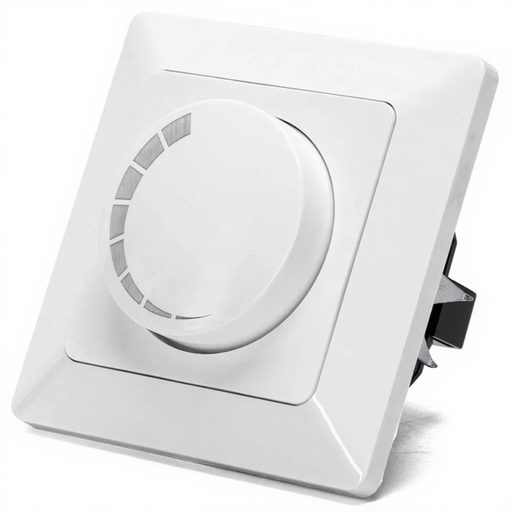
Why It Stands Out: This switch focuses on one core function: reliably dimming modern light bulbs. Its classic rotary knob design blends discreetly into existing installations.
Advantages:
Who Is It For? For users who want to replace an existing light switch with a simple and functional dimming option, without needing smart home features.
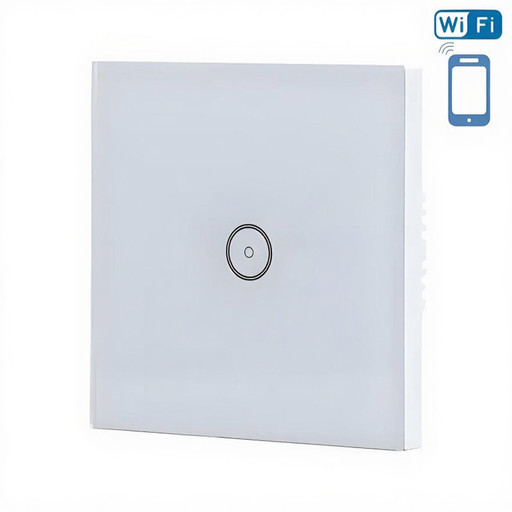
Why It Stands Out: This switch transforms a conventional light fixture into a smart device. With its glass surface and touch controls, it offers a modern aesthetic and comprehensive control options via app and voice.
Advantages:
Who Is It For? For tech-savvy users who want to fully integrate their lighting into their Smart Home to benefit from automation, remote access, and voice control.
If the models presented here don't exactly match what you're looking for, or if you're seeking matching outlets in the same design, you can find other alternatives.
Discover a wider selection in our category for white wall socket and related electrical installation products.
1. Can you retrofit a light switch without an electrician? That depends on the type of switch. A purely battery-powered or kinetic cable-free wireless light switch can be mounted on the wall without interfering with the home's electrical system. However, the corresponding receiver must be connected to the lamp's circuit. Replacing an in-wall switch requires basic electrical knowledge. It is essential to turn off the corresponding circuit breaker and verify that the power is off with a suitable tester before starting work. When in doubt, the installation should always be left to a qualified electrician.
2. Does every dimmer work with LED lamps? No. LED bulbs have a very low power consumption and require a dimmer specifically designed for them. A conventional dimmer for incandescent bulbs can cause flickering, buzzing, or complete failure with LEDs. When purchasing, look explicitly for the "suitable for LED" label and check the minimum and maximum load specified by the manufacturer.
3. What is the difference between a wireless light switch and a Wi-Fi light switch? A wireless light switch communicates directly with a receiver via radio frequency (RF). This system works autonomously and does not require an internet connection or a home network. A Wi-Fi light switch, on the other hand, connects to your router and the internet. This enables advanced features such as app control from anywhere, integration with voice assistants, and the creation of complex schedules and automations.