
Lieferung heute & morgen

Qualitätsgarantie

Willkommens-Angebote freischalten: KOSTENLOSE Lieferung | Bis zu 80 % RABATT | Kostenlose 30-Tage-JoyPlus-Testphase
App herunterladen
A functional tyre pressure monitoring system (TPMS) is more than just a convenience feature; it is an essential component of driving safety. While it has been mandatory in new vehicles since 2014, many older cars, motorhomes, and trailers lack this system. Retrofitting a system for tyre pressure monitoring is a smart investment to check tyre pressure and temperature in real-time. However, the market can be confusing, and not every product delivers on its promises.
As your Joybuy Product Recommendation Officer, I will help you navigate the common pitfalls of purchasing and make an informed decision. We will focus on the facts that truly matter, so you can find a reliable solution for your vehicle.
Many retrofit systems advertise long feature lists, but in practice, they often fail to meet basic requirements. Watch out for these three weaknesses to avoid a bad investment:
To avoid the problems mentioned above, you should check three technical features before buying. These define the reliability and practicality of a retrofit TPMS.
Accuracy is the most critical factor. Pay attention to the maximum margin of error specified by the manufacturer. A value of < 0.1 Bar (or < 2 PSI) is a good indicator of high-quality sensors. For retrofit systems, there are two main types:
For most users, external sensors offer the best balance of ease of use and reliable performance.
A dual power supply is crucial for year-round operation in the UK. The system should be chargeable via both a solar panel and a USB port (ideally Type-C). A smart sleep mode, which turns the device off after about 10 minutes of inactivity and automatically reactivates it when the vehicle moves, significantly conserves the battery.
The digital tyre pressure display should also feature automatic brightness adjustment. A clear colour display during the day and a glare-free, backlit display at night ensure that the information is always easy to read.
A good TPMS system does more than just warn of low pressure. Look for at least five different alert modes:
Also, check the supported pressure range. For cars and SUVs, systems up to 8 Bar (approx. 116 PSI) are generally sufficient. For a motorhome tyre pressure monitoring system or a van, models with a higher measurement range may be necessary.
Based on the criteria above, we have identified some products that are suitable for different types of users.
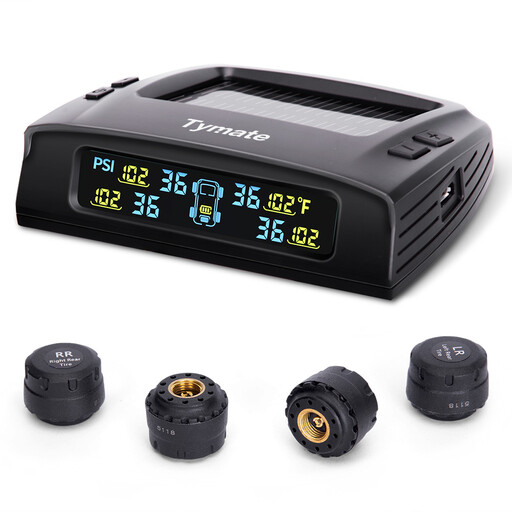
Why this model is a good fit: Ideal for drivers of cars and SUVs who want reliable, real-time monitoring for their daily commute and occasional long trips. The simple installation of the external sensors requires no visit to a workshop.
The system offers a specified measurement accuracy of under 2 PSI, a dual power supply (solar and USB), and external sensors with replaceable CR1632 batteries.
Five different alert modes and a colour display with automatic brightness adjustment ensure clear and proactive warnings of any deviations.
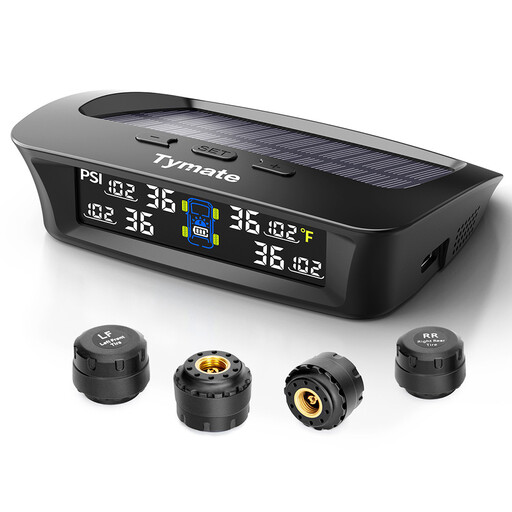
Why this model is a good fit: Designed for longer vehicles and extended journeys. The stable signal transmission and larger battery provide extra security for motorhomes, trailers, or long holiday trips.
The display's larger 500 mAh battery ensures longer operation, even with low sun exposure. Automatic calibration simplifies the setup process before a trip.
The combination of a larger battery and stable radio transmission (433.92 MHz) makes it a reliable choice for vehicles up to 20 feet (approx. 6 metres) in length.
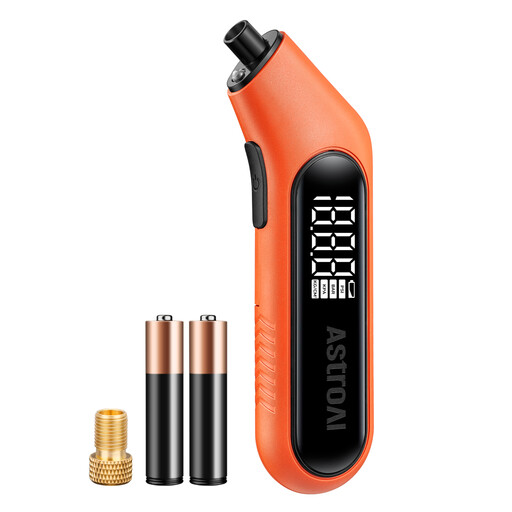
Why this model is a good fit: For drivers who don't need a permanent monitoring system but still want to check their tyre pressure regularly and accurately. A cost-effective alternative for increasing safety.
As a manual gauge, it bypasses the typical problems of electronic systems like power supply or signal interference. It focuses on a single task: accurate measurement.
High measurement accuracy (ANSI B40.7 Grade 2A), a large, backlit display, and a robust design make it a durable and reliable tool for any glove compartment.
We have compiled a complete, up-to-date list of products that fully meet these strict selection criteria and UK safety regulations.
Most external car tyre pressure sensors use a standard CR1632 coin cell battery. Under normal use, the manufacturer-stated lifespan is typically about two years. Replacement is simple and can be done yourself without any tools.
No, installing systems with external sensors is very easy. The sensors are screwed on in place of the valve caps. Then, the display is placed in the vehicle and switched on. Most systems pair with the sensors automatically. The entire process usually takes no longer than 10 to 15 minutes.
Yes, provided it is a model with a dual power supply. The solar panel serves to extend the battery life. During the winter months with less sun or for frequent night driving, the display can be conveniently charged via the integrated USB port to ensure continuous operation. A solely solar-powered system is not recommended for year-round use in the UK.