
Lieferung heute & morgen

Qualitätsgarantie

Willkommens-Angebote freischalten: KOSTENLOSE Lieferung | Bis zu 80 % RABATT | Kostenlose 30-Tage-JoyPlus-Testphase
App herunterladen
Reusable cups for on the go should be lightweight, seal securely and be easy to clean. In practice, though, the differences often only become clear after repeated use. A lid may come loose in transit, a cup may not fit in your bag, or cleaning may become unnecessarily difficult because the seals are hard to reach.
Families, commuters, campers and travellers are better off looking at specific product details rather than general marketing claims. The following criteria can help you choose a BPA-free cup, a plastic smoothie cup or a picnic cup that suits your everyday needs.
The term leakproof drinking cup alone doesn’t tell you when the seal will stay secure. The key factors are:
A cup for smoothies or yoghurt isn’t automatically suitable for fizzy drinks. Unless the manufacturer says otherwise, a full cup should also be kept upright in a bag.
A microwave-safe smoothie cup may be suitable for heating food or drinks. However, that doesn’t mean you can heat the lid too. With the Tefal model, the lid must be removed before using it in the microwave. Otherwise, pressure build-up and hot contents could cause injury or damage.
Freezer-safe doesn’t mean that every type of content can be frozen without taking any precautions. Liquids need room to expand. Always follow the care and safety instructions for the product in question.
A BPA-free cup can be a sensible choice of material, but it doesn’t tell you about the product’s overall environmental impact. For everyday use, what matters most is how long it lasts, how durable the materials are and how easy it is to clean. How often you use it matters too: a cup you use regularly can replace single-use packaging in your daily routine.
Polypropylene, or PP, is often used to make lightweight plastic cups. Check the manufacturer’s specific information on BPA-free materials, food contact and temperature limits. Choose a capacity that suits how you plan to use the cup:
An oversized cup may be awkward to fit in a cup holder, rucksack pocket or cool bag. So be sure to check its dimensions and shape too.
A clip-on lid makes a cup quick to open and close. When it comes to carrying it around, check that the lid seals securely against the container and that the manufacturer confirms it’s leakproof for the contents you plan to carry. Cups with a handle or grip are easier to hold while walking, but may take up more space.
A cup set with a storage box offers an extra benefit: the individual cups can be stacked neatly and carried cleanly. This is useful for families, camping trips and picnics when you need to cater for several people.
A dishwasher-safe cup makes cleaning easier. Even so, check the lid, seals and clips after washing. Residue can collect in narrow gaps. For microwave use, only choose models approved by the manufacturer, and remove the lid as instructed.
It’s a good idea to give your cup a quick visual check before each use. Cracks, warping or damaged closures are all reasons to stop using it.
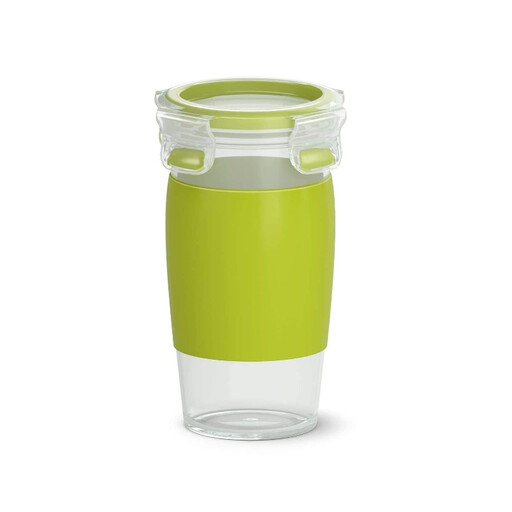
Why this product suits this profile: Its 450 ml capacity is ideal for an individual smoothie, juice or smaller portion during the working day. The integrated grip makes it easier to drink on the go.
The product details specify a clip-on lid, leak protection and dishwasher suitability. This gives you clear information about carrying and cleaning the cup.
Lightweight plastic cup with a 450 ml capacity, grip and clip-on lid, with stated suitability for BPA-free use, the dishwasher, freezer and microwave.
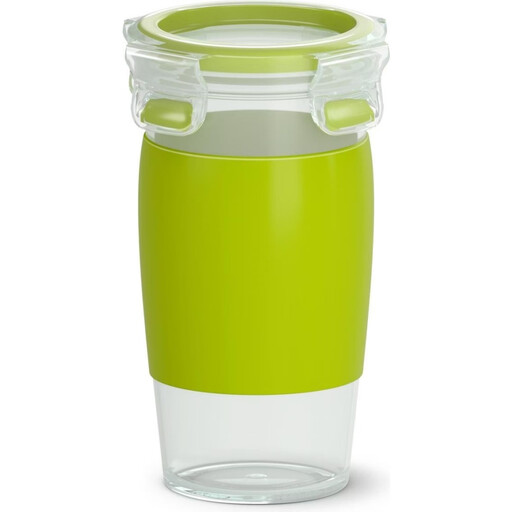
Why this product suits this profile: This model is designed for smoothies, yoghurt and oat-based dishes. Its stated leak protection and suitability for the freezer, microwave and dishwasher make it a flexible choice for everyday use.
The instructions specifically say to remove the lid before heating. They also advise against using the cup for fizzy drinks or dry ice.
BPA-free polypropylene, a leakproof design and stated suitability for the dishwasher, freezer and microwave. The lid must be removed before heating.
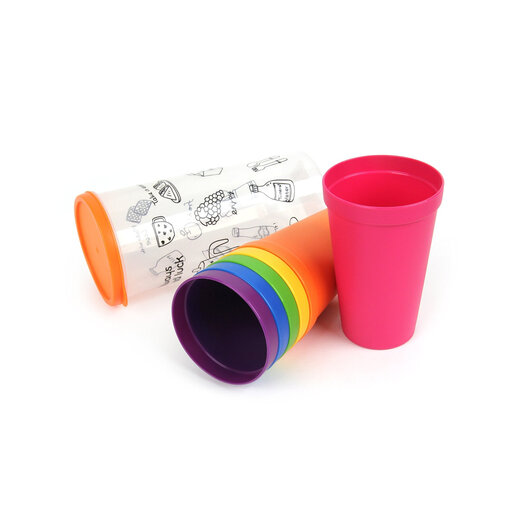
Why this product suits this profile: This set is ideal for families, camping groups and picnics. The six 650 ml cups stack neatly in the included storage box.
The lidded storage box stops the cups from rattling around loose in your bag. Their stackable design makes all six easy to carry compactly and cleanly.
Six BPA-free PP plastic cups, each with a 650 ml capacity, plus a lidded storage box and stated dishwasher suitability.
We’ve put together a complete, regularly updated list of products that meet these strict selection criteria and fully comply with the safety regulations in force in the EU.
Their lifespan depends on the material, how they’re used, how they’re cleaned and how they’re stored. Check cups and lids regularly for cracks, warping and damaged closures. Stop using the product if you notice any visible damage.
Not every plastic cup is designed for hot drinks. Check the manufacturer’s guidance on temperature limits and microwave use. A microwave-safe model should only be used as instructed; with the Tefal cup, the lid must be removed first.
After use, rinse away any leftover drink as soon as you can. Dishwasher-safe models make cleaning easier at home. When you’re out, rinse the cup with clean water and let it dry completely afterwards. Pay particular attention to the closures and seals, where residue can collect.