
Lieferung heute & morgen

Qualitätsgarantie

Willkommens-Angebote freischalten: KOSTENLOSE Lieferung | Bis zu 80 % RABATT | Kostenlose 30-Tage-JoyPlus-Testphase
App herunterladen
A reusable water bottle is part of the daily kit for many commuters, working professionals, athletes and travellers. But not every model works well in everyday life. Weaknesses often only become apparent after a few weeks: the lid leaks, the bottle is difficult to clean or its capacity isn’t right for the way you use it.
The description leakproof water bottle is only useful if you look closely at the lid. A screw-top lid with a silicone seal can close securely, but it needs to be fitted correctly and checked regularly. Sports bottles with a drinking spout have additional parts, such as a mouthpiece, valve or protective cap. These make the bottle more convenient to use, but can also make it harder to clean.
Before you buy, check:
With a dishwasher-safe water bottle, check which parts can actually go in the dishwasher. Some models require you to remove the sealing ring or carry strap first. Others, such as Tritan bottles or bottles with delicate seals, are recommended for hand washing by the manufacturer.
A bottle that isn’t cleaned thoroughly very often can develop unpleasant smells around the mouthpiece or beneath the seal. A wide neck and removable lid components are practical features, not just design details.
A 500 ml water bottle is ideal for short journeys, keeping at your desk or taking to a workout. Models holding 550, 600 or 700 ml mean fewer refills on longer commutes and outings. However, a larger capacity usually means a bulkier, heavier bottle.
A vacuum flask with double-wall stainless steel keeps drinks hot or cold for longer, depending on the model. A standard stainless steel water bottle without insulation, on the other hand, is lighter and more compact, but doesn’t protect its contents from outside temperatures as effectively.
For your daily commute, 500 to 600 ml is often a practical size. A 600 ml water bottle can be a good choice for the gym, cycling and longer car journeys. If you need to drink plenty or will be out for a long time without being able to refill, consider a model with a capacity of 650 to 730 ml.
Capacity isn’t the only thing that matters: the bottle’s diameter and height need to fit in your rucksack’s side pocket, bike cage or car cup holder. A compact bottle with a diameter of around 6.5 to 7.5 cm will fit many standard holders, but check it against your own accessories before you buy.
A drinking lid with a mouthpiece lets you drink without unscrewing the whole lid. Squeeze bottles are handy for sport, as you can control the flow by squeezing the bottle. For fizzy drinks, the manufacturer must explicitly state that the bottle is suitable. Carbonation can cause pressure to build up in many sports and plastic bottles.
A water-filter bottle is designed for cold tap water and needs its filter changed regularly. According to the product information, the MicroDisc filter in the BRITA model featured here should be replaced after up to 150 litres or around four weeks. Remember to factor the cost of replacement filters into your ongoing expenses.
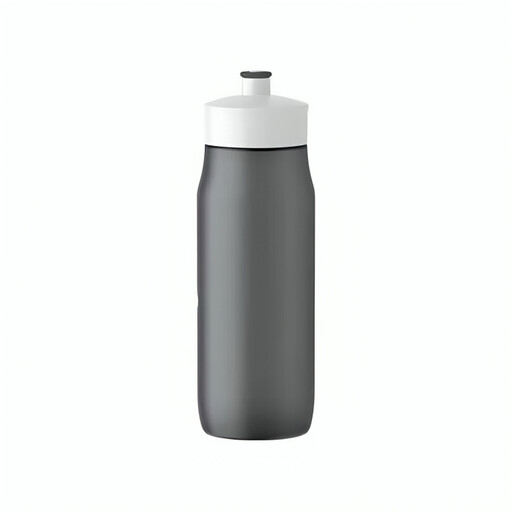
Why this product suits this type of user: This lightweight, BPA-free plastic bottle has a 600 ml capacity and is designed for the gym, cycling and the commute. The drinking lid can be operated with one hand.
The product details specify a screw-top lid with a drinking spout and a leakproof design. It’s suitable for cold and lukewarm drinks up to 60 °C.
Around 98 g in weight, a 600 ml capacity and, according to the product details, suitable for the top rack of the dishwasher.
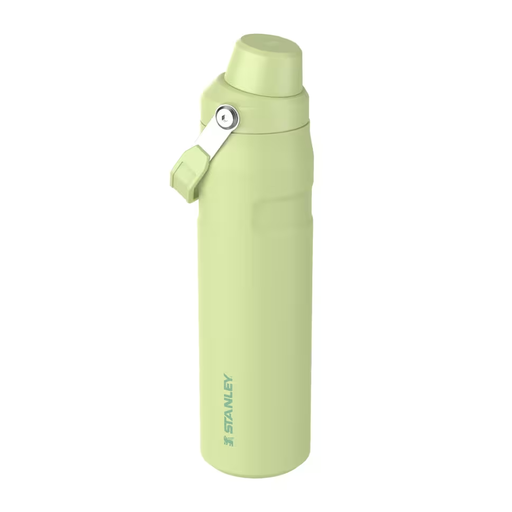
Why this product suits this type of user: This double-wall stainless steel water bottle is for anyone looking to combine insulation with a wide neck and a carry handle.
According to the product description, the wide opening makes the bottle easier to fill and clean. The lid is removable, and the bottle is listed as dishwasher-safe.
A 600 ml capacity, vacuum insulation and, according to the product details, drinks kept cold for up to 10 hours and ice for up to two days.
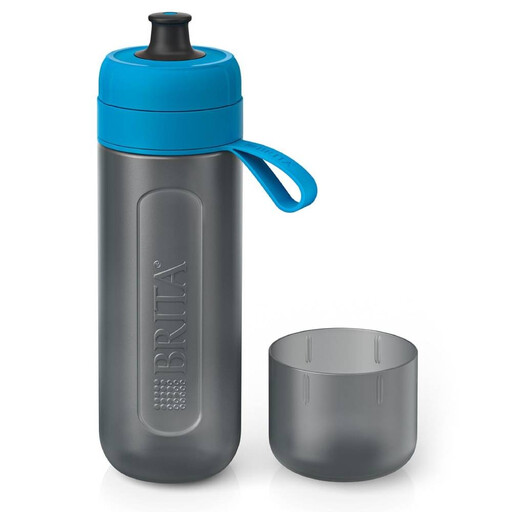
Why this product suits this type of user: For commuters, travellers and frequent users, this water-filter bottle features an integrated MicroDisc system for cold tap water.
The product details specify when the filter should be changed. This makes it easier to plan ongoing maintenance than with a filter that has no clear replacement schedule.
A 600 ml capacity, BPA-free plastic and a carry strap. According to the product details, the bottle and lid are dishwasher-safe when the filter is removed.
We’ve put together a complete, regularly updated list of products that meet these strict selection criteria and fully comply with the safety regulations in force in the EU.
A reusable water bottle should be emptied and left open to dry after every use. It’s a good idea to clean it straight away, especially if you’ve used it for sugary drinks, drinks containing milk or drinks with pieces of fruit. Remove the seals and mouthpieces regularly to check for cracks, discolouration or residue.
Follow the manufacturer’s instructions to help your bottle last:
Rinse the bottle with water after every use and clean it thoroughly with mild washing-up liquid on a regular basis. Pay particular attention to the mouthpiece, seal and lid, as liquid residue can collect there.
For short commutes, 500 to 600 ml is often enough. If you’ll be out for longer without being able to refill, you could choose a 650 to 730 ml bottle. Before you buy, check that its height and diameter will fit your bag, bike cage or cup holder.
Its lifespan depends on the material, how often it’s used and how well it’s cared for. Replace your bottle if it develops cracks or deformation, the seals become damaged or unpleasant smells linger. Filter models also need regular replacement filters.