
Lieferung heute & morgen

Qualitätsgarantie

Willkommens-Angebote freischalten: KOSTENLOSE Lieferung | Bis zu 80 % RABATT | Kostenlose 30-Tage-JoyPlus-Testphase
App herunterladen
A reusable water bottle can replace many single-use bottles in everyday life, at the office, at school or during exercise. However, models vary considerably in their materials, lids, ease of cleaning and suitability for different drinks. A product description that looks appealing won’t necessarily tell you whether the bottle suits your lifestyle.
Three common buying pitfalls are worth watching out for:
A stainless steel water bottle is often double-walled and insulated, helping to keep drinks at the right temperature for longer. Bear in mind that it may be heavier and wider than other options. If you’re considering a vacuum-insulated bottle, check whether the manufacturer approves it for hot drinks, cold drinks or only certain types of drink.
A BPA-free water bottle made from plastic or Tritan is often lighter than a stainless steel one. BPA-free describes the material; it doesn’t automatically mean the bottle is suitable for hot or fizzy drinks. So be sure to check for guidance such as ‘for cold and room-temperature drinks only’.
Glass can be neutral in taste, but it’s more vulnerable to knocks. A silicone sleeve can make the bottle easier to grip and offer some protection, but it doesn’t replace careful handling.
Several components determine whether a leakproof water bottle lives up to its name: the thread, sealing ring, lid mechanism and the correct fit of the seal. Make sure the lid is fully closed before carrying the bottle. For sports bottles with a flip-top or push-button lid, an additional lock is useful when the bottle is in a bag.
If you’re looking for a sports water bottle, also consider whether it can be operated with one hand, whether it has a carry loop or grip, and its diameter. A wide drinking spout can increase the flow of liquid, but that doesn’t automatically make it suitable for fizzy drinks.
A 500 ml water bottle will usually fit neatly into a rucksack side pocket, school bag or drinks holder. A 700 ml water bottle gives you more to drink on longer journeys, at the gym or on outings, but it may be taller and heavier.
An insulated water bottle with a vacuum construction is a good choice if you want to keep drinks hot or cold for several hours. Check the manufacturer’s stated temperature retention times, and don’t use it for fizzy drinks if the manufacturer specifically advises against this.
If you’re buying a dishwasher-safe water bottle, check the details carefully. Flexible loops, seals and coated outer surfaces are often not suitable for machine washing. After washing, leave the bottle to dry completely with the lid open to prevent moisture collecting around the lid.
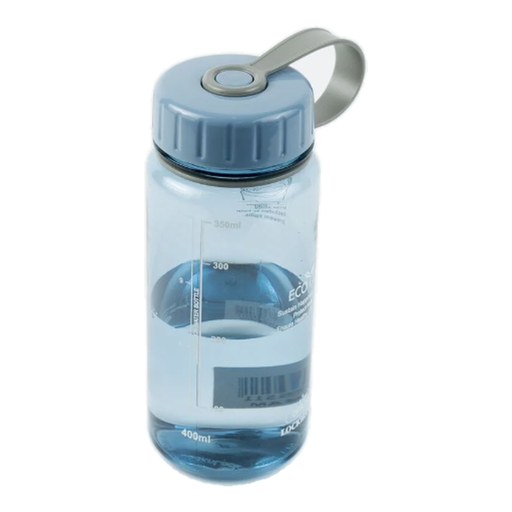
Why it suits this profile: This compact, BPA-free plastic bottle is designed for short journeys, school, the office and smaller bags. At 400 ml, it’s relatively light and easy to carry.
The product details specify a silicone seal and say the bottle is suitable for cold drinks. Fizzy drinks and hot liquids are explicitly not recommended.
BPA-free plastic, a clear view of the fill level and compact dimensions.
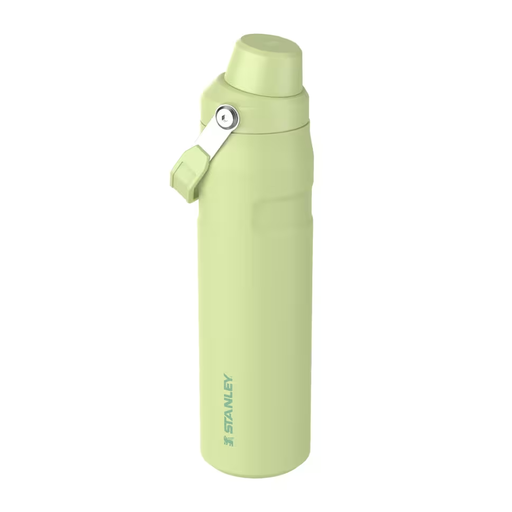
Why it suits this profile: This double-walled bottle, made from recycled 18/8 stainless steel, features vacuum insulation, a carry handle and a wide drinking spout. It’s a practical choice for work, commuting and training.
The manufacturer states that it keeps drinks cold for up to 10 hours and ice for up to two days. Fizzy drinks must not be poured into the bottle.
600 ml capacity, dishwasher-safe according to the product details and suitable for many drinks holders.
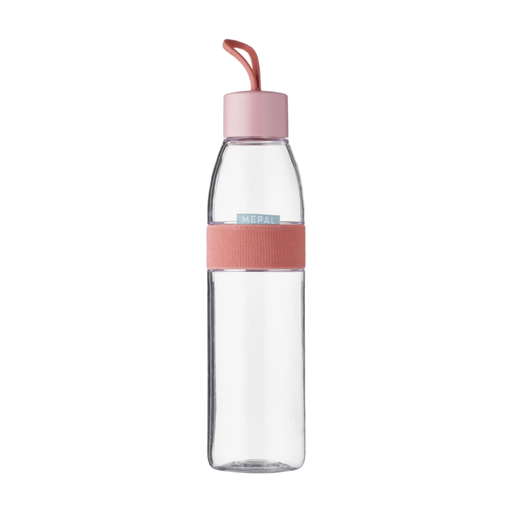
Why it suits this profile: This lightweight ABS and PCTG model offers extra capacity for long working days, exercise and travel. The product description says the bottle is BPA-free and suitable for fizzy drinks.
According to the manufacturer, leave some space below the rim when filling the bottle with fizzy drinks. This allows for pressure to build up.
700 ml capacity, described as 100% leakproof and dishwasher-safe without the elastic loop.
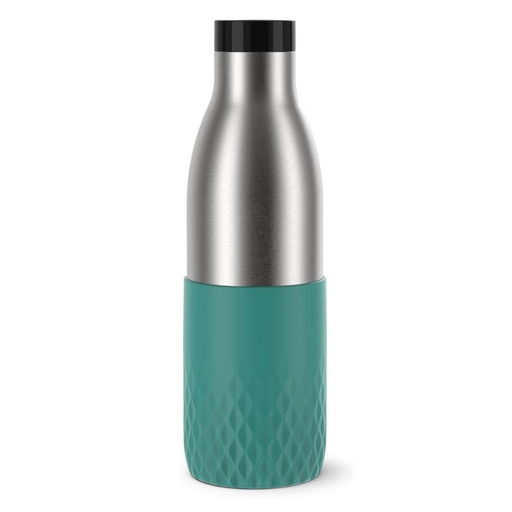
Why it suits this profile: This insulated stainless steel bottle combines a 700 ml capacity with a Quick-Press lid and a silicone sleeve. It’s well suited to commuting, the office, the gym and hiking.
The product description says the lid is leakproof and designed for one-handed use. Although the bottle is dishwasher-safe, hand-washing the silicone sleeve is recommended.
18/10 stainless steel, vacuum insulation, and a stated heat-retention time of up to 12 hours and cold-retention time of up to 24 hours.
We’ve put together a complete, regularly updated list of products that meet these strict selection criteria and fully comply with the safety regulations in force in the EU.
A few simple habits can help your bottle last longer:
Its lifespan depends on the material, lid, cleaning and how heavily it’s used. Stainless steel and glass bottles can last a long time if treated with care. Replace plastic bottles if they develop cracks, persistent odours or deformities, or if the seals no longer close reliably.
A water bottle for school and the office with a capacity of 400 to 500 ml is compact and will usually fit in a bag or drinks holder. A 700 ml bottle means fewer refills on long working days, when exercising or travelling. Weight and access to somewhere to refill it are also worth considering.
No. BPA-free describes the material and doesn’t automatically tell you what temperature the bottle can withstand. Follow guidance such as ‘for cold drinks only’ or a temperature range, for example, from -20 °C to 60 °C.