
Lieferung heute & morgen

Qualitätsgarantie

Willkommens-Angebote freischalten: KOSTENLOSE Lieferung | Bis zu 80 % RABATT | Kostenlose 30-Tage-JoyPlus-Testphase
App herunterladen
By a Joybuy Product Recommendation Officer, July 28, 2026
The quality of tap water is a key concern for many households. Concerns about limescale, chlorine, heavy metals, or other residues, coupled with a desire to reduce plastic waste by avoiding bottled water, are leading more people to seek an effective home water filter. A reverse osmosis system represents an advanced solution to significantly improve water quality.
This article serves as your guide. It explains the essential features of reverse osmosis systems and introduces different model types to provide you with a solid basis for making an informed decision that suits your individual needs.
Choosing the right system depends on your living situation, your desire for convenience, and your water quality goals. Here are three key points to consider.
The first decision is where to install the system. Both options offer specific advantages.
Under-Sink Reverse Osmosis System: As the name suggests, these systems are discreetly installed in the cabinet under your sink. They are ideal for homeowners or for kitchens where you want to keep your countertops clear. Modern, tankless reverse osmosis systems are particularly space-saving and hygienic, as they filter water on demand rather than storing it in a tank. Installation typically requires a power outlet under the sink and drilling for a separate faucet and the wastewater connection.
Countertop Reverse Osmosis System: These units sit directly on the countertop and require no permanent installation. They are the perfect solution for renters or for use in offices, holiday homes, or RVs. This type of no-installation water filter simply needs to be plugged into an electrical outlet. Water is manually filled into a tank, filtered by the system, and is then ready to be dispensed.
Modern systems can do more than just filter. Depending on the model, additional features are available to make daily life easier.
A system's performance is described by two key metrics:
Based on the criteria above, we have compiled a selection of systems with different specialities.
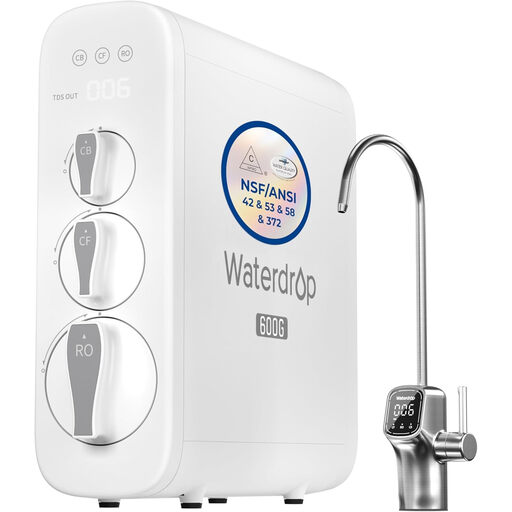
What sets this model apart: The G3P600 is a high-performance under-sink system with a thoughtful, tankless design. It combines powerful filtration with smart features like an intelligent faucet that displays the TDS level and filter life in real-time.
Advantages:
Who is this system for? Ideal for families and tech-savvy households looking for a reliable and space-saving under-sink reverse osmosis system with smart monitoring features.
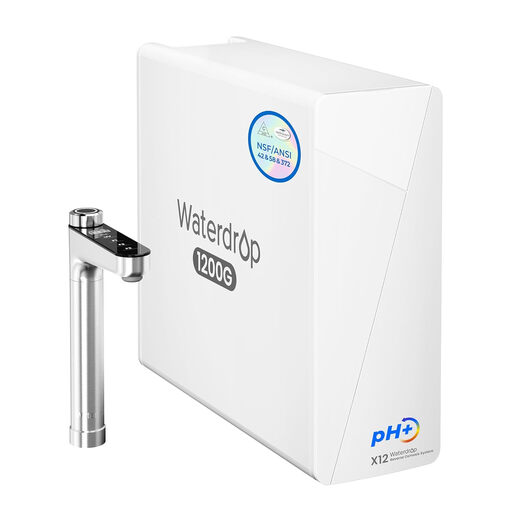
What sets this model apart: The X12 is a premium under-sink system that combines an extremely high flow rate with 11-stage filtration. It features UV sterilisation and an alkaline remineralisation technology that raises the water's pH level.
Advantages:
Who is this system for? Perfect for demanding users and health-conscious households who want the highest filtration performance, very fast water availability, and the benefits of alkaline, mineralised water.
What sets this model apart: The WD-A2 is a multifunctional, installation-free water filter for the countertop. It combines 5-stage reverse osmosis filtration with a hot and cold water function, offering maximum flexibility without any structural modifications.
Advantages:
Who is this system for? The optimal choice for renters, office communities, and anyone looking for a flexible, all-in-one solution for pure, temperature-controlled water without the hassle of installation.
The models presented here cover common use cases. However, if you are looking for different specifications or specialised water treatment solutions, you can find more alternatives in our range.
? Discover a wider selection of water filter systems and accessories here. For special applications, such as producing fully demineralised water for technical purposes, you can find suitable products in our category for deionized water.
1. What is the difference between a reverse osmosis system and a standard water filter? A conventional water filter, often based on activated carbon, primarily removes chlorine, odours, and bad tastes. A reverse osmosis system uses a semipermeable membrane with extremely fine pores (0.0001 microns). This allows it to remove a much broader spectrum of contaminants, including dissolved salts, heavy metals (lead, arsenic), fluoride, and nitrates. The goal is to reduce the TDS level and achieve very high water purity.
2. How often do the filters in a reverse osmosis system need to be changed? The replacement intervals depend on the specific filter type, your water consumption, and the local water quality. Pre-filters generally need to be replaced more frequently (e.g., every 6–12 months), while the central RO membrane can have a longer lifespan of 24 months or more. Modern systems, like the models featured, have an integrated filter life indicator that reminds you in time for the upcoming change.
3. Is a reverse osmosis system suitable for renters? Yes, a countertop reverse osmosis system is especially ideal for renters as it requires no installation whatsoever. For an under-sink reverse osmosis system, it is advisable to consult with the landlord, as drilling is usually required for the additional faucet and the wastewater connection. However, these installations can usually be removed without a trace when you move out.