
Lieferung heute & morgen

Qualitätsgarantie

Willkommens-Angebote freischalten: KOSTENLOSE Lieferung | Bis zu 80 % RABATT | Kostenlose 30-Tage-JoyPlus-Testphase
App herunterladen
A high-performance blender has become an indispensable tool in many kitchens. Whether for nutritious morning smoothies, creamy soups, or crushing ice for cocktails—its uses are incredibly versatile. However, the market can be overwhelming, and many marketing claims fail to deliver. This guide will help you identify the essential features and avoid common purchasing mistakes.
Before we dive into the important technical details, you should be aware of three common marketing traps that often lead to buyer's remorse.
To find a durable and high-performance blender that meets your needs, you should focus on the following three parameters.
A blender's power is measured in watts (W). For most everyday tasks, such as making smoothies or puréeing soups, a 1000W blender is a solid foundation. Models in this range are also typically capable of functioning as an ice crusher. For more demanding tasks, like grinding nuts into butter or processing very tough ingredients, a high-performance blender with more than 1000 watts and a higher rotational speed (RPM) may be a better choice. Also, pay attention to the coupling—the part that connects the motor base to the blade. A metal coupling is generally more durable than a plastic one.
The choice of jar material directly impacts handling, hygiene, and longevity.
The number, shape, and material of the blades are crucial for the blending result. Most good blenders feature four to six blades made of stainless steel. An asymmetrical arrangement or blades set at different levels can help create a vortex, which continuously pulls ingredients down towards the blades. This ensures an exceptionally smooth and homogeneous result, which is especially important for a smoothie blender.
Here are a few models that are well-suited for different user profiles based on their objective features.
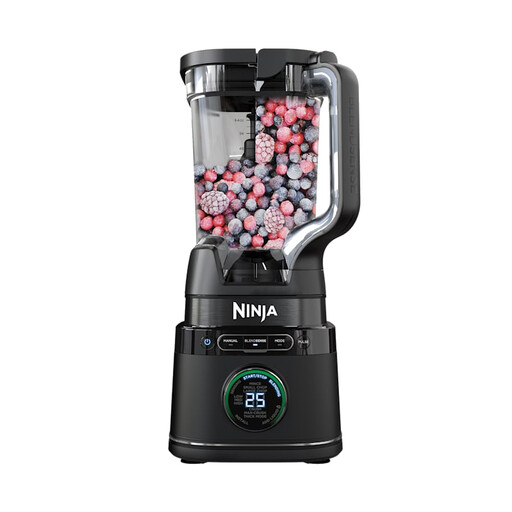
Why it's a great fit: With its large 2.1-litre pitcher, this blender is ideal for preparing meals for the whole family or for meal prepping. The 1000-watt motor effortlessly handles larger quantities and even frozen ingredients.
The BPA-free Tritan jar is robust and resistant to staining. The appliance focuses on a core competency—efficient blending with its "Total Crushing Technology"—instead of superfluous programs.
Large capacity (2.1 L) and a 6-blade system for consistent results, even with a full load.
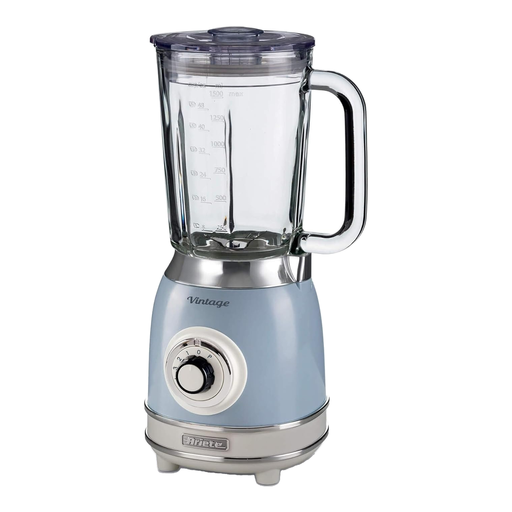
Why it's a great fit: For those who value aesthetics without compromising on performance. The retro design makes this blender a kitchen statement piece, while the 1000-watt motor and ice-crush function ensure it's highly functional.
The 1.5-litre glass jar is hygienic, scratch-resistant, and avoids the drawbacks of cheap plastic. The controls are straightforward with 4 speeds and a pulse function, not overloaded with unnecessary programs.
A combination of striking vintage design and solid everyday performance, thanks to its 1000W motor and glass jar.
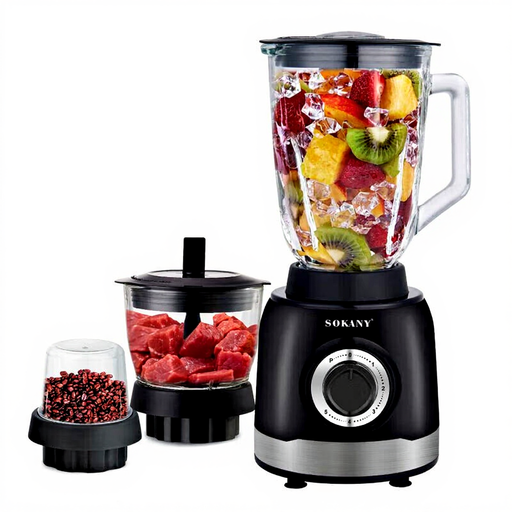
Why it's a great fit: Ideal for users who want more than just a smoothie maker and wish to save kitchen space. This appliance combines the functions of a blender with those of a meat grinder and juicer.
Instead of making vague all-in-one promises, this model offers clearly defined attachments for specific tasks (blending, grinding, juicing). The base is a powerful 1000W motor that ensures sufficient power for all functions.
True multi-functionality through separate, specialised attachments that go beyond the capabilities of a standard blender.
We have compiled a complete, up-to-date list of products that fully meet these strict selection criteria and UK/EU safety regulations.
For most applications like smoothies, soups, and dips, a power rating between 800 and 1200 watts is sufficient. A 1000W blender offers a great sweet spot between performance and energy consumption. For regularly grinding hard ingredients like grains or nuts, a model with a higher wattage may be beneficial.
No, not every blender is designed for it. An effective ice crusher requires a combination of a powerful motor (typically 1000W or more), robust stainless steel blades, and a sturdy blender jar. Models with a dedicated pulse or ice-crush function are best suited for this task. Using an unsuitable appliance can lead to damage to the motor or blades.
Both materials have pros and cons. A blender with a glass jar is more hygienic, heat-resistant, and won't stain, but it is heavier and breakable. A high-quality, BPA-free Tritan plastic jar is lightweight and shatterproof but can get scratched if not cared for properly. The choice depends on your personal priorities: hygiene and heat resistance (glass) versus low weight and durability (plastic).